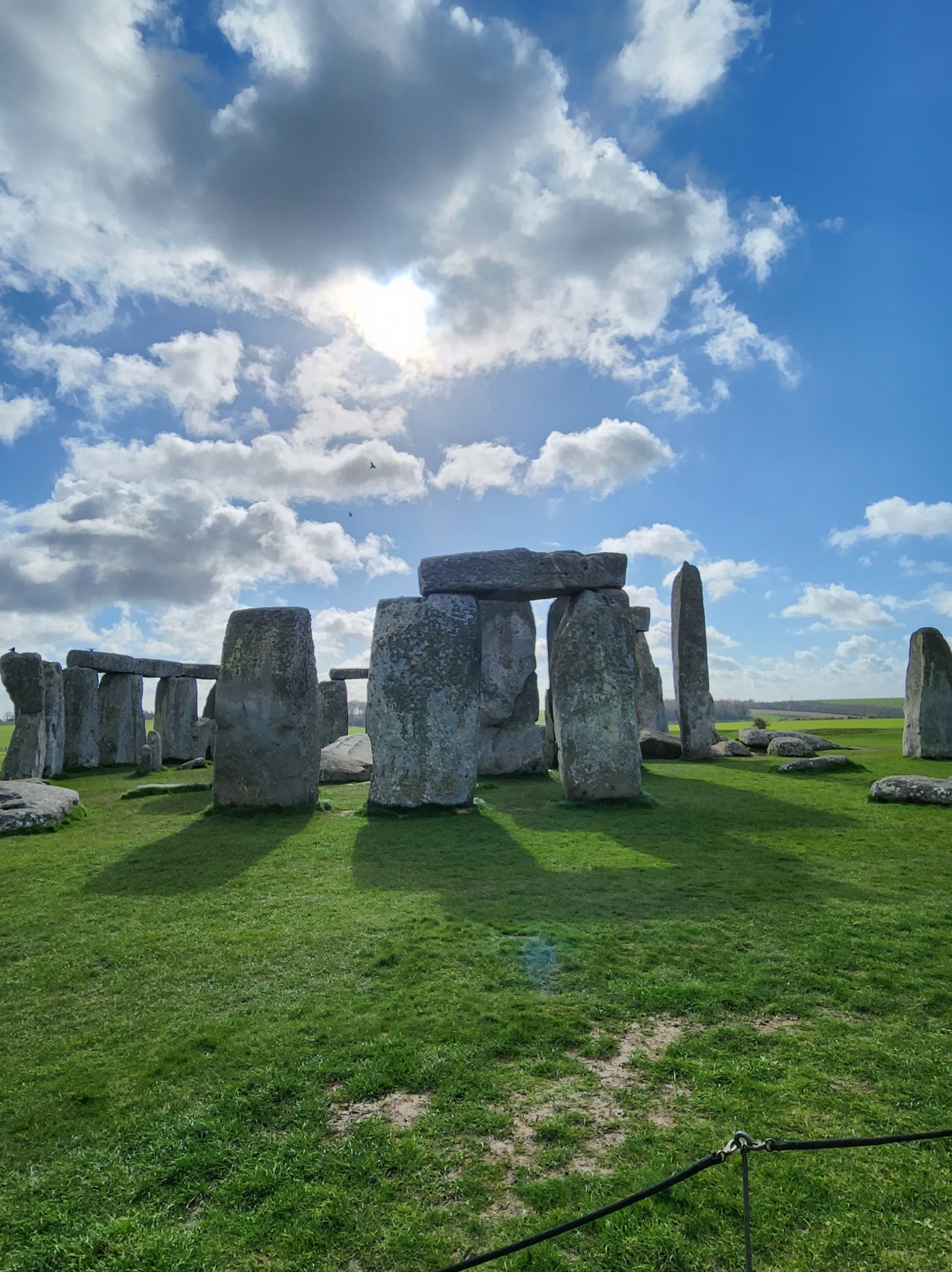
Early this morning, we piled in a van (driven by someone else, fortunately) and headed to Stonehenge.
We’d signed up for this tour (led by an Irish dude with ear gauges named Tony) that would take us to three of the farther-flung British must-see attractions: Stonehenge, Bath, and Windsor Castle.
Now, I don’t know what I was expecting with Stonehenge; trekking across the highlands, climbing one last rise, and seeing the mystical, ancient structure looming on the next hill with much solemnity.
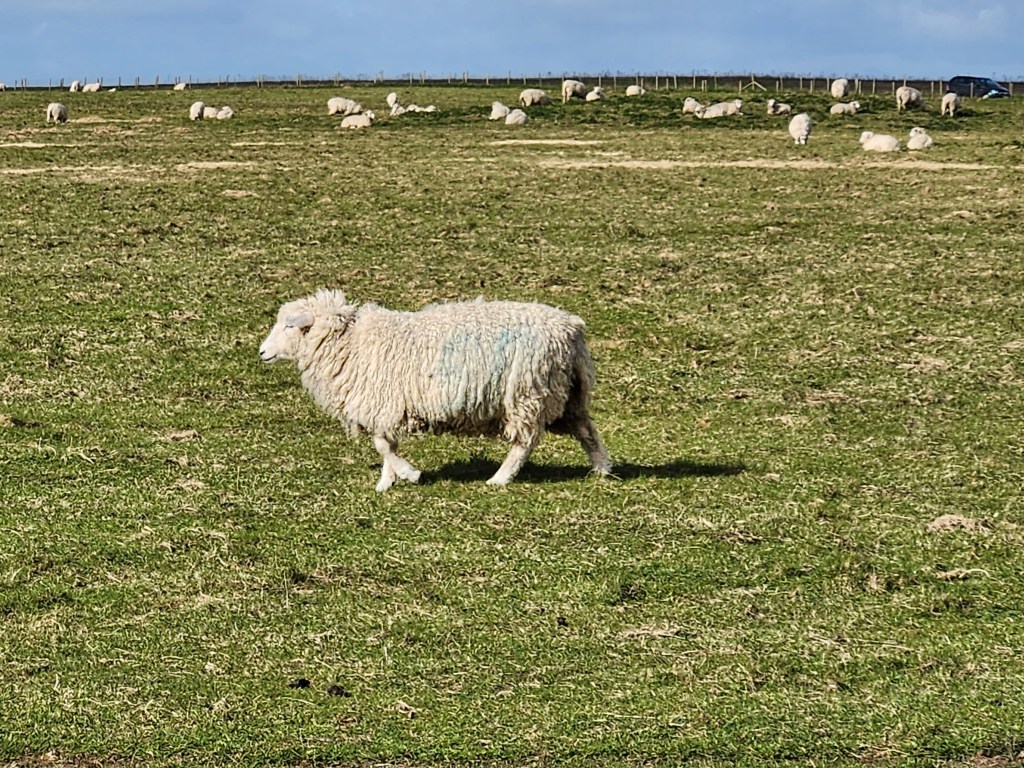
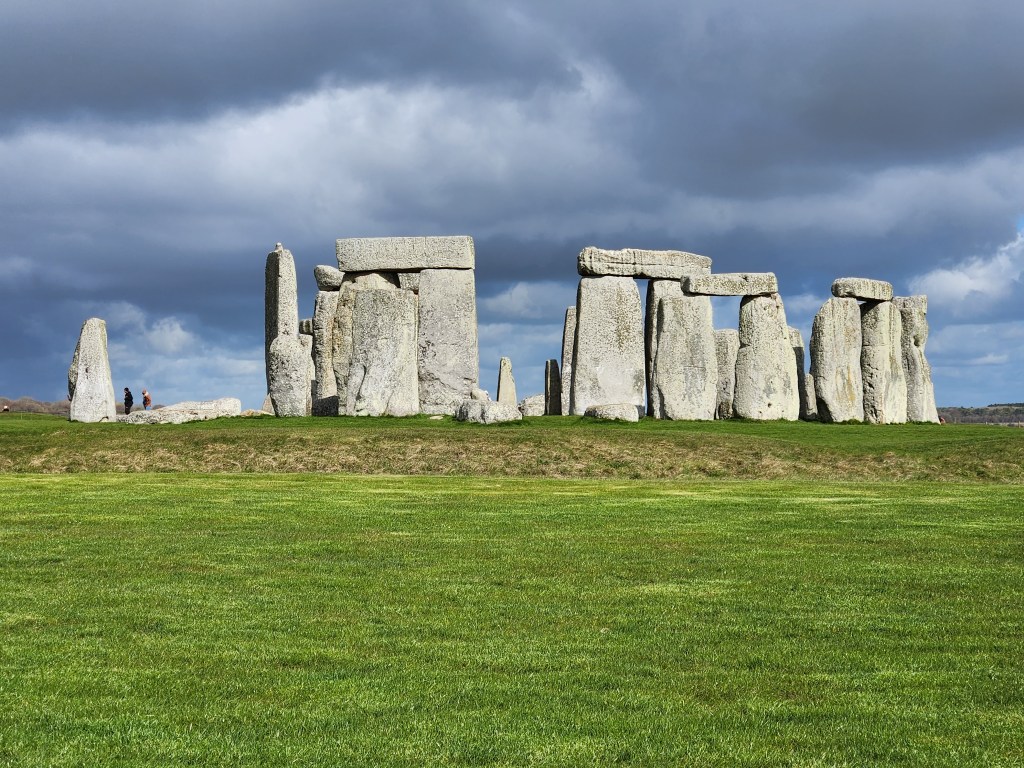
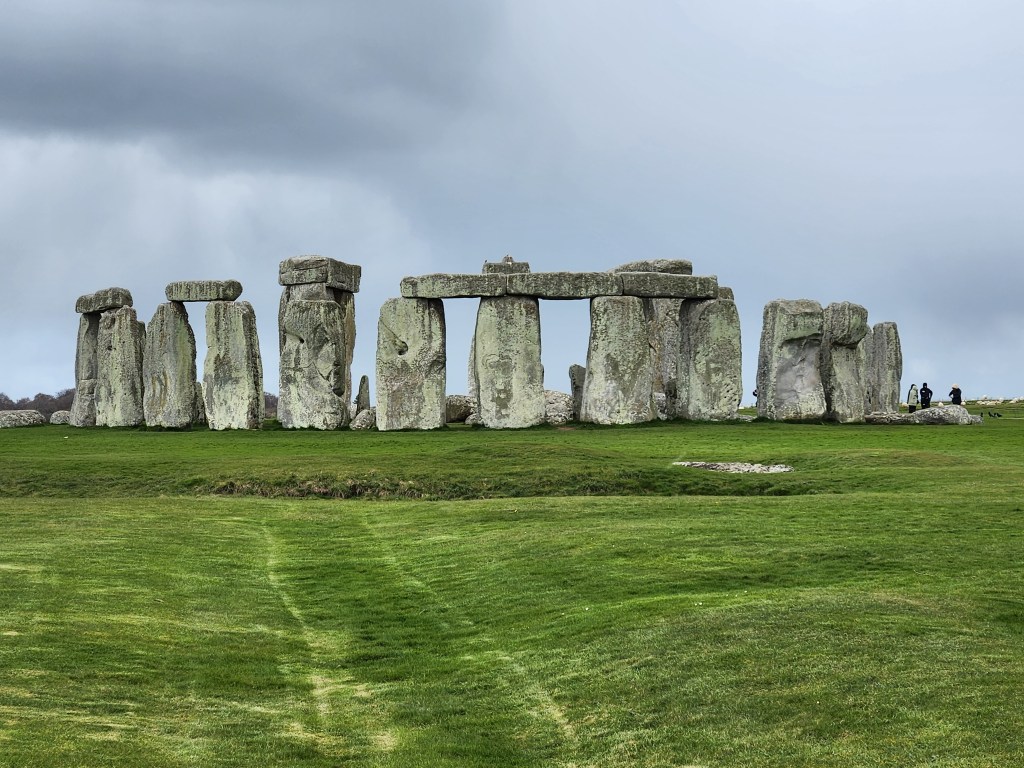
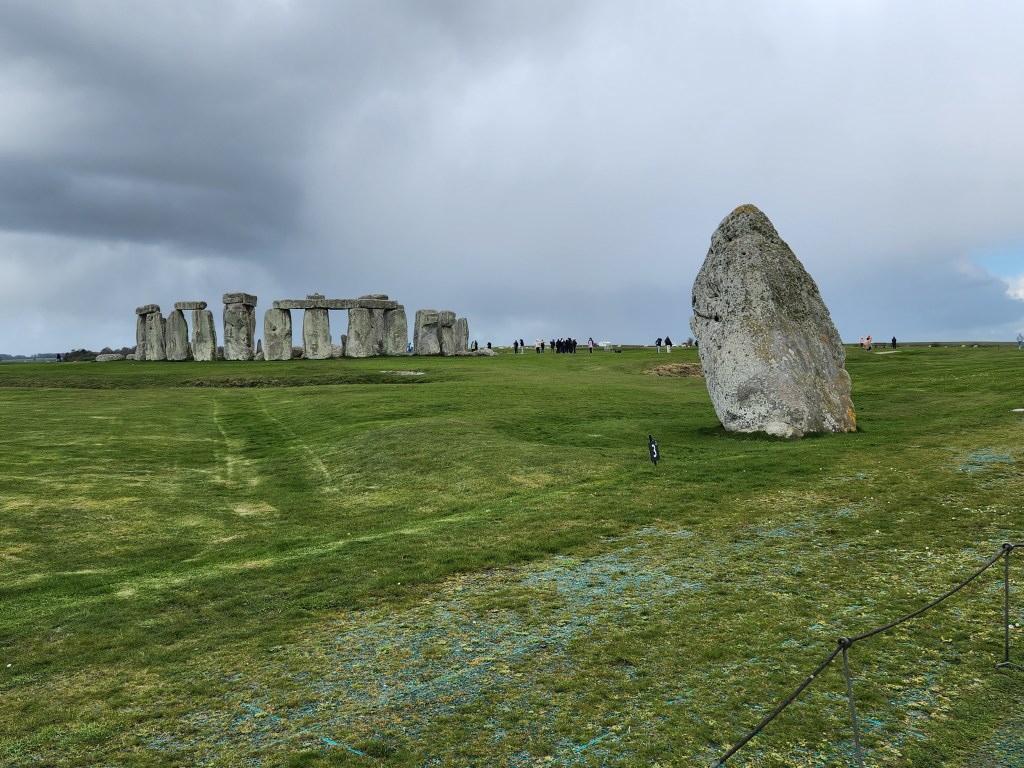
Yeah, no. It’s on the side of the highway, surrounded by sheep. There’s a visitor center with a gift shop, a café, and toilets that actually have plumbing. And honestly, it’s smaller in person.
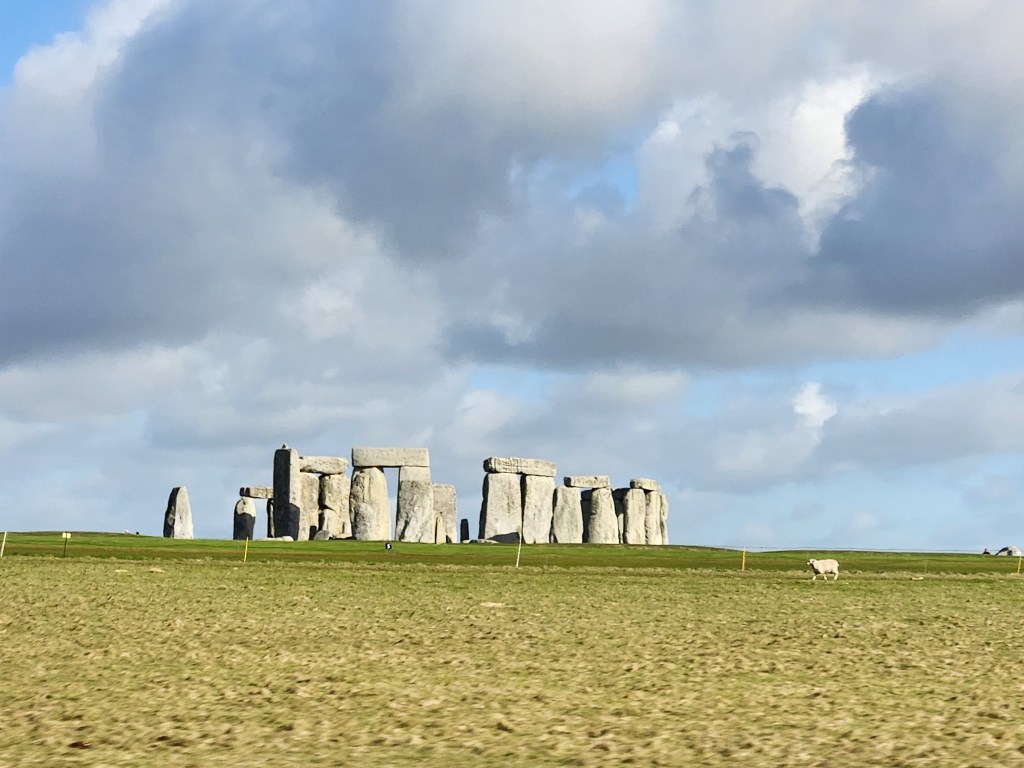
It’s still extremely majestic, though, and the lighting was being all dramatic and stuff and overall it was extremely fun to take pictures of:


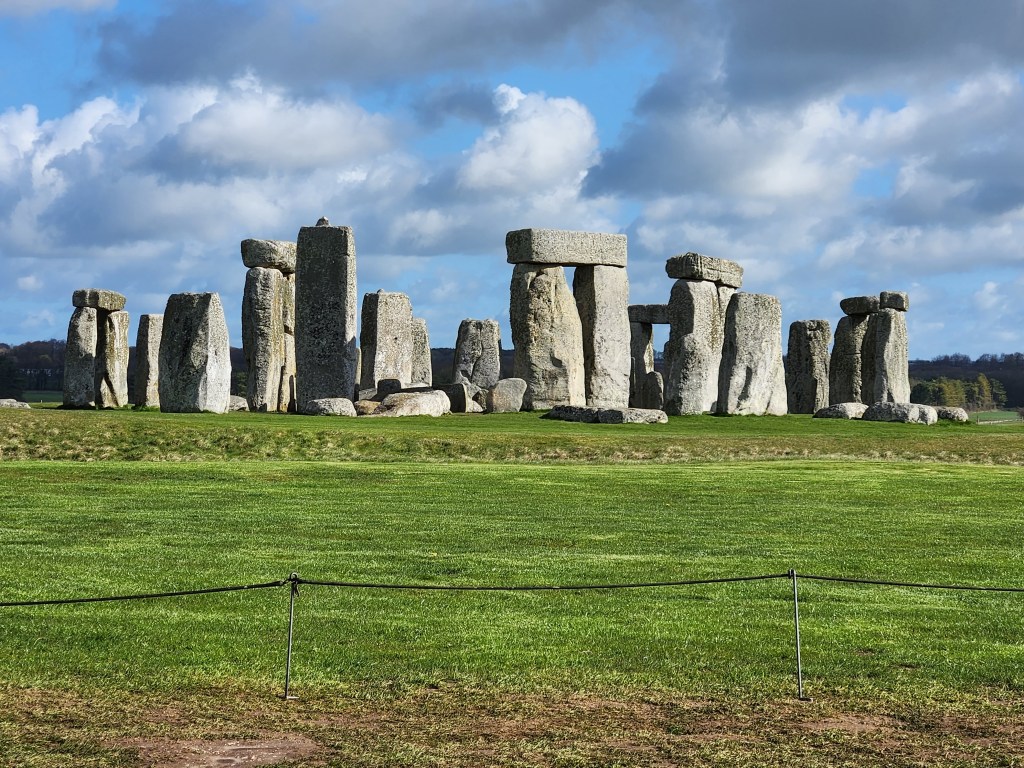
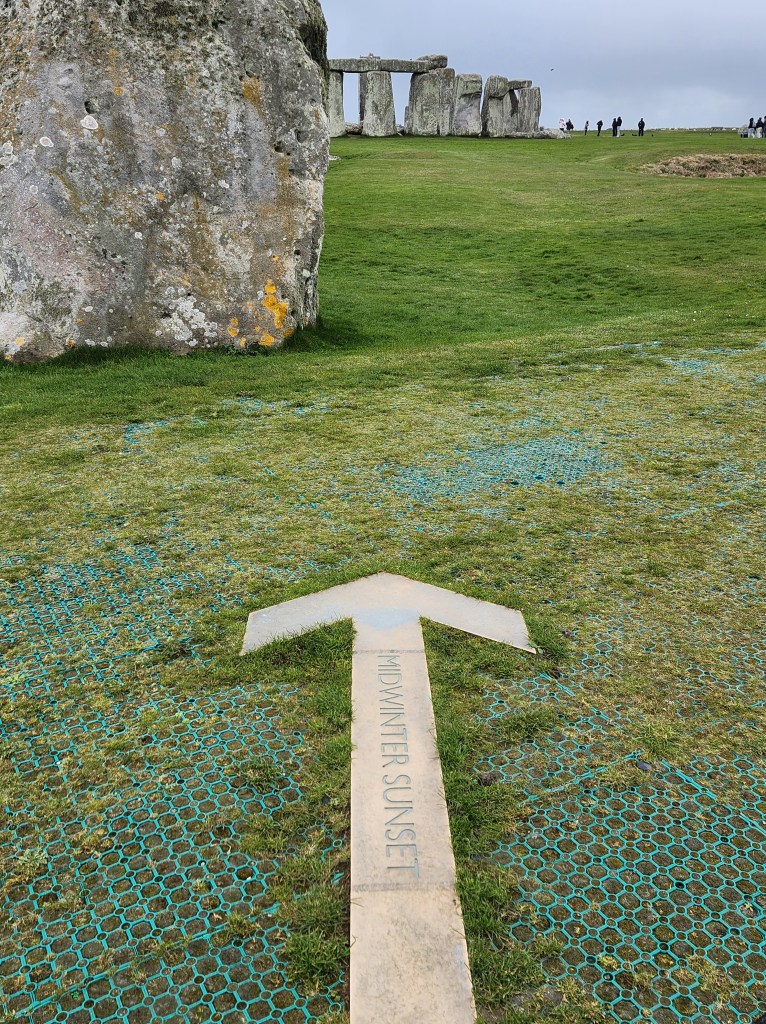
Tony timed things perfectly so that we beat a tour bus full of French people, both to the henge and to the café.
Then, we piled back into the van and headed to Bath.
Now, I know you’re probably thinking that Bath seems kinda meh. It sounds like some kinda stodgy, sleepy old English place that’s just a collection of maybe a dozen thatched-hut cottages.
Dude, it’s not. It’s a pretty substantially-sized city, at the bottom of a little valley surrounded by rolling English hills, with curving rows of limestone houses stretching seemingly endlessly in each direction.
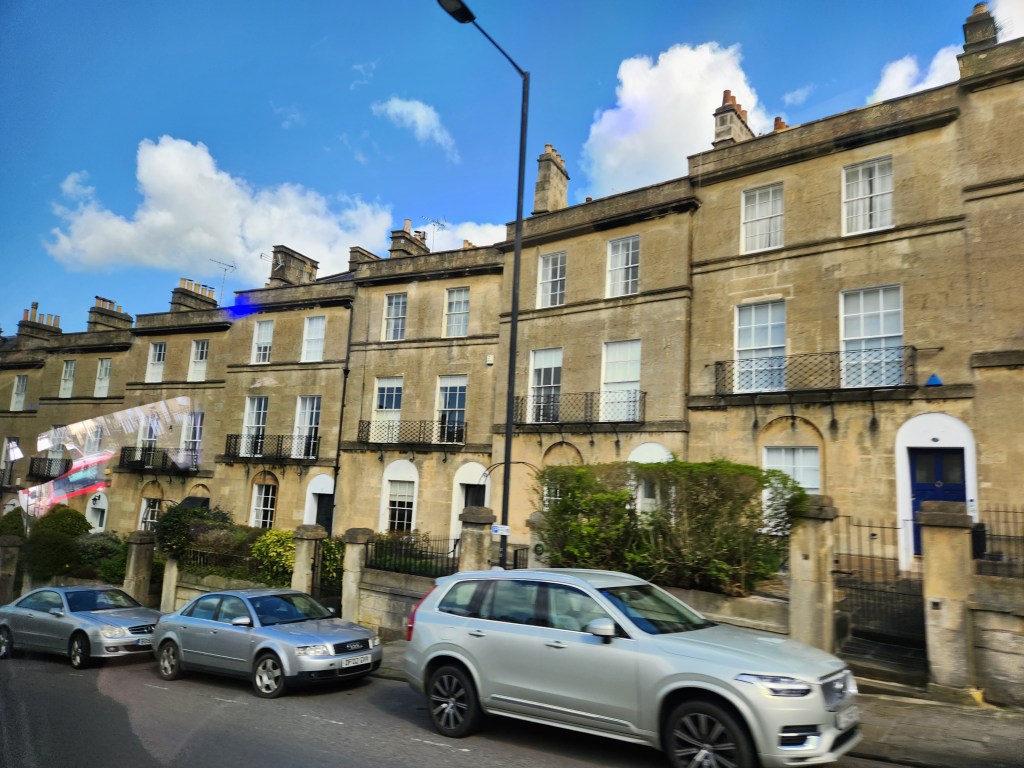

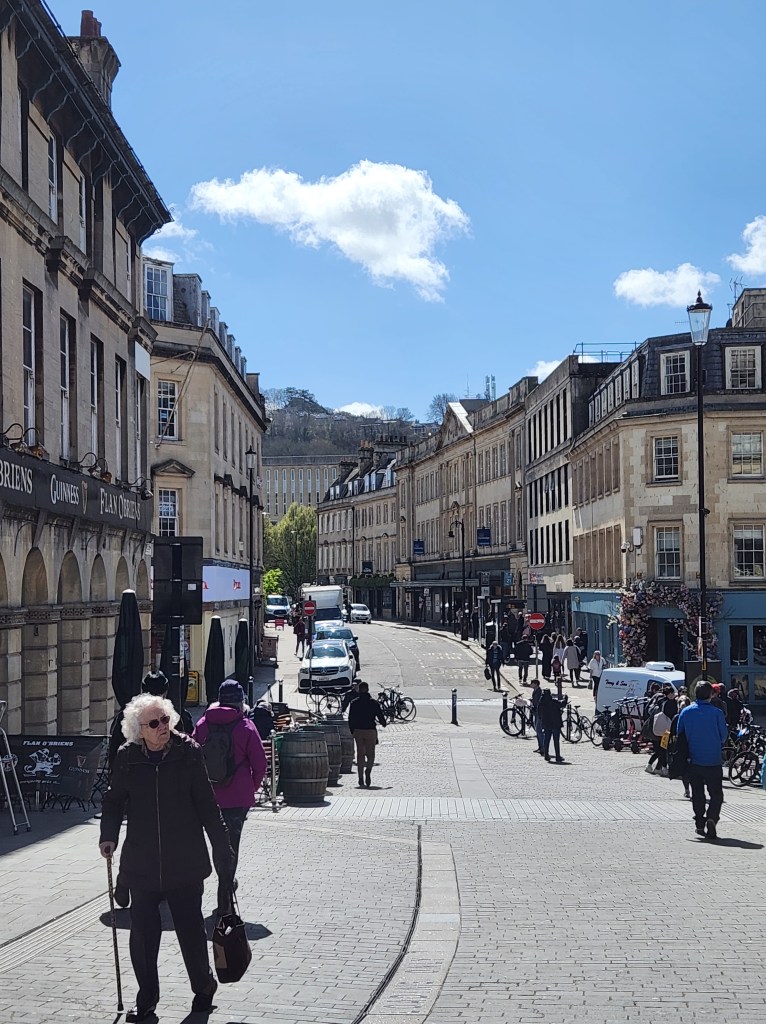
There have been people living at Bath since the Romans, 2,000 years ago. The limestone rock in the surrounding hills percolates water into the valley to create natural springs, and the Romans took advantage of this by building bath houses here, giving the town its name.

The place really got popular in the 17th century, though, which is probably when all these limestone buildings date to. It was considered good for your health to ‘take in the waters’ at Bath. By the time Jane Austen lived there in the early 1800s, it was a popular vacation spot for the well-to-do, with the gentry congregating at the Pump Room to see and be seen.
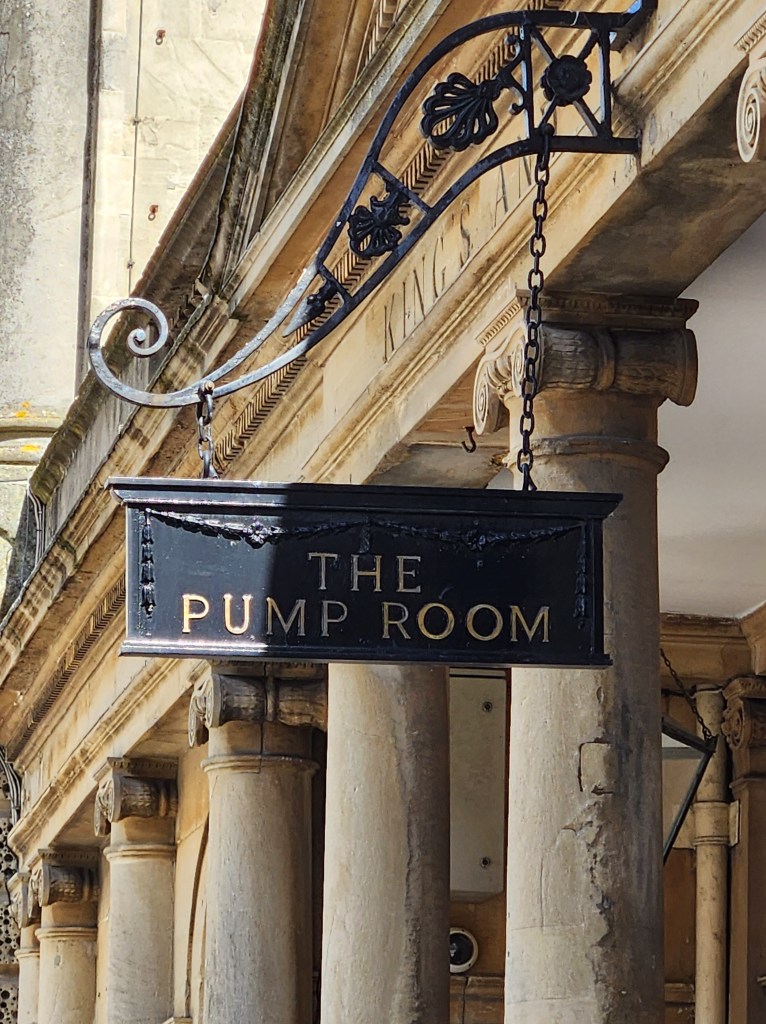
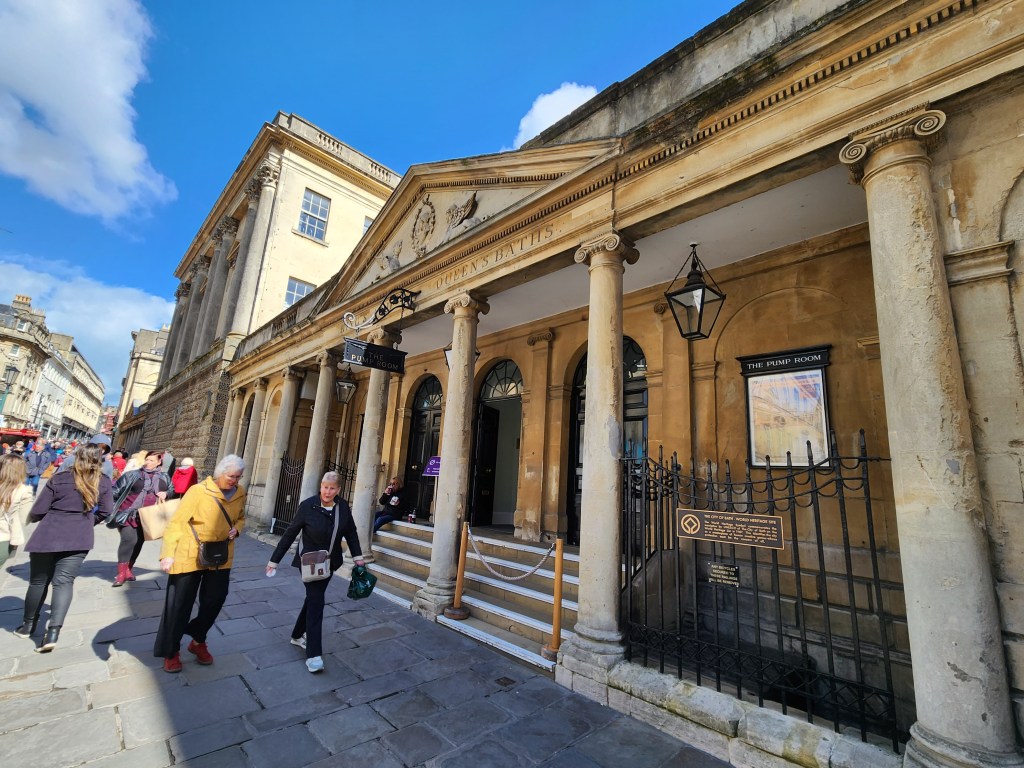
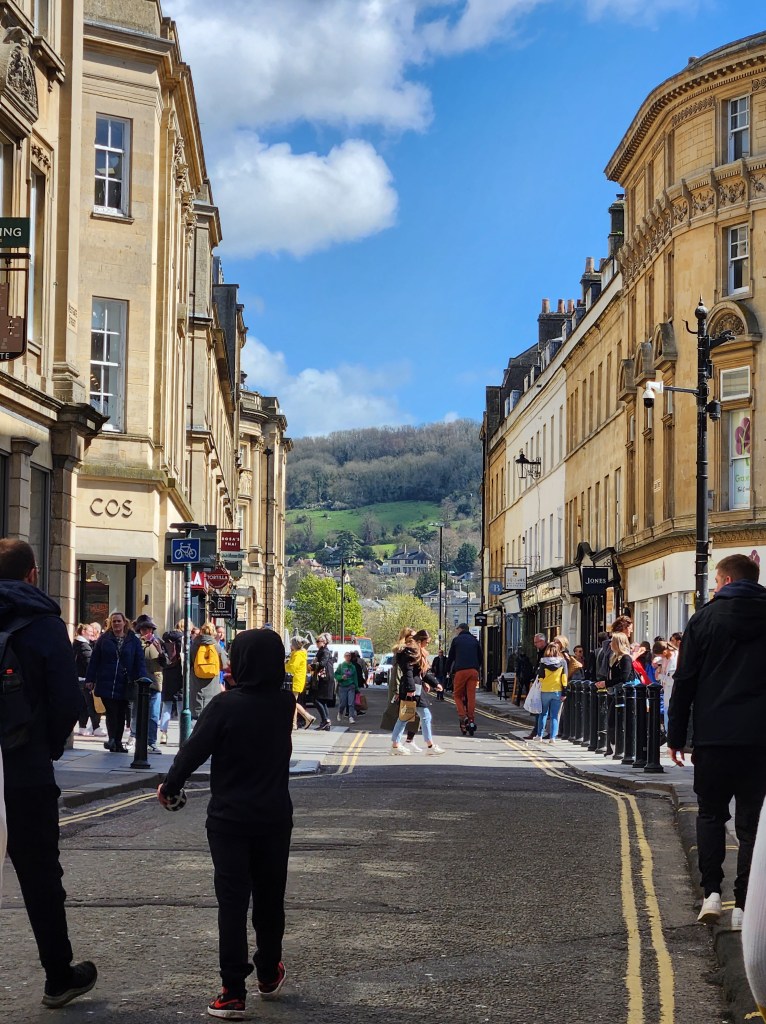
It seems like Bath hasn’t lost its trendiness, because the main thoroughfare is now lined with high-end shopping, storefronts retrofitted into those old-fashioned limestone buildings.
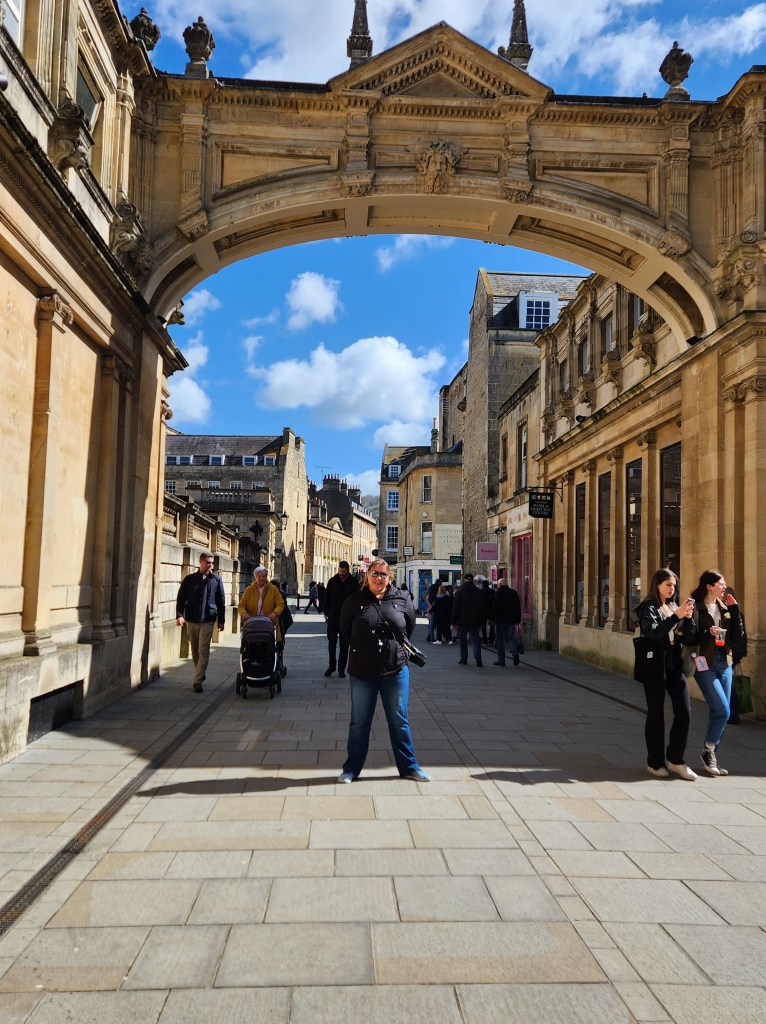
Wandering through Bath felt surreal. Most of the town is closed to cars, and even on the roads that were driveable, we barely saw any. It was actually really relaxing just to wander leisurely through these streets that looked like something out of a period drama. (Speaking of, there is a Jane Austen museum in Bath. We didn’t have time to really go in, but I definitely wandered the gift shop.)


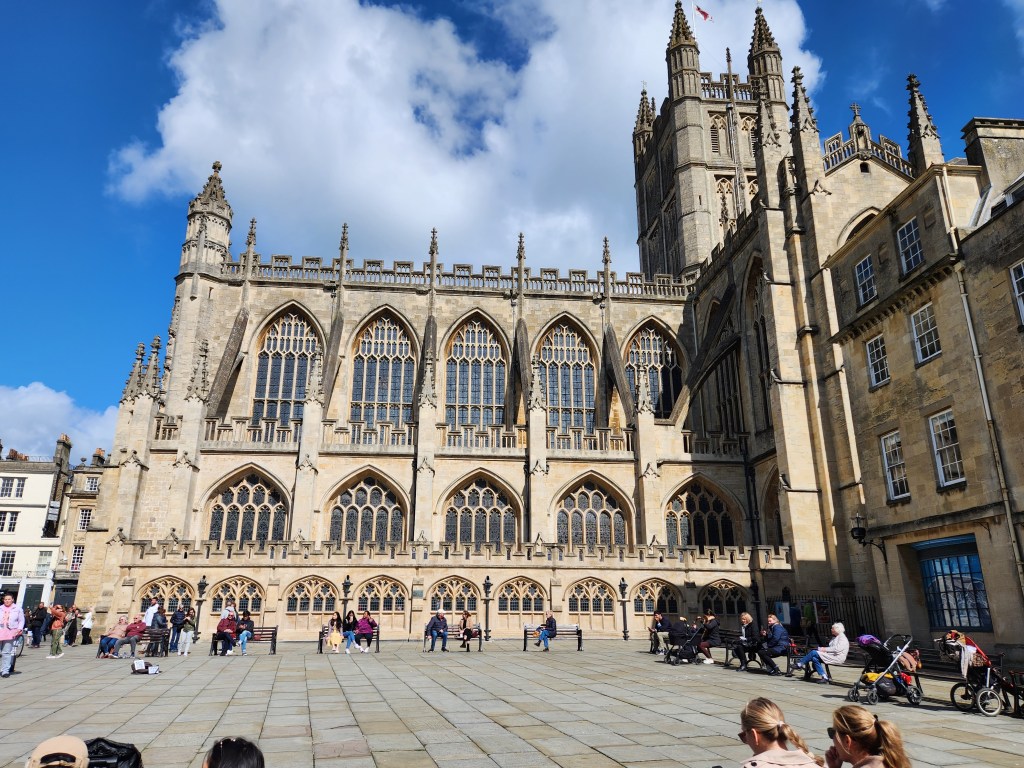
We got lunch at a baguette shop and sat down to eat it in the great square next to the cathedral. There were some fantastic buskers, singing opera or playing really mellow guitar music. It was pretty chill.
After another couple hours of driving through the scenic English countryside, we arrived in Windsor Castle.
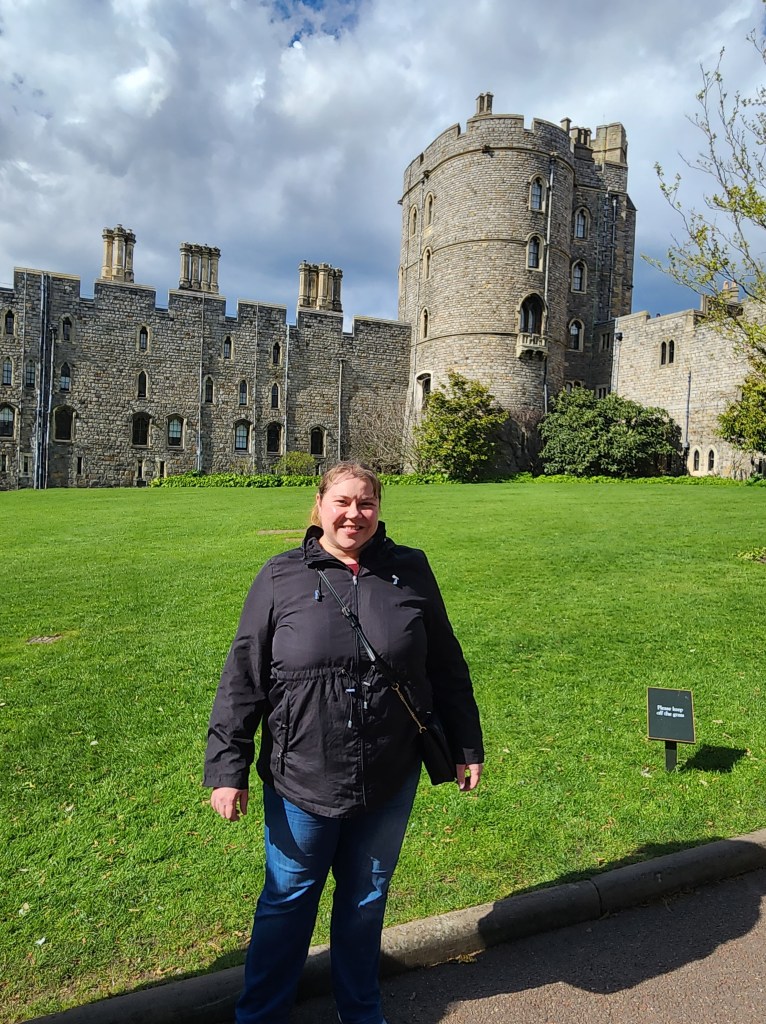

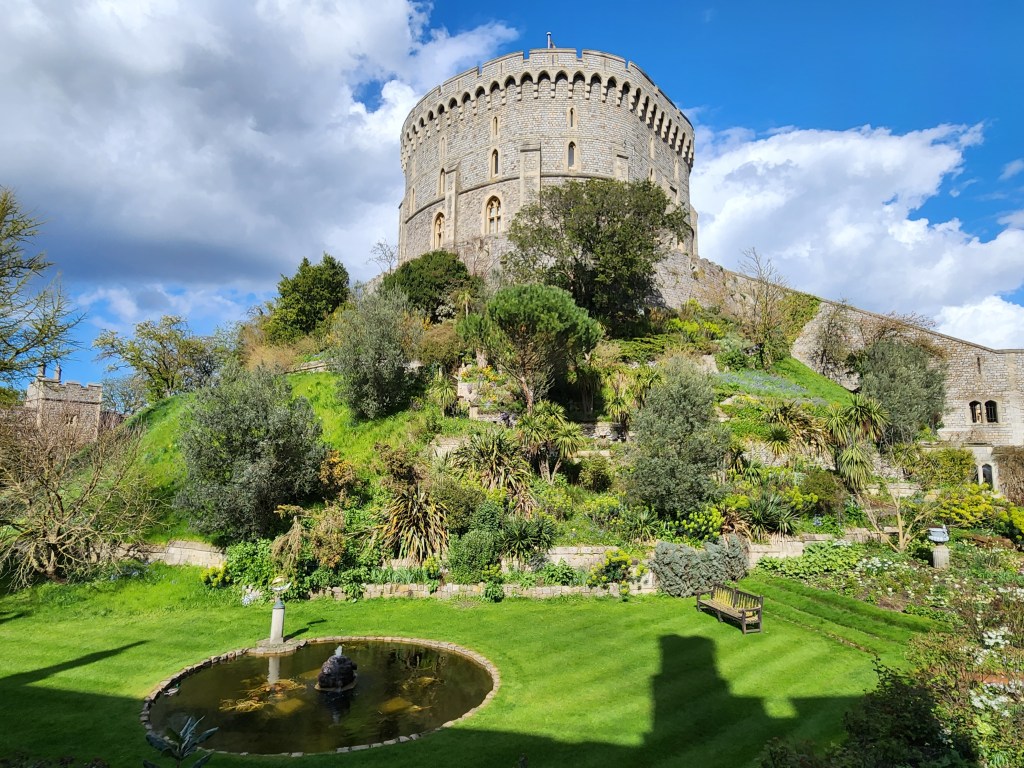
Windsor was first built by William the Conqueror almost a thousand years ago, and it’s the oldest continually inhabited royal residence in the world. It was Queen Elizabeth II’s favorite house, according to our guide Tony, who had some strong opinions about each member of the royal family and was not afraid to share them out loud. Charles, Tony tells us, doesn’t particularly enjoy Windsor because it’s right under the flight path for Heathrow, and he can’t stand the noise. As Chicagoans living in the shadow of O’Hare, we thought that was a lame excuse.
Windsor Castle is MASSIVE, taking up several city blocks. The inner buildings themselves are huge and sprawling, but also within the walls (which are surrounded by the town of Windsor) are a football field-sized courtyard, numerous little lawns, footpaths, and terraces, and the chapel that so many royal weddings have been held out of.
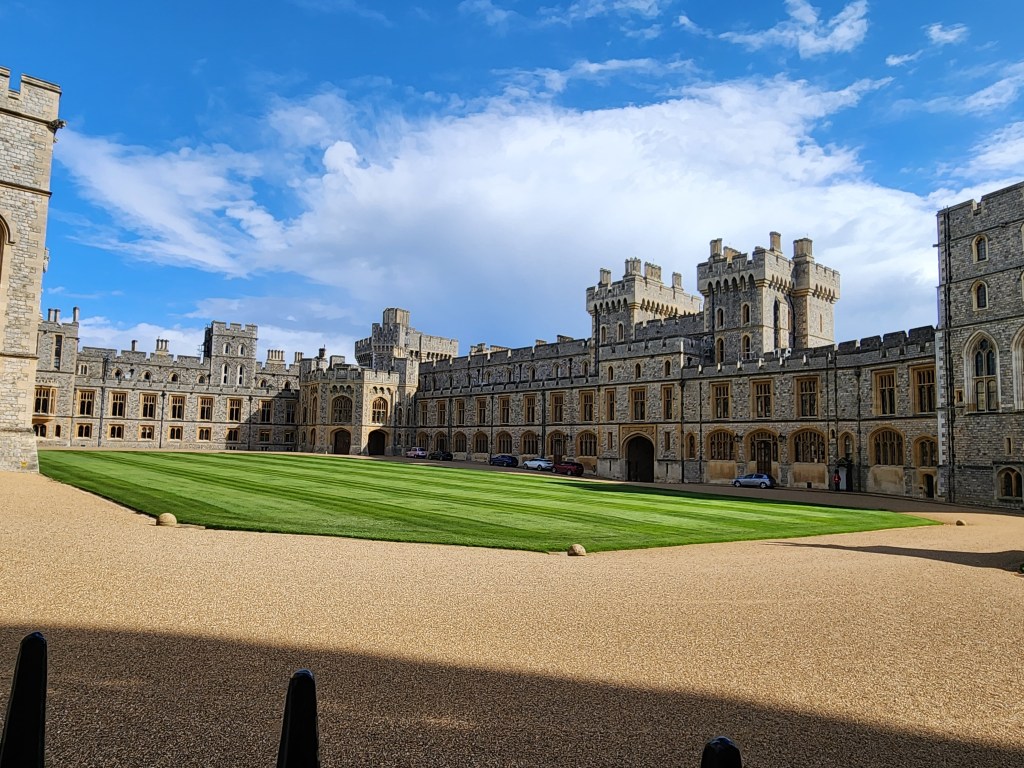

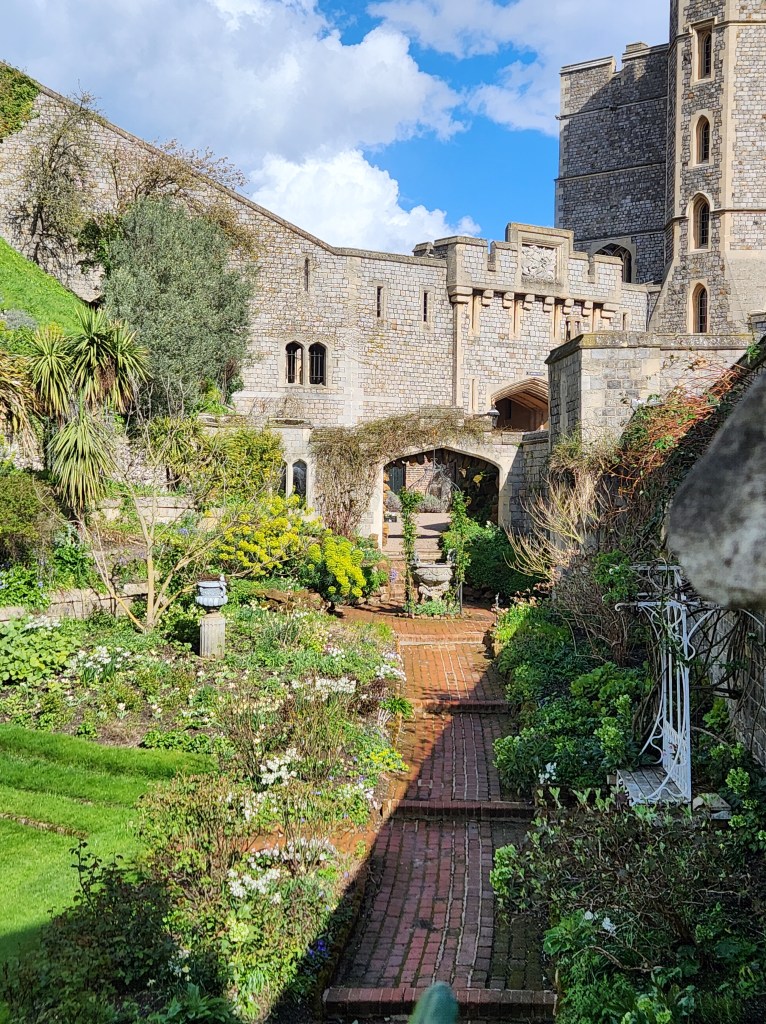


We were able to go inside the state rooms as well, although we weren’t allowed to take pictures inside. The path through the wing that was open led us through a huge dining room with one of those long tables where the people at each end are sitting about 50 feet apart. Then, the room where the monarch knights people, and a massive hall where the walls and high, vaulted ceilings were covered in probably 1,000 different coats of arms of various nobles. We toured several drawing rooms, and even what used to be the king’s bedroom and dressing room. To our chagrin, the billiard room is now a gift shop.
After spending so much of my existence at Disney inside fake castles, my brain was kind of exploding being inside a real one. Every room was so much more exquisite (and extravagant) than what you see in a typical sword and sorcery movie. It was wild to stare at a marble bust or a jade vase and realize that these things weren’t props, that the gold leaf on the walls was real, and that the velvets and polished woods were probably several centuries old.
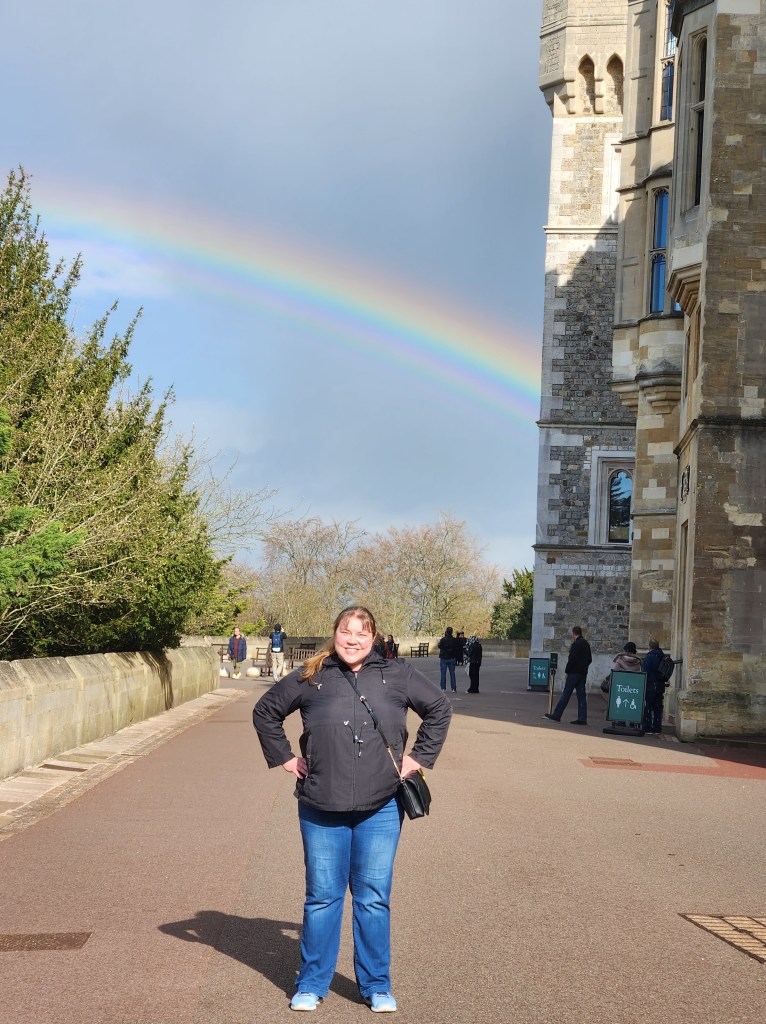
As we finished up at Windsor, a huge rainbow arced across the sky. It was only there for a couple minutes, but that was long enough for us to take advantage of it.
It was a lengthy and arduous trek across the English countryside, but every place we visited felt like a dream to walk through and around. It absolutely gave me inspiration for some future writing.
 Laura Writes