We left our last full day in London kind of open-ended, in case unforeseen things (like the weather, or, say, a museum workers’ strike) forced us to skip something we really wanted to see. We did wind up having to miss the British Museum earlier this week due to a workers’ strike, so we rescheduled that for this afternoon. To fill up the morning, we went to a place that we’d heard was super cool but hadn’t found any time for: The Royal Mews. We opted for a cab, and our driver, Martin, was wonderful, chatting with us and pointing things out along our route back toward Buckingham palace.
The Royal Mews is a bit of a misnomer. Anywhere else in Europe, a ‘mews’ is where you would keep a nobleman’s falcons for hunting. Initially, the royal family had a separate stable and mews. In 1537, though, the stables burned down, and the mews seemed like the logical place to temporarily hold King Henry VIII’s horses. After a few years, the change became permanent, and now every British rich person refers to the place they keep their horses as a mews.
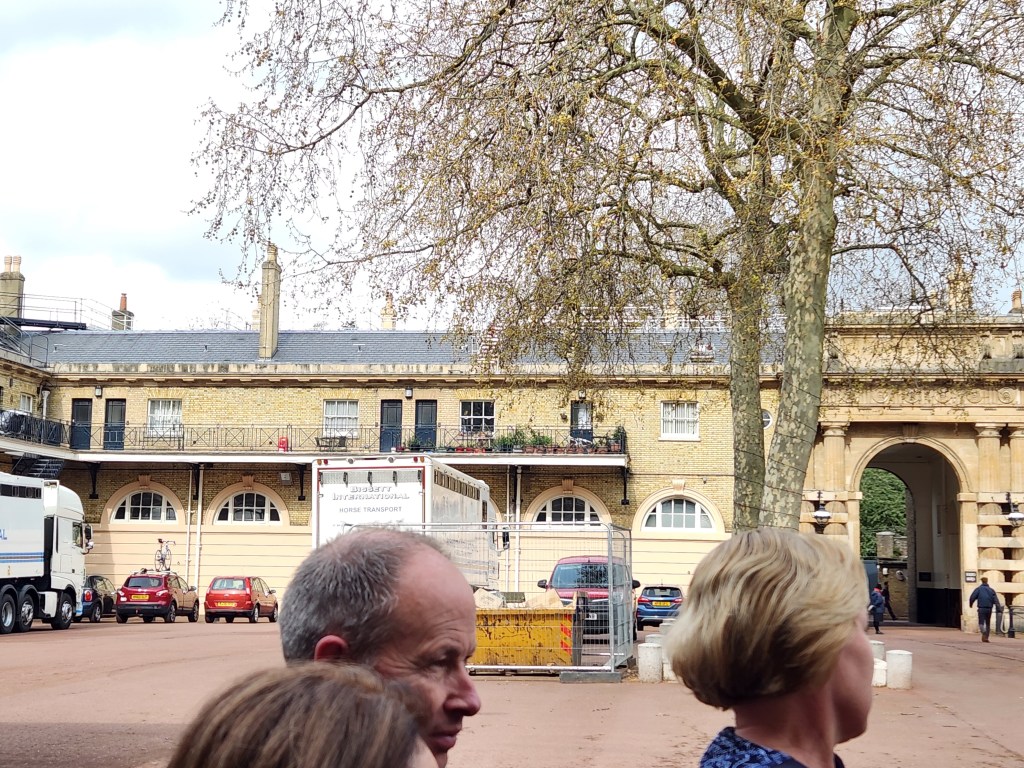
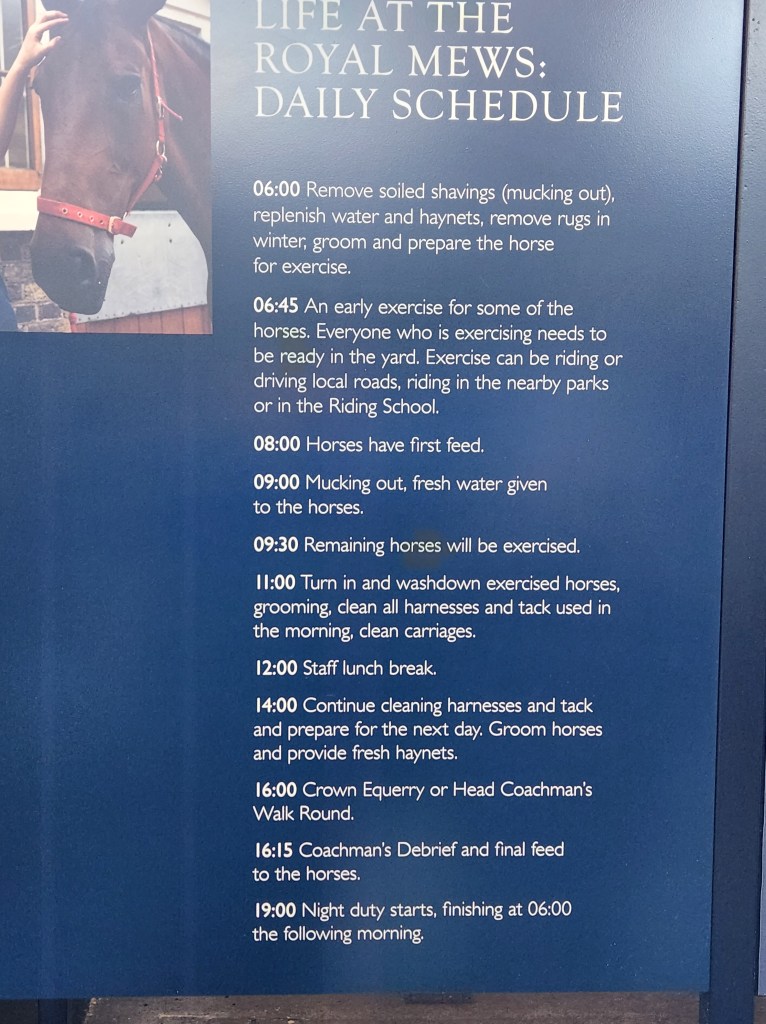
The Mews were cool. Ringed around the outside were apartments, because taking care of horses is a 24/7 job, so those employed at the Mews actually live there. Some of the employees are actually third or fourth generation in the job.
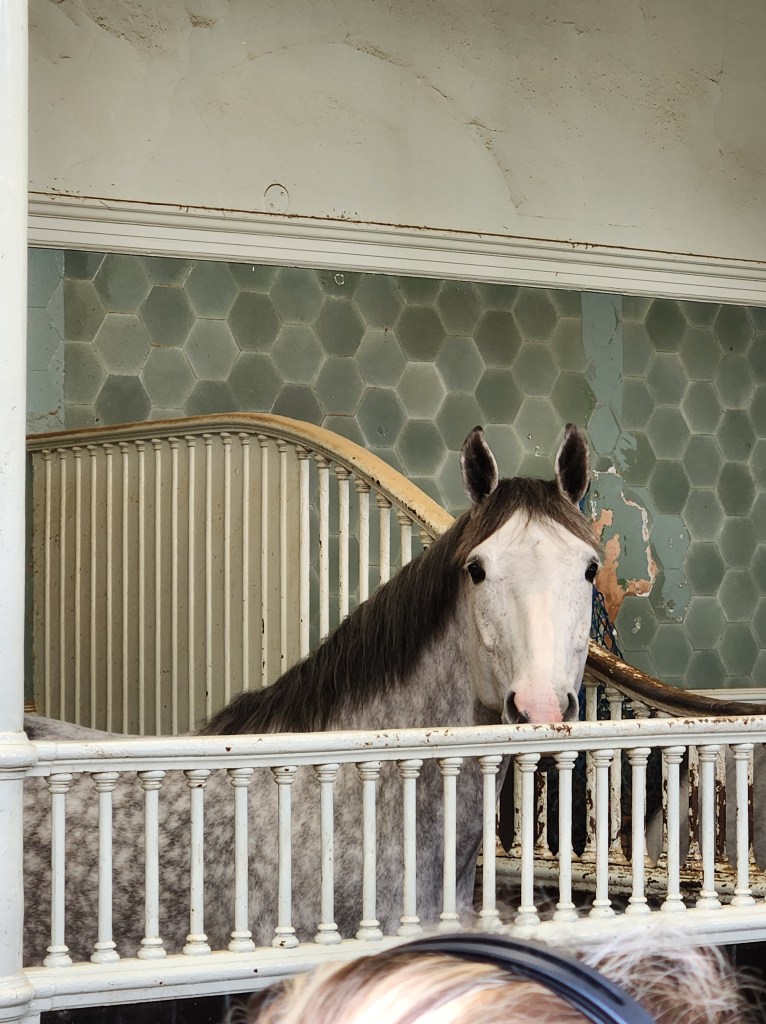
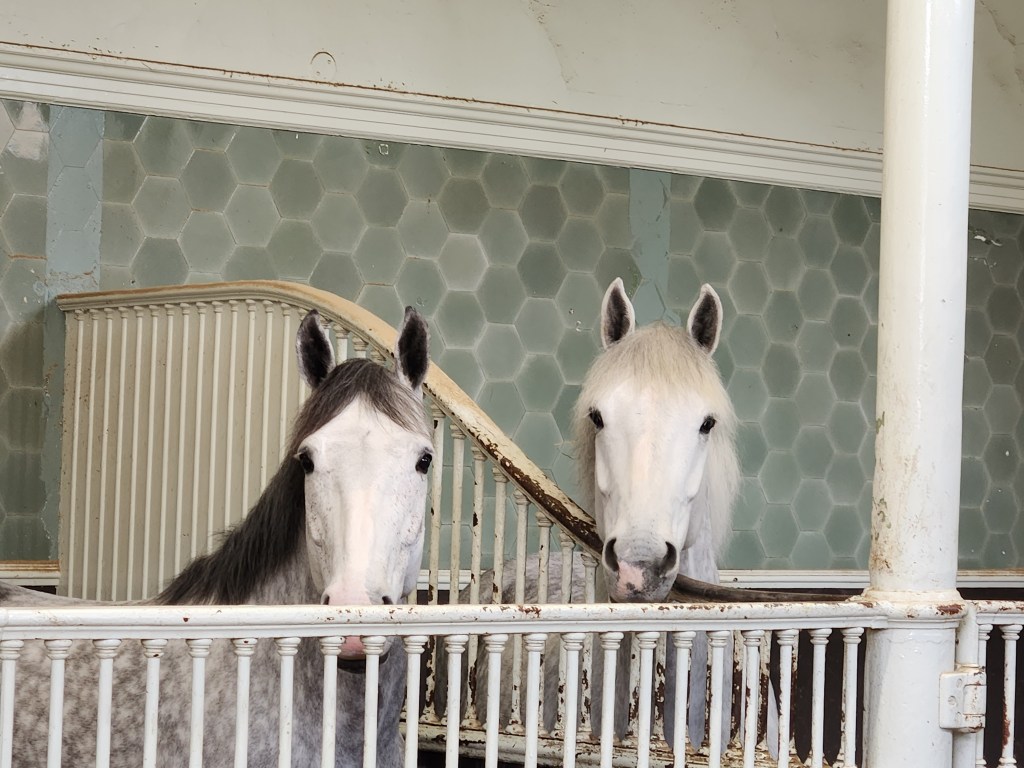
The horses are ‘Windsor Grays’ though the official breed is Irish Draught Horse. Up until about 100 years ago, Hanoverian (German) horses were used for the royal family, but when World War I broke out, continuing to use horses of enemy origin apparently seemed a bit gauche, so the change was made. The horses start their service around four years old, provided they are tall enough and strong enough to pull the carriages (the largest of which weighs around four tons) and pass a series of tests. Nearly all the horses pass, and those that don’t get to live a life of quiet retirement on the stud farm. The horses serve for as long as they are physically able—as you can imagine, their handlers watch them carefully to make sure they’re still fit—and usually retire around 25 years old.
The mane and pattern are darker on young horses, and lighten as they age. When new horses join the ranks, they are paired with an older horse who will be their parading partner and teach them the ropes. The two horses spend a lot of time together so that they’re comfortable with each other.
Then we got to see the royal coaches, starting with Queen Alexandra’s coach. This used to be used for actual people, but since 1962 it’s been used to transport the Imperial Crown to Parliament for its official opening every year. The crown sits on a red cushion inside. Previously, the crown was transported up the Thames on a boat.

The Irish Coach was designed by an Irish dude, who one day approached Queen Victoria’s staff and asked if they would commission him to build the nicest coach in the world for the queen. They said no. Well, he built it anyway, funding it with his own money, and decided to exhibit it at an Irish exhibition that he happened to know Queen Victoria would be attending, thereby effectively going around her staff. The queen saw the coach from across the room, and was immediately delighted by it. She wrote in her diary that night that she’d seen a new coach ‘made just for her’, and paid the Irish dude three times his asking price for it.
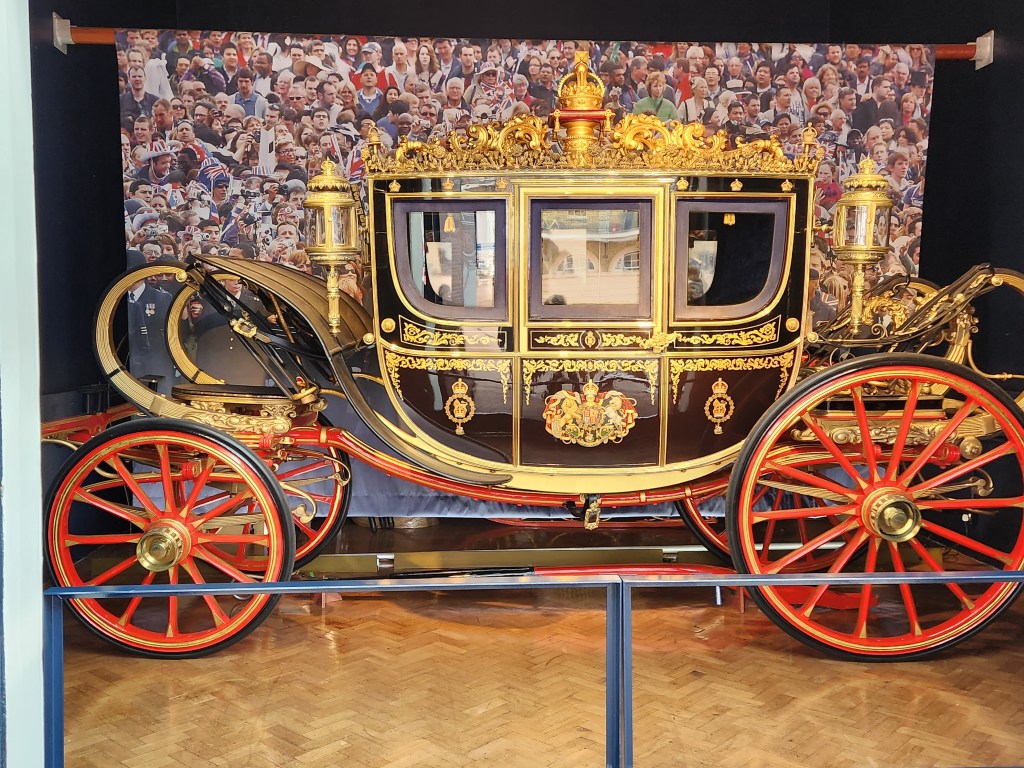
The newest coach in the royal lineup is the Jubilee Coach, which Queen Elizabeth II commissioned for her 60th Jubilee in 2012, although it wasn’t completed until two years later. As the only coach with heating and air conditioning and a modern suspension, it’s quite the latest thing in royal conveyances.
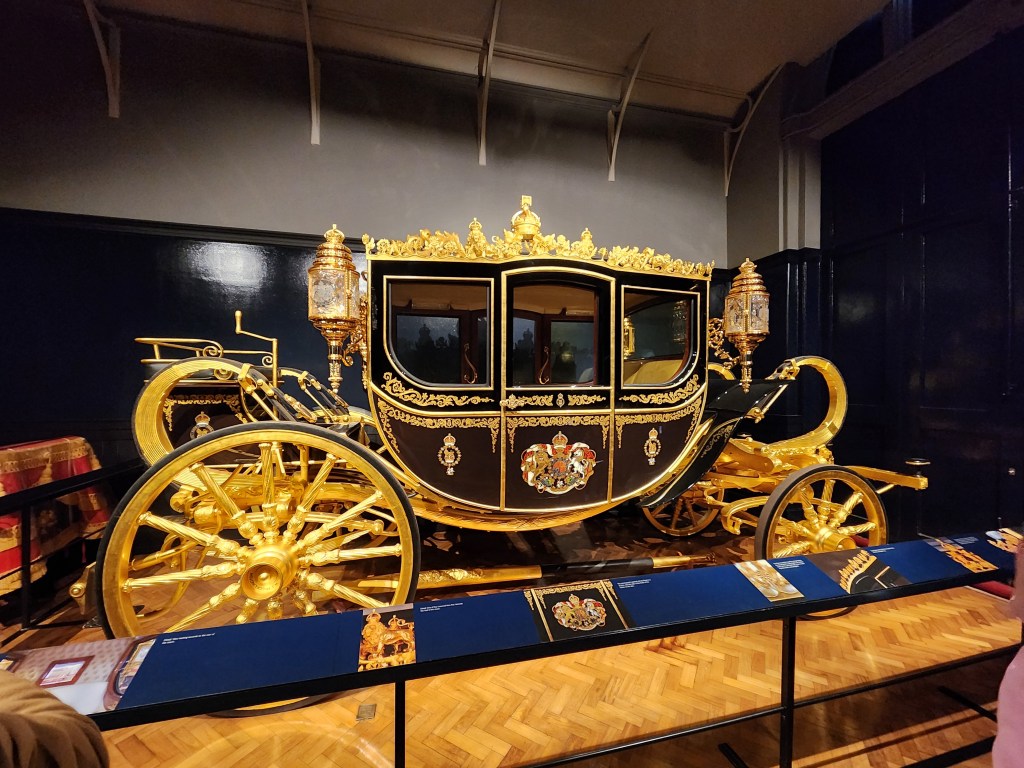
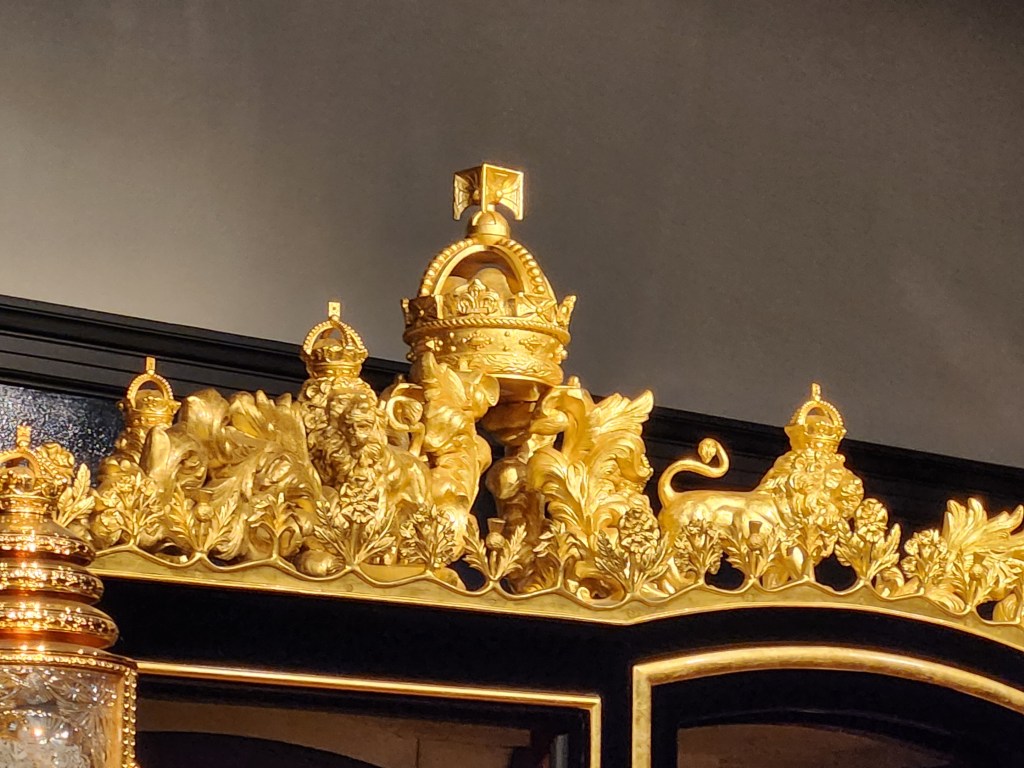
But since it’s so new, the designer built some history into it—literally. The ornament on the top of the coach is carved from a piece of Lord Nelson’s historic flagship.
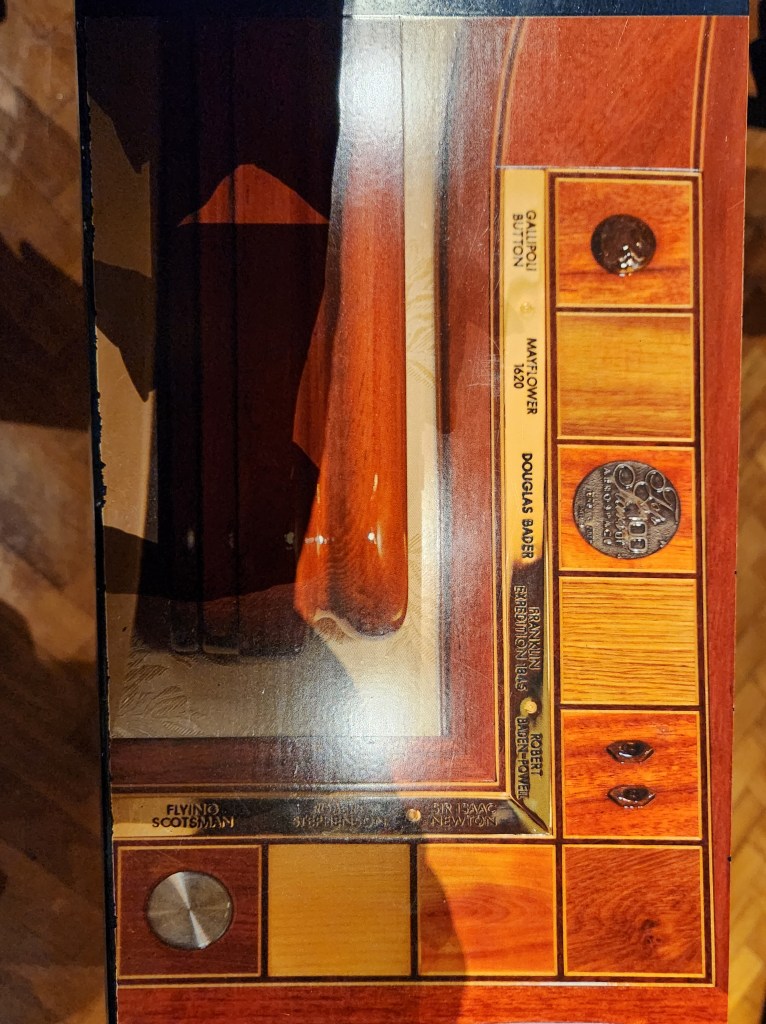
The wood inside is inlaid with wood from various historic places, things, and events that were integral to British history (one example I noted is wood from the Mayflower—yes, that Mayflower. Turns out Britain was actually pretty well pleased to be rid of the Puritans.) Embedded beneath the seats are a musket ball from Waterloo, a piece of the Stone of Scone (the ancestral coronation seat of the kingdom of Scotland) and a small chunk of the original Magna Carta.
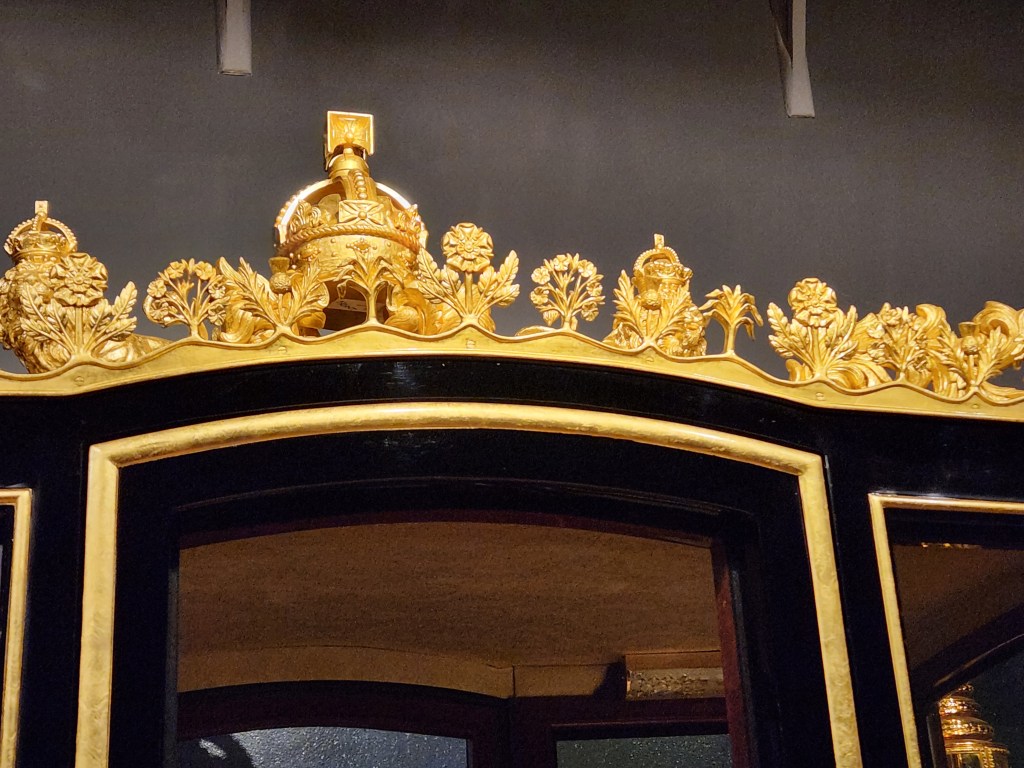
Interesting bit we learned today: one of the earlier-built carriages has ornamentation around the top to represent the three kingdoms of Great Britain: the English rose, the Scottish thistle, and the Irish clover.
By the time the Jubilee Coach was built, though, the United Kingdom was comprised a little differently. The ornamentation around the top of that contains the English rose, the Scottish thistle, flax for Northern Ireland (since the south is now its own nation), and a leek for Wales, which was actually in there all along and just kind of never got its own acknowledgement.
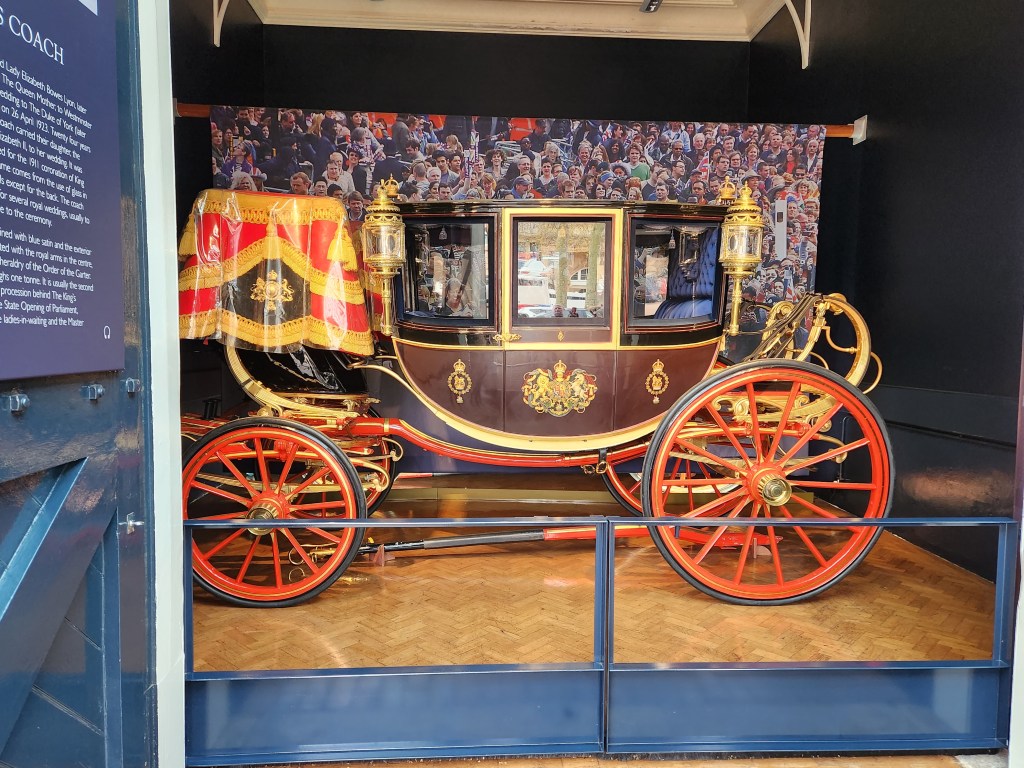
The Glass Coach is known as the ‘marriage carriage’ because it’s been used over the last century or so to carry the brides to royal weddings.
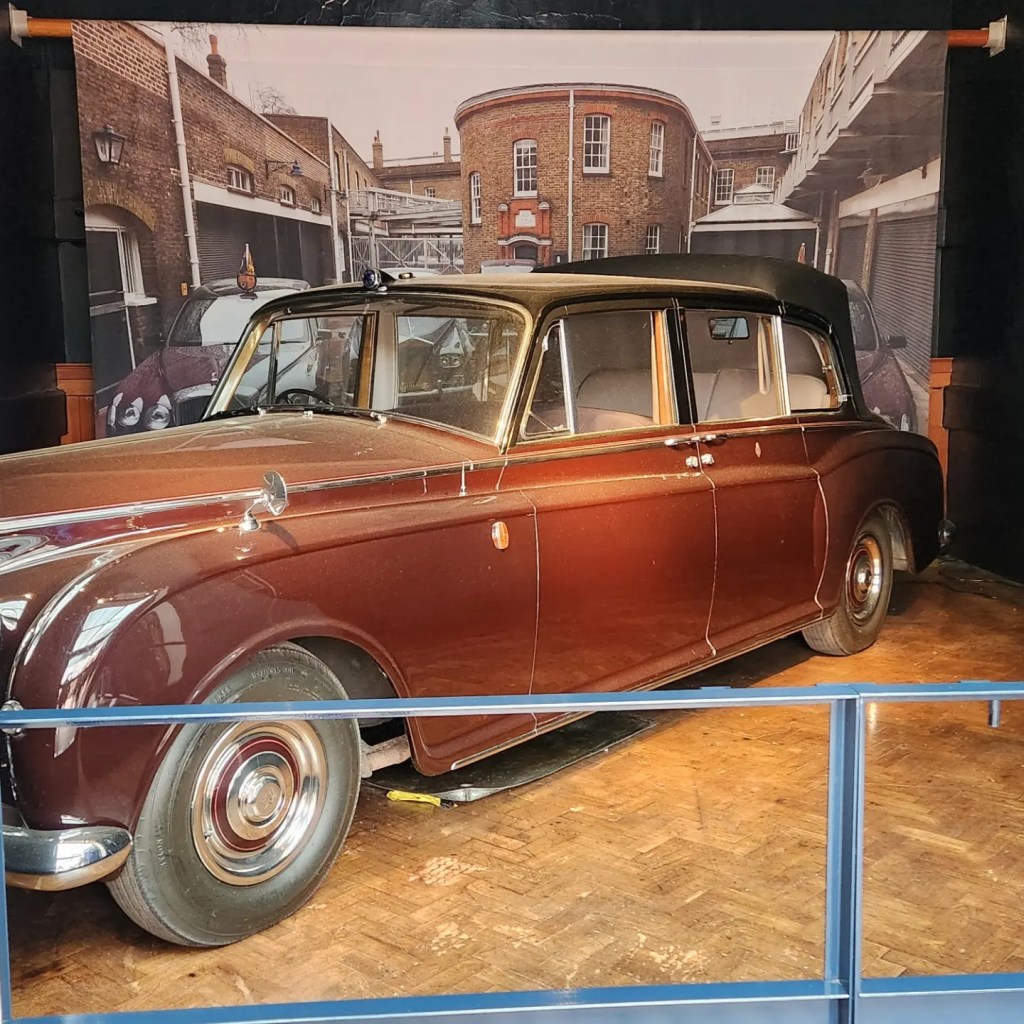
His Majesty also owns a Rolls Royce. The royal chauffeurs are all required to double as mechanics.
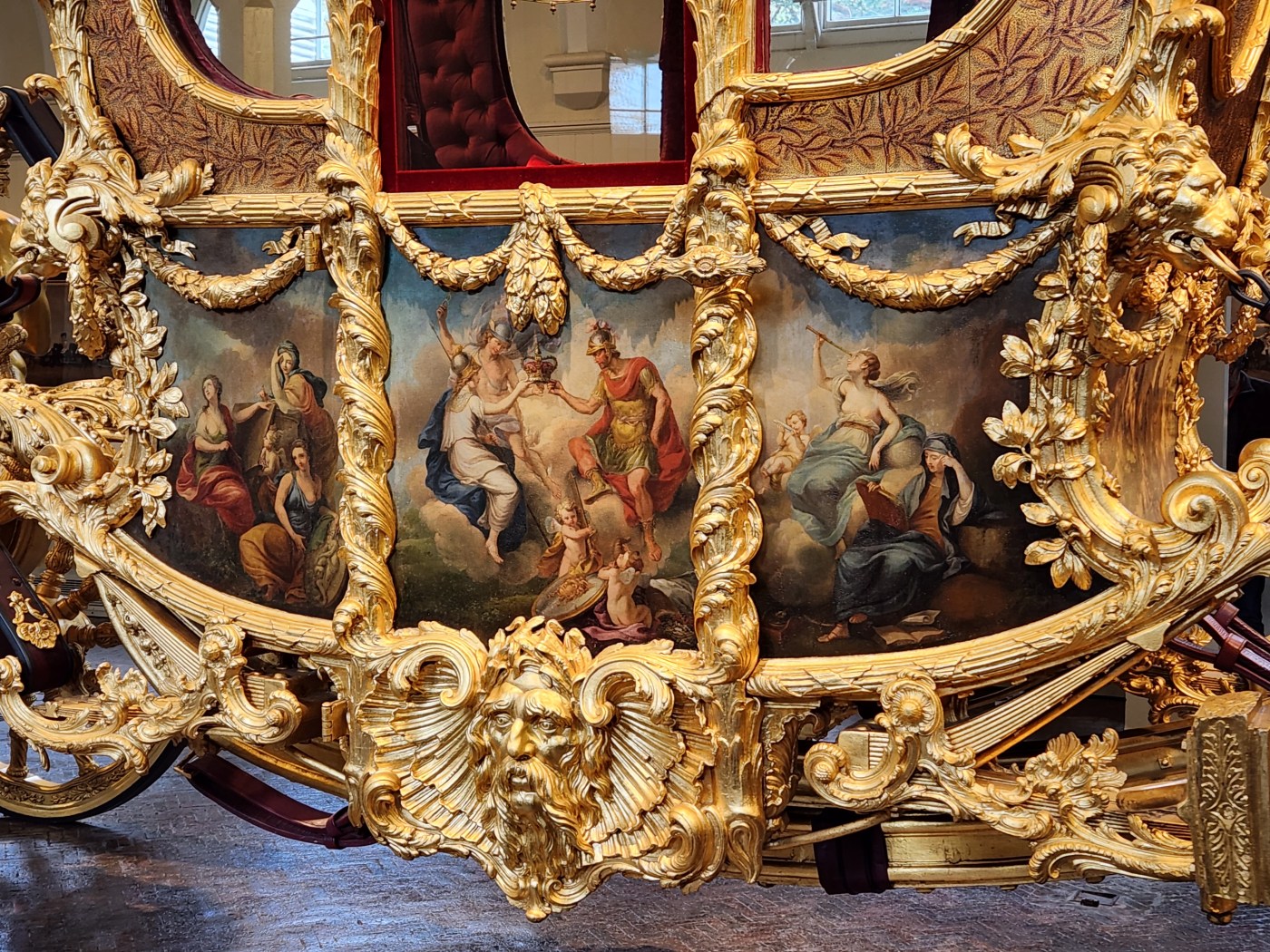
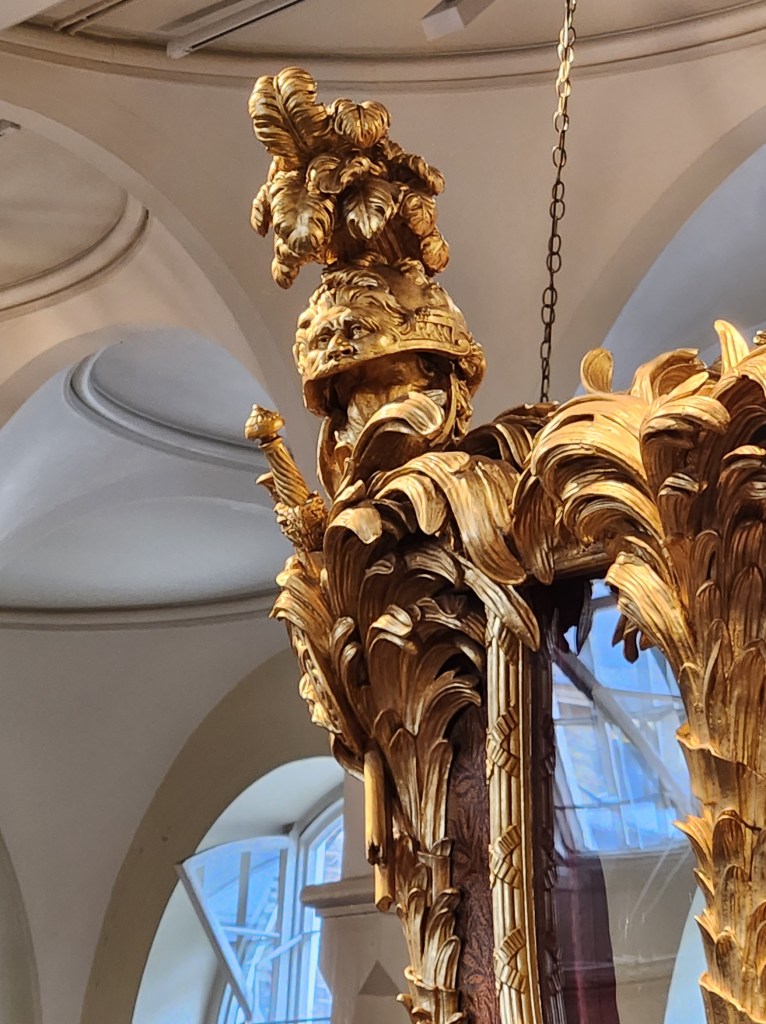
This behemoth is known as the Coronation Carriage. It’s been around for a few hundred years, takes double the usual number of horses to pull, and is reportedly absolutely awful to ride in because its suspension is LITERAL suspension: the coach portion is held aloft by leather straps that are supposed to prevent all the jostling and jolting of going over bumps, but have the unfortunate side effect of making the whole thing swing around.


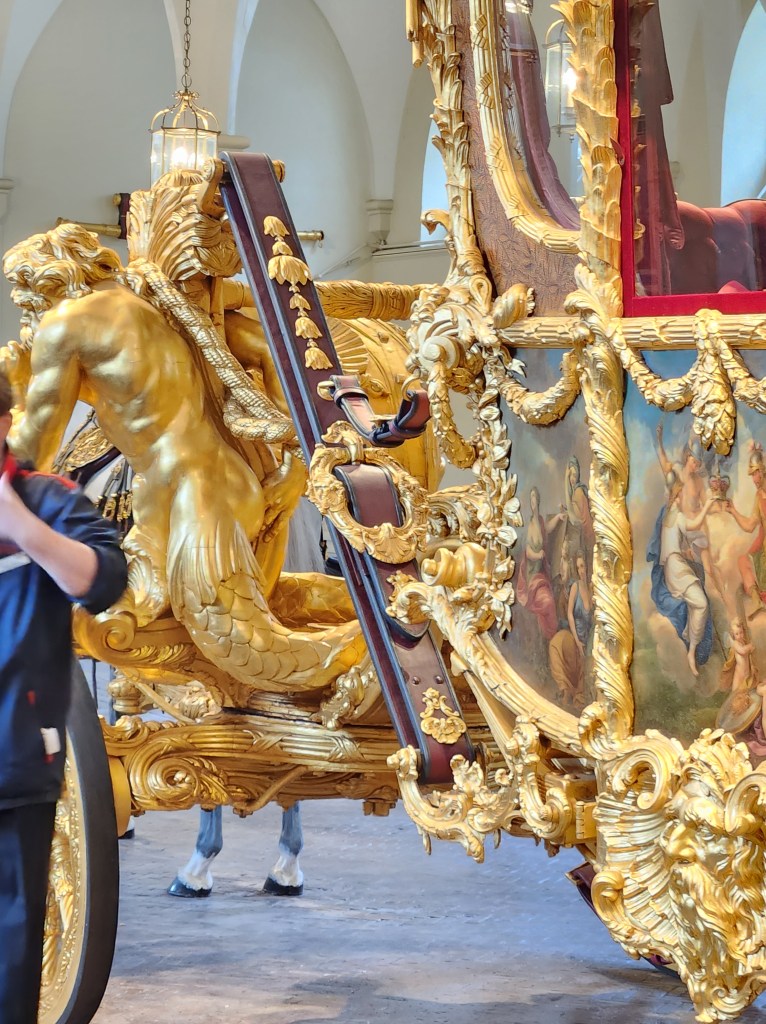
First built for King George III, the carriage is covered in symbols representing Britain’s naval prowess…

Domination of the arts and sciences…
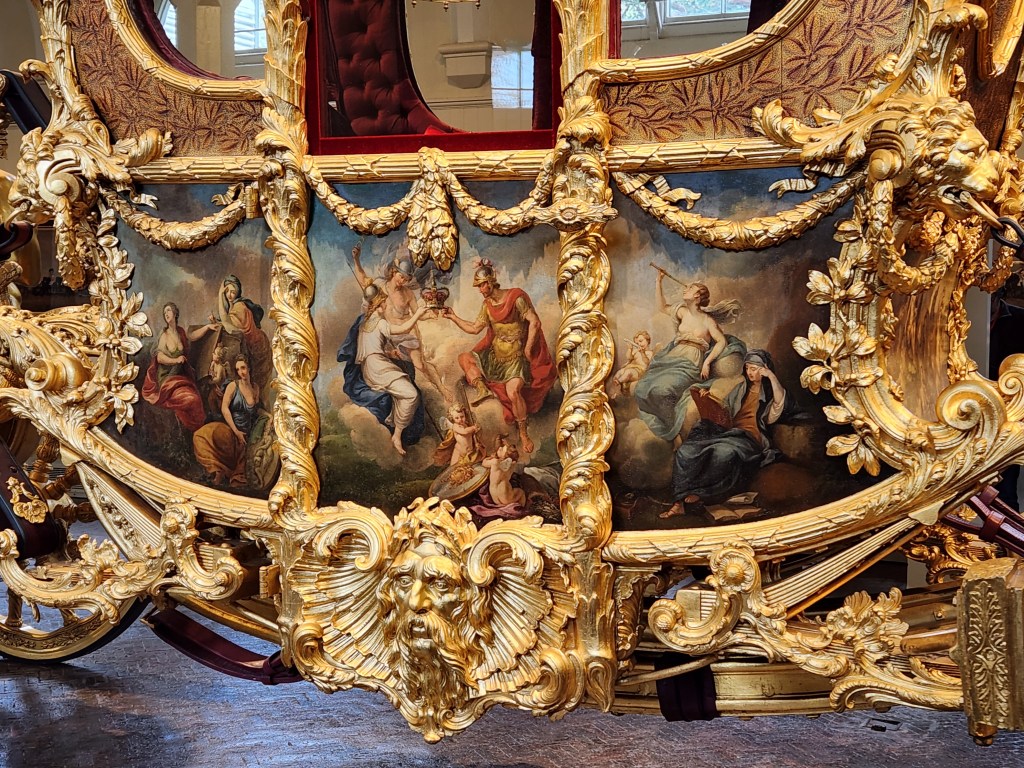
And, believe it or not, peace (note the broken spear and unused weapons), despite the fact that Britain was involved in a lengthy war at the time (the seven years’ war) that it had not yet won. People noticed and were suitably annoyed.
The Mews also contains a sleigh—a gift from Canada.

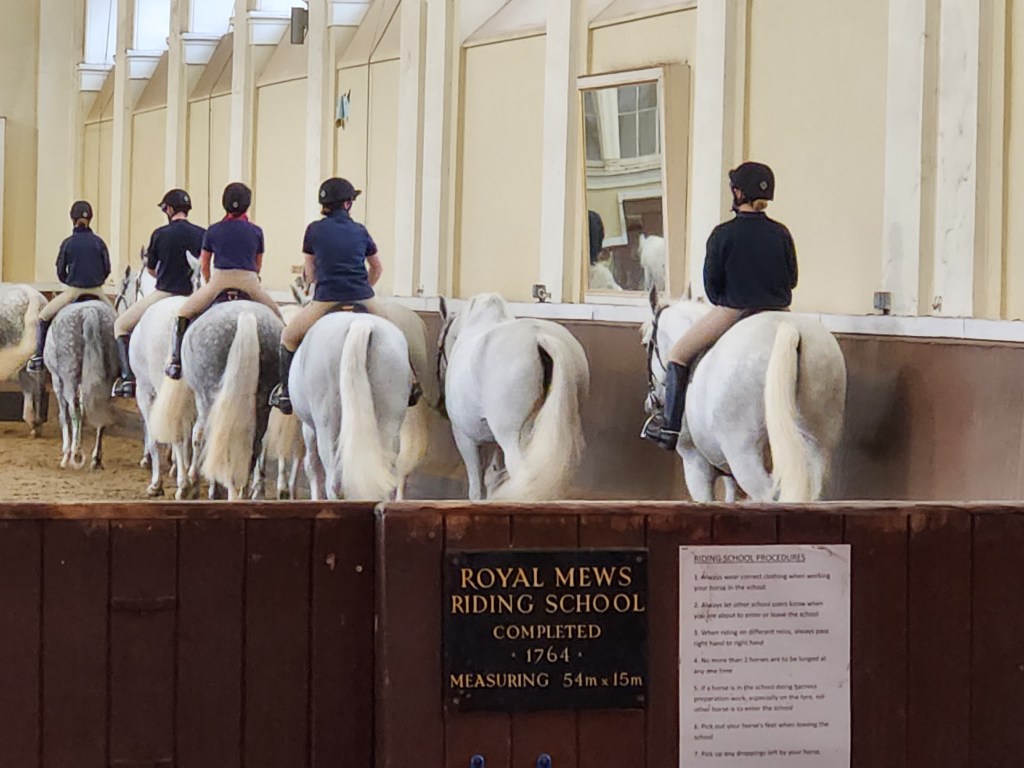
On our way out of the Mews, we saw riders (and horses!) training in the attached riding school.
Our next appointment wasn’t until the mid-afternoon, at the British museum. It was a 40-minute walk from where we were, and since we had the time, we decided that wandering across London didn’t seem like a bad idea.
So, we passed by Buckingham Palace again…
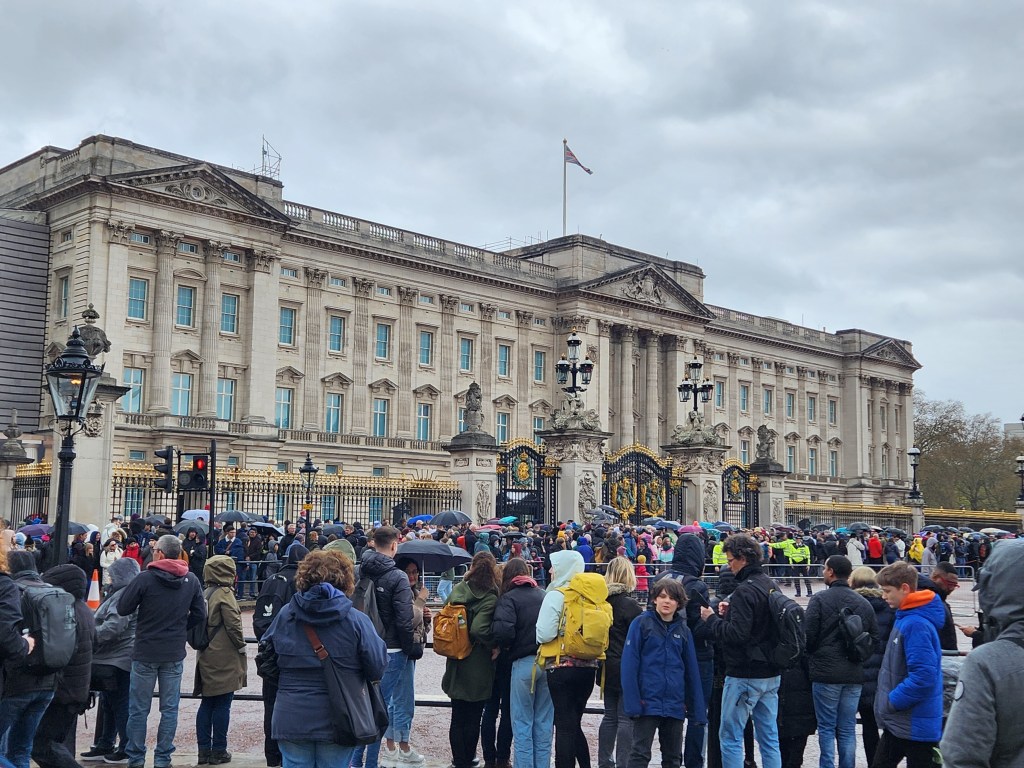
Through St. James’s park, and on to Trafalgar Quare.
We ate lunch at a place called Pizza Express, mostly because they’re pretty ubiquitous throughout London and we always enjoy judging a place by how badly they mangle pizza. The pizza was pretty good for fake pizza, actually, but this might have been the only time on the whole trip when we actually felt like dumb American tourists. We were all a little shocked when our pizza arrived unsliced, and we were expected to eat it with a knife and fork.
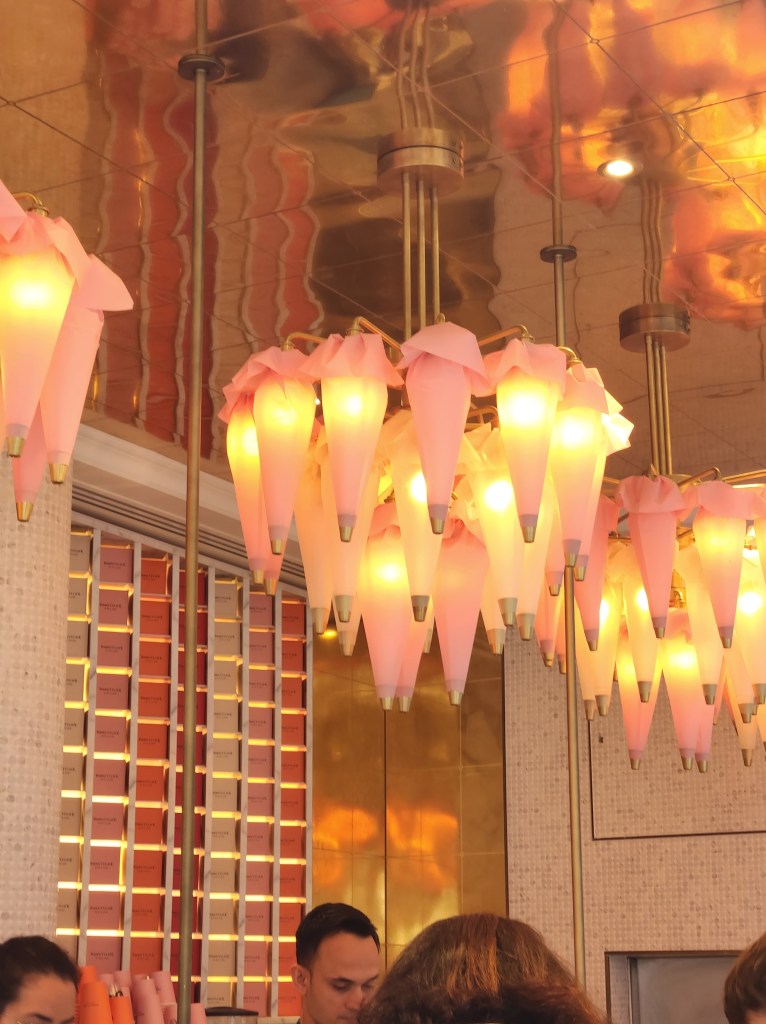
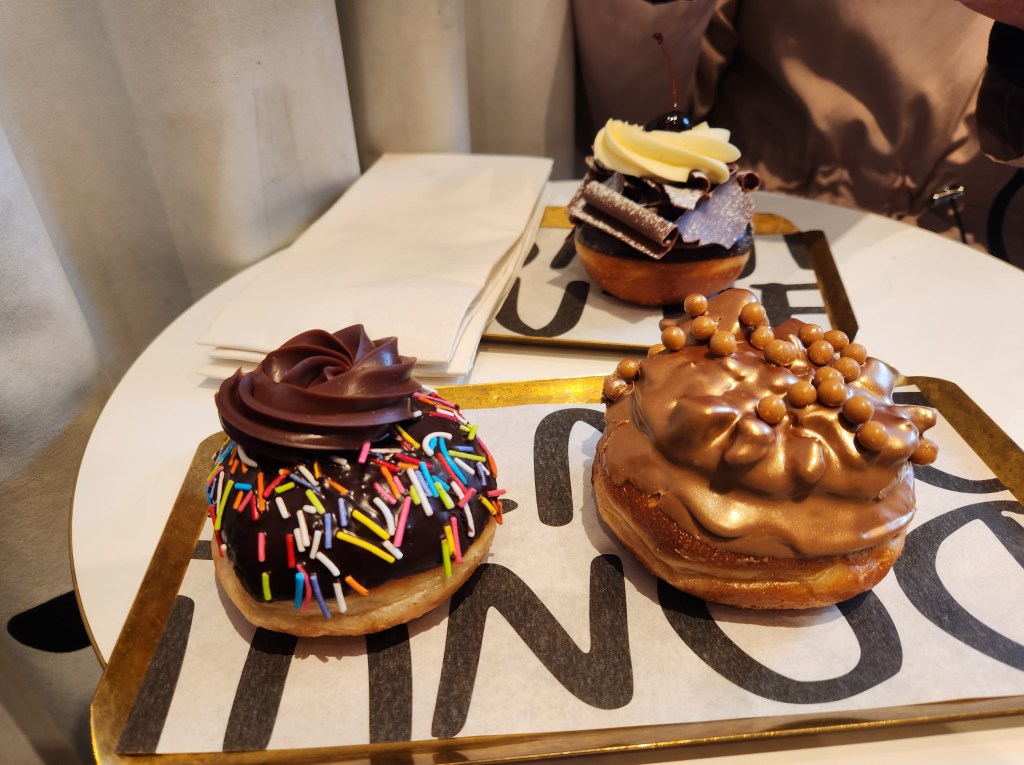
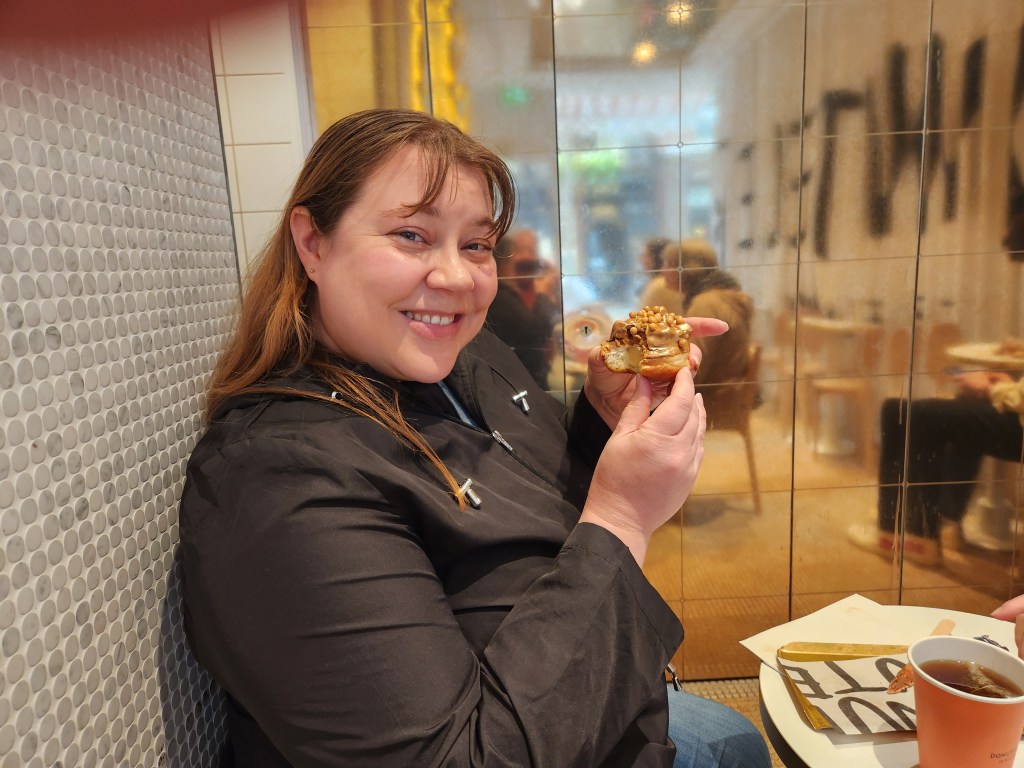
Continuing on, we ran across a donut place, called the Donutelier, that a friend of mine had recommended, and let me tell you, that friend was absolutely correct. Those donuts were heavenly.

Our trek to the British Museum took us through public gardens and ancient churchyards…
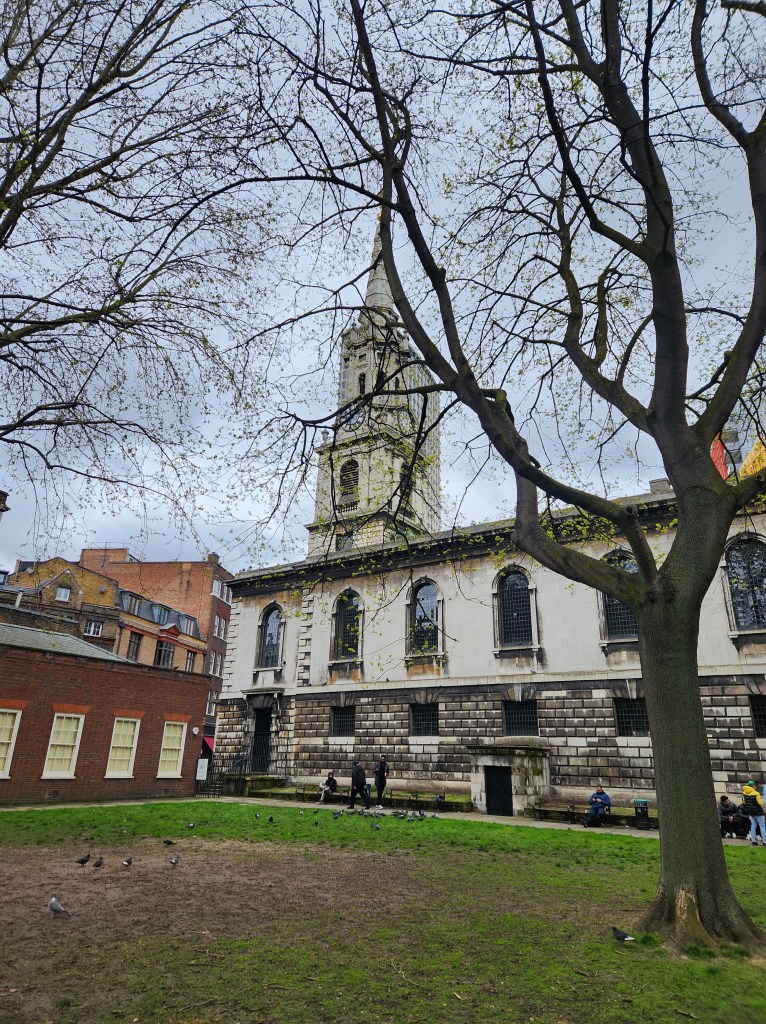
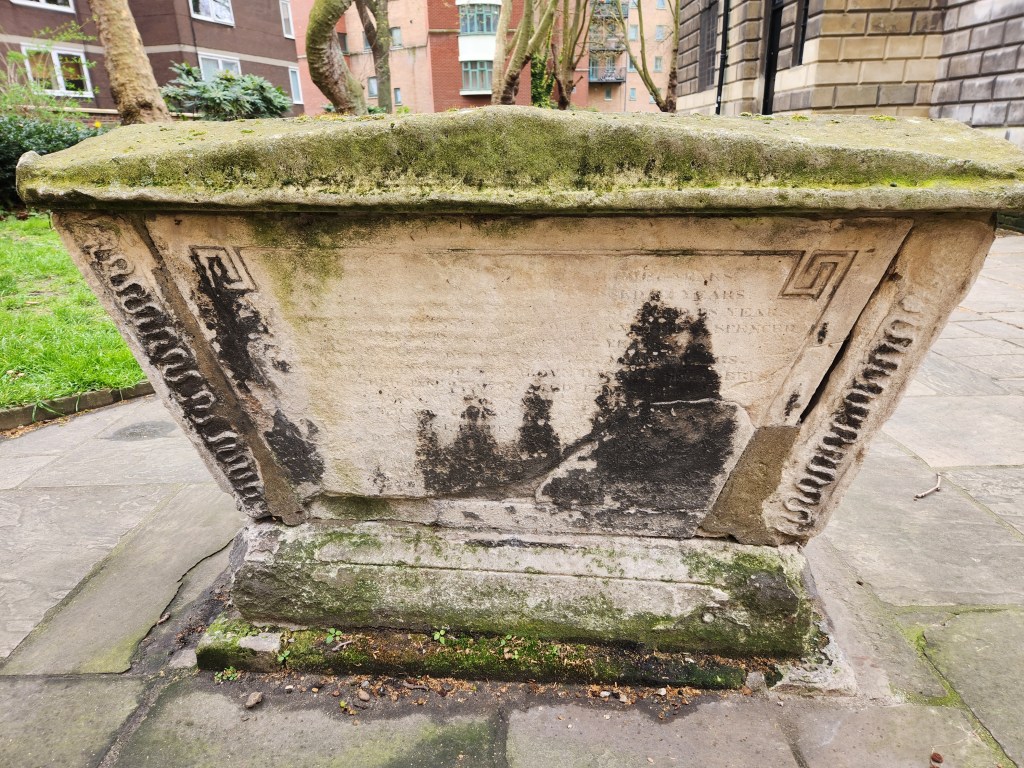
past beautiful buildings and quaint barbershops…

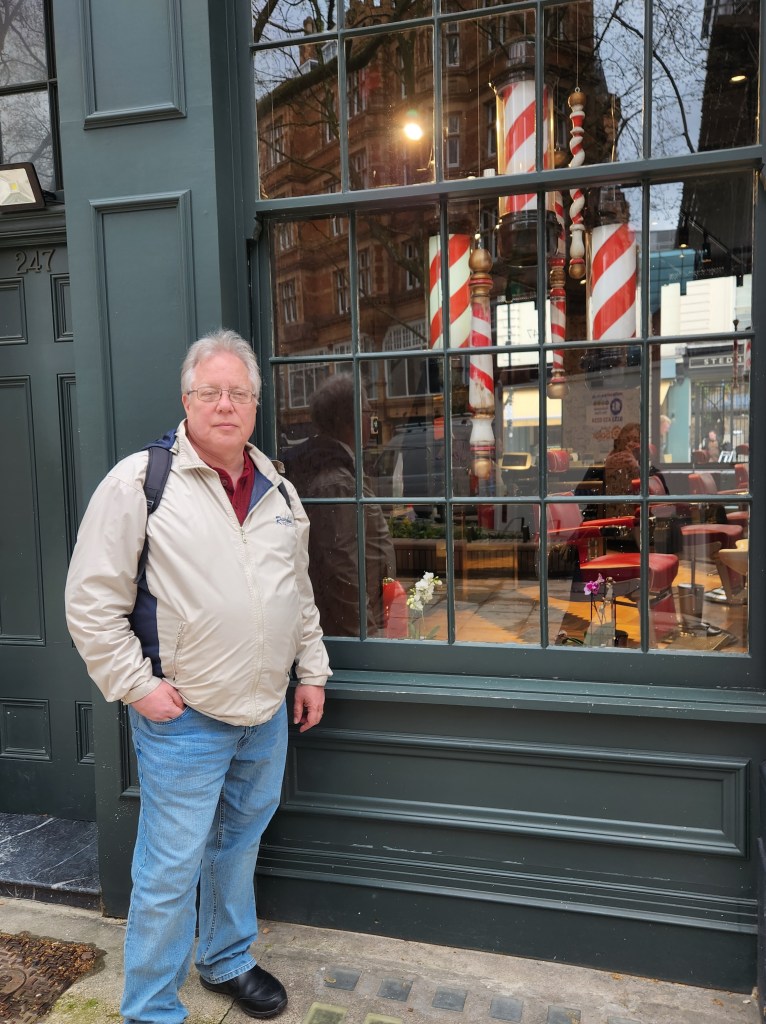
but finally, we were there.
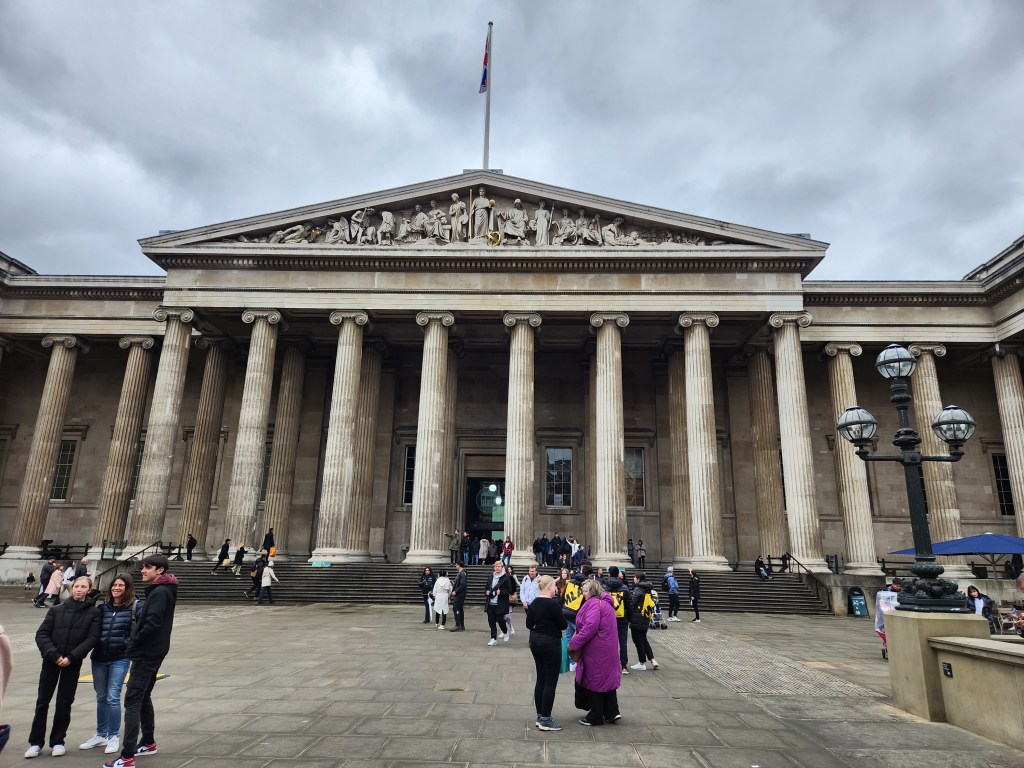
Our main goal was to see the Rosetta Stone.
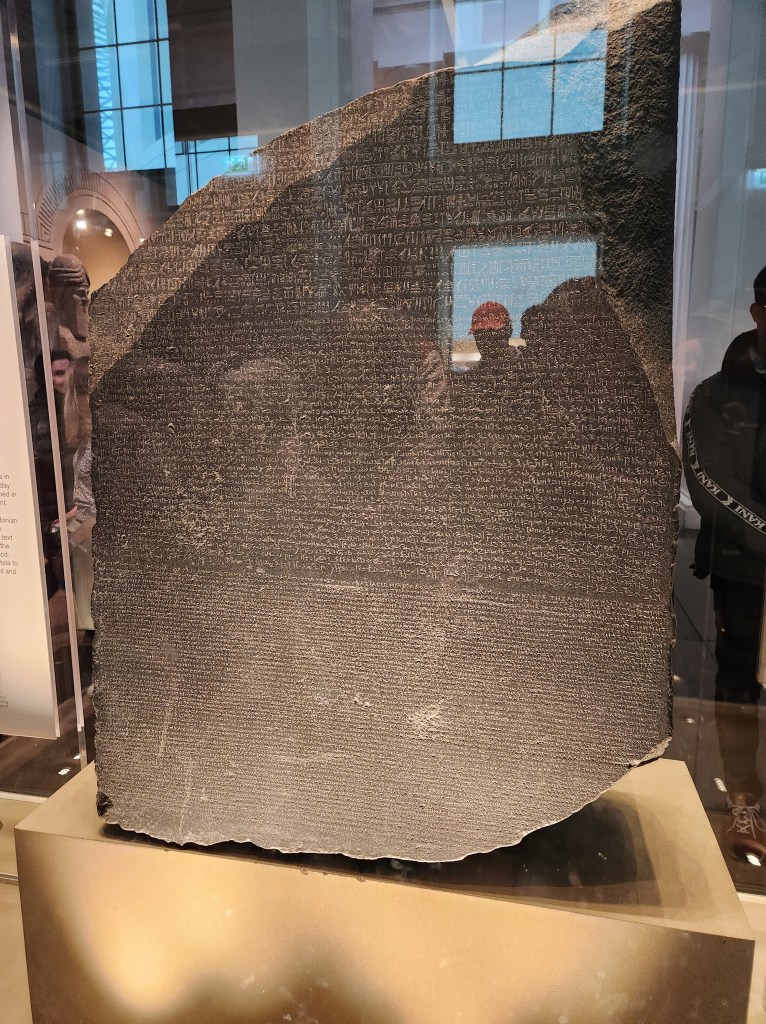
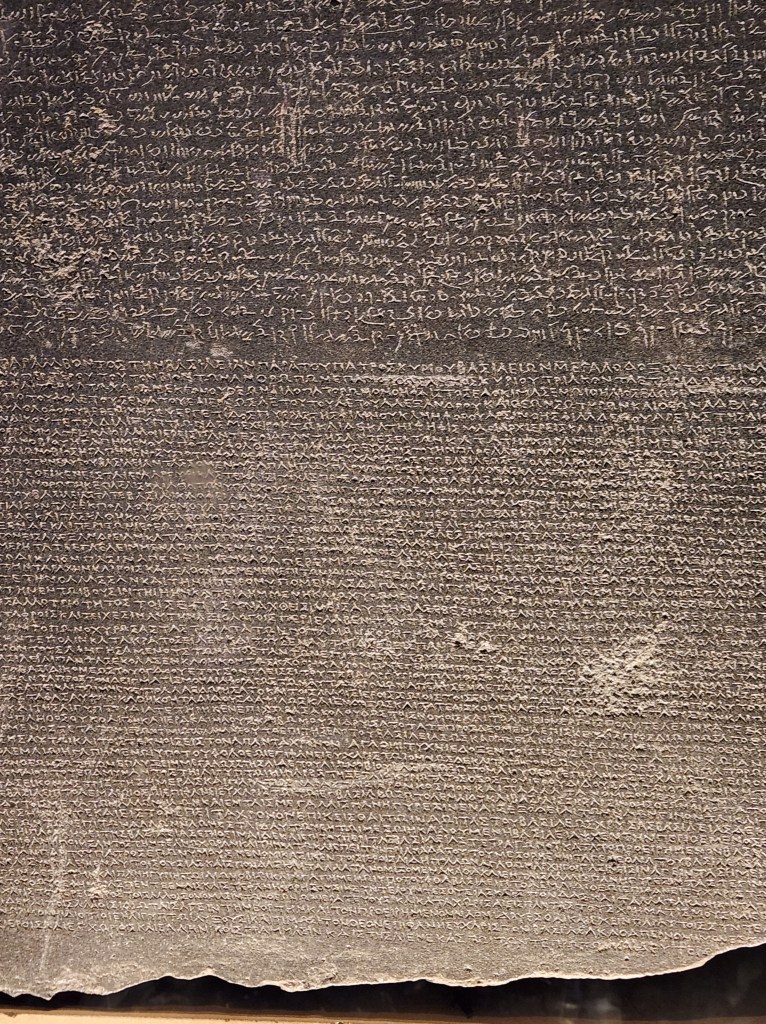
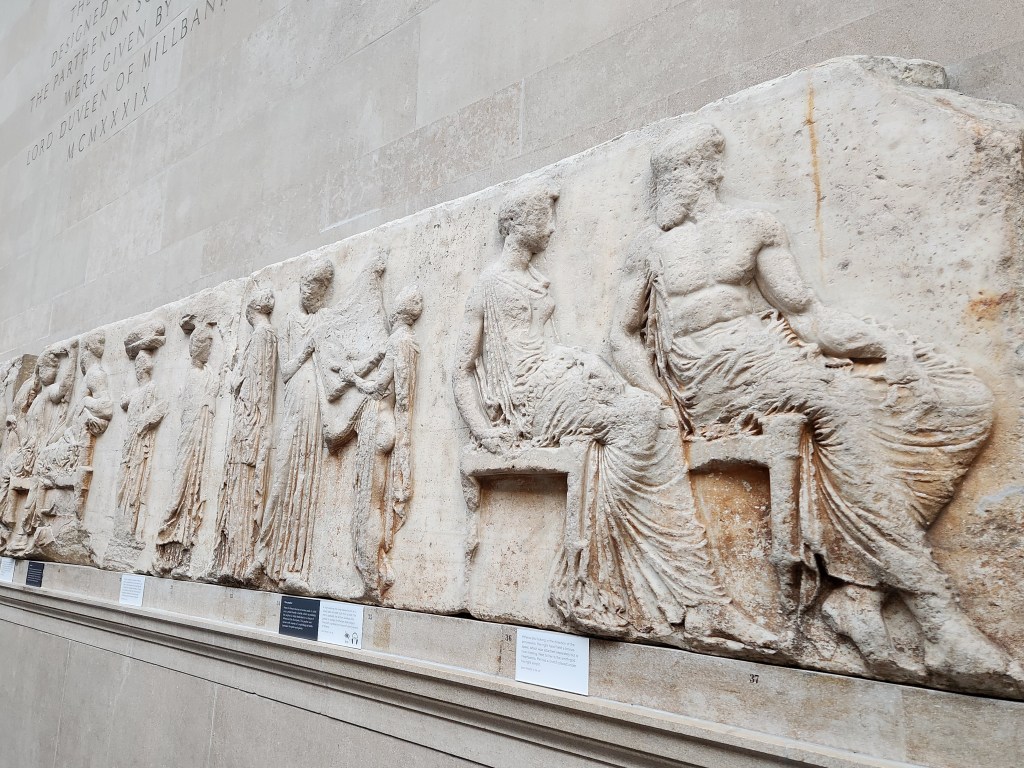
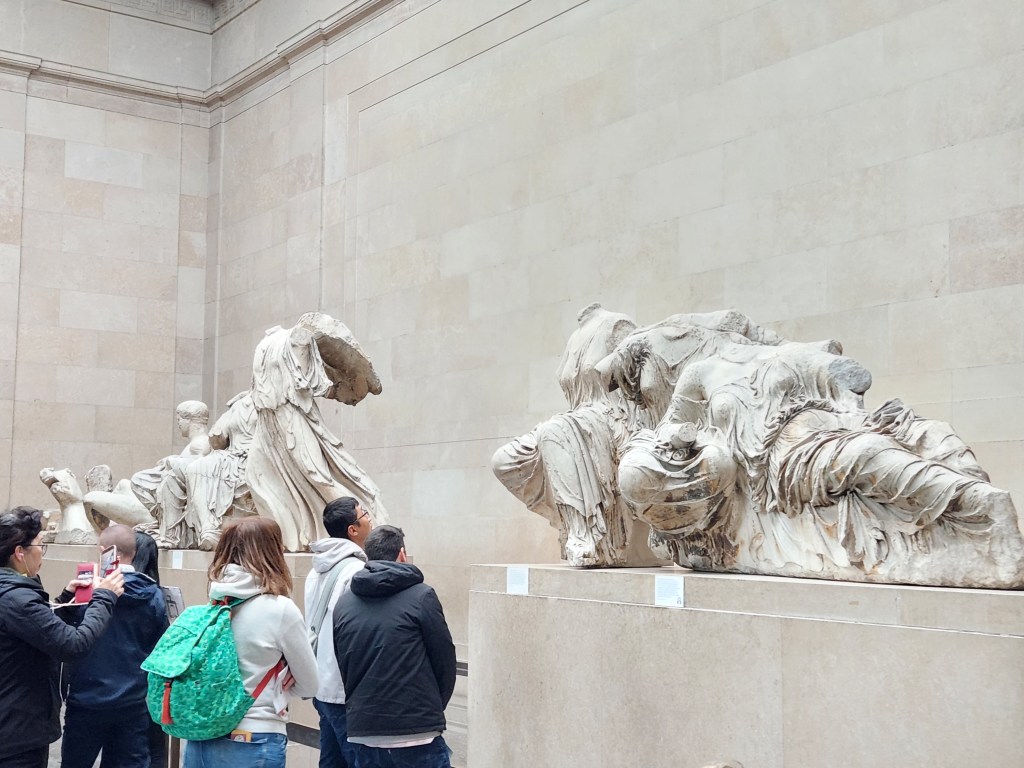
It was also cool to see bits of the Parthenon, but we couldn’t help feeling very aware of the sordid way that the British acquired a lot of this stuff.
The Easter Island Moai is also a thing we can’t see at our excellent museums in Chicago, so that was a must-do as well.
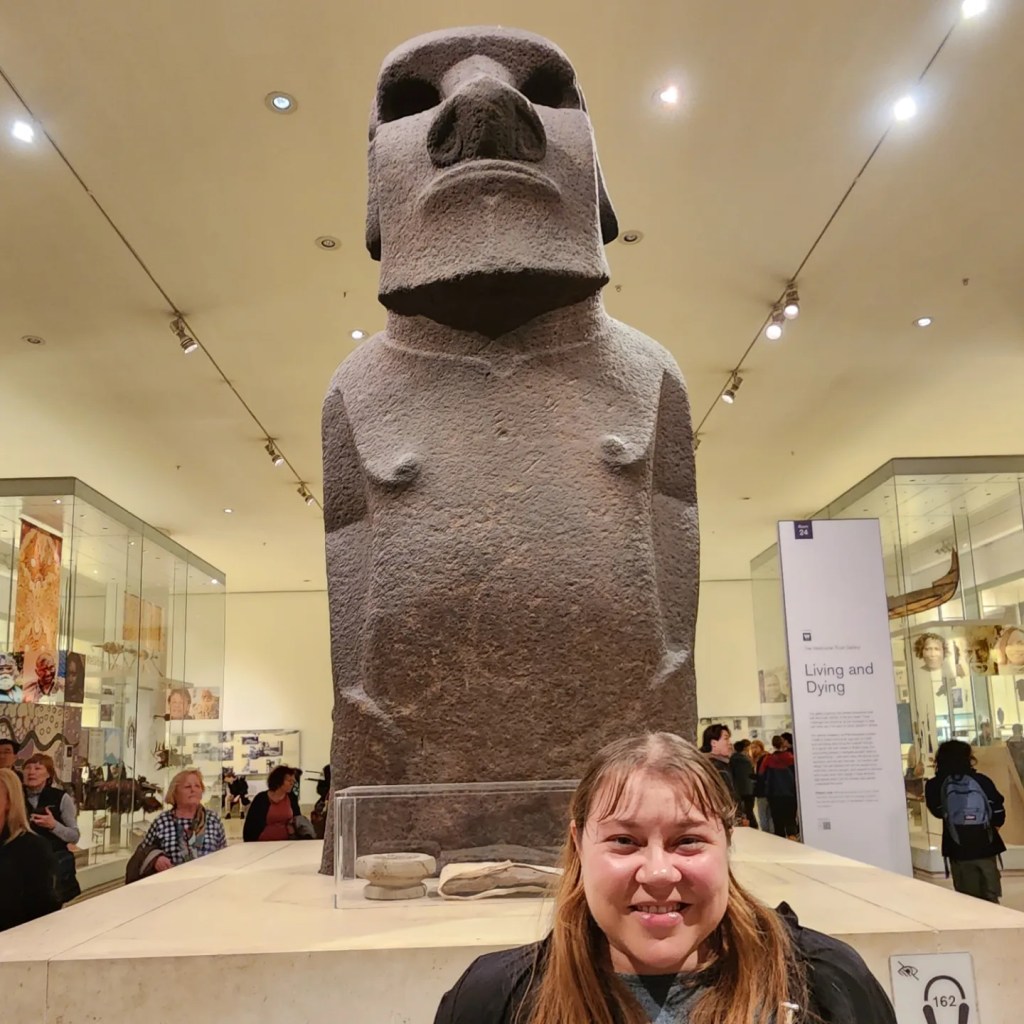
But as we continued to move through the museum, as neat as it was to be able to get in close proximity to a lot of the artifacts (the Field Museum would have put all this stuff behind glass, for sure…)
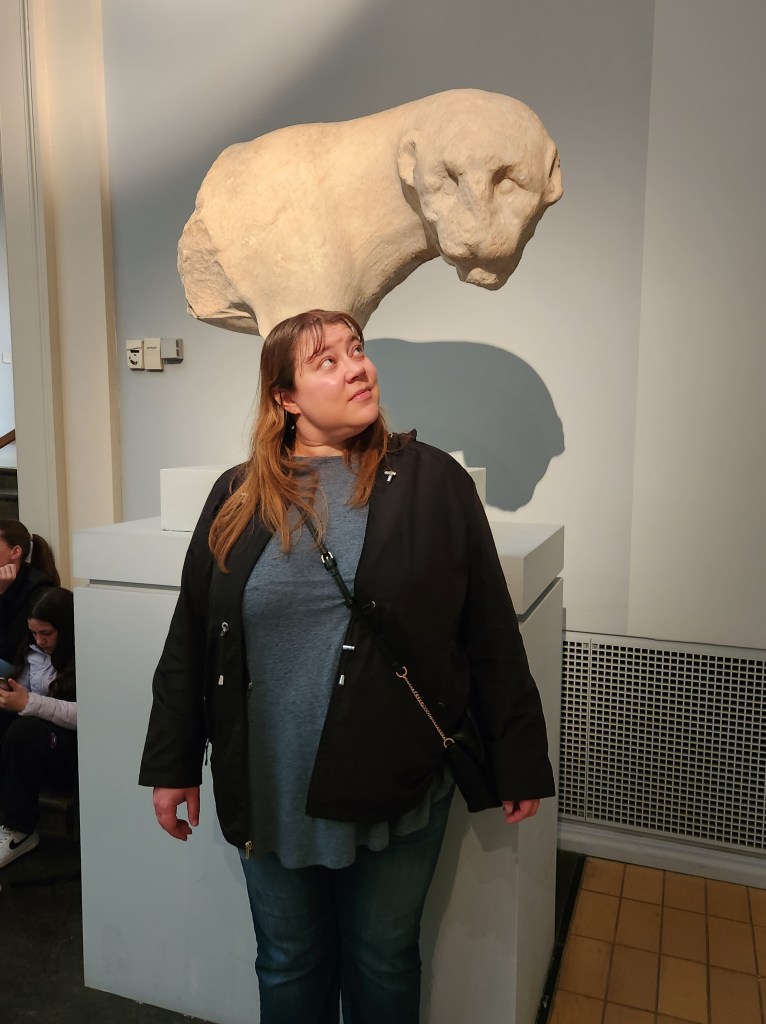
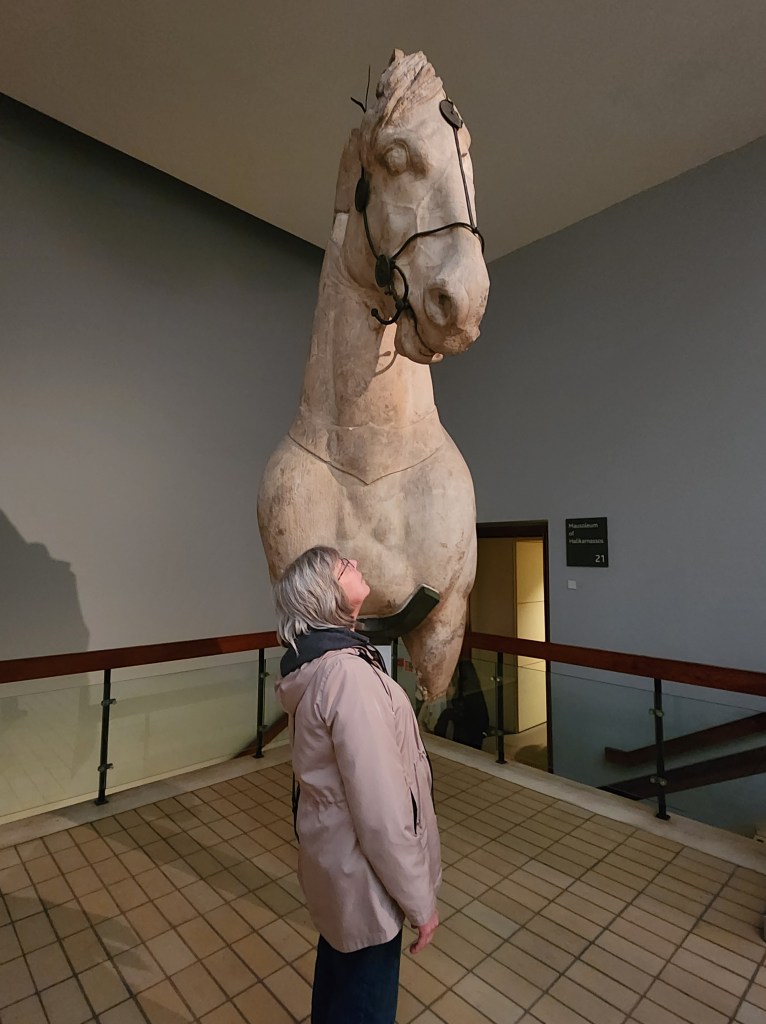

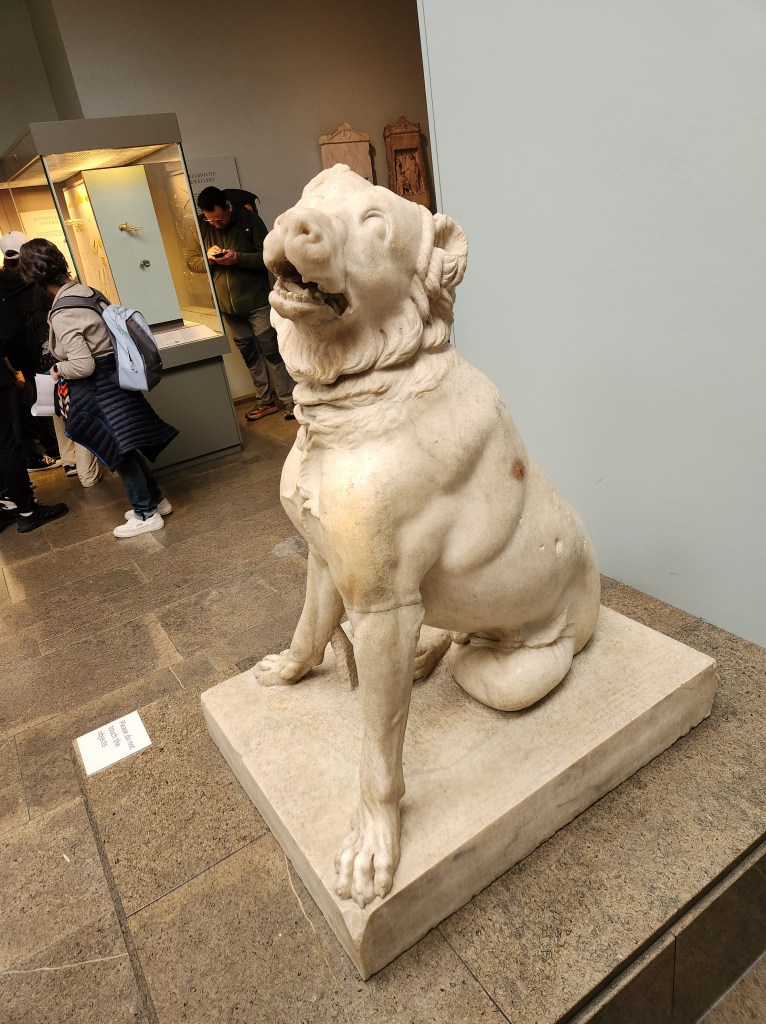
We ran into a bunch of frustrating things. The museum clearly wasn’t laid out for this kind of crowd, and the tourists around us were definitely of the ‘dumb’ variety, the kind that don’t understand concepts like ‘taking turns’ or ‘how elevators work’. Plus, we can see a lot of the rest of this stuff in Chicago. So after about an hour and a half, we’d had enough of the British Museum.
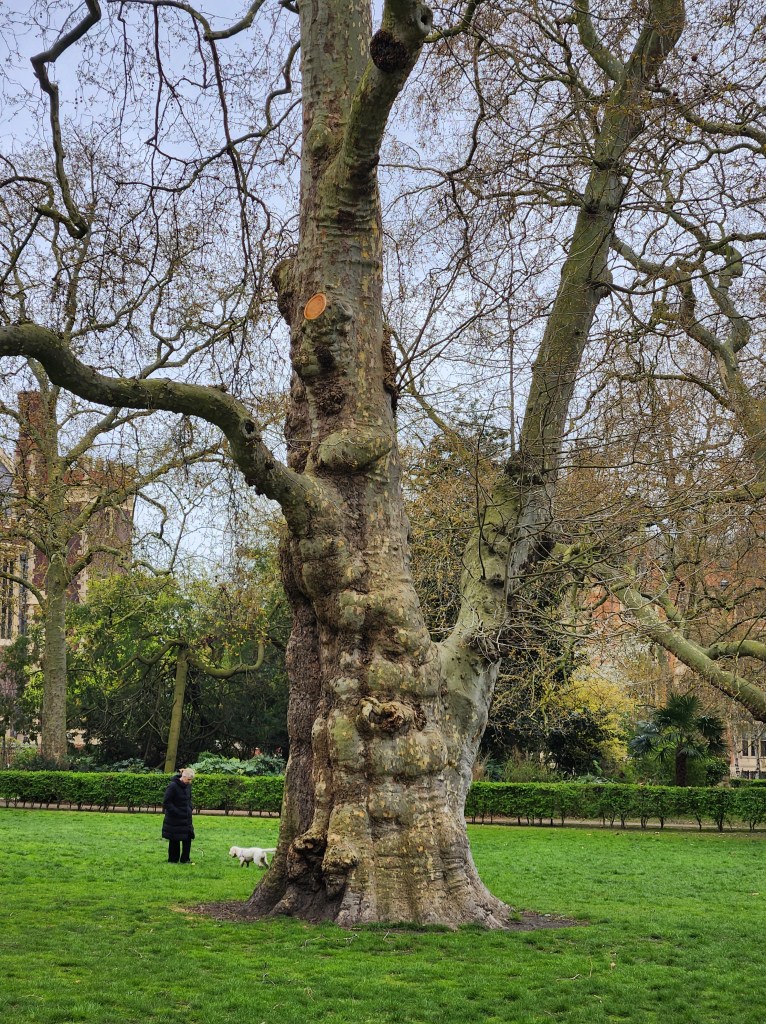
Our meandering route back to the hotel took us past Lincoln’s Inn Fields, a pretty little public park that was extremely tranquil and contained a bunch of old, knobbly trees that definitely had fairies in them…

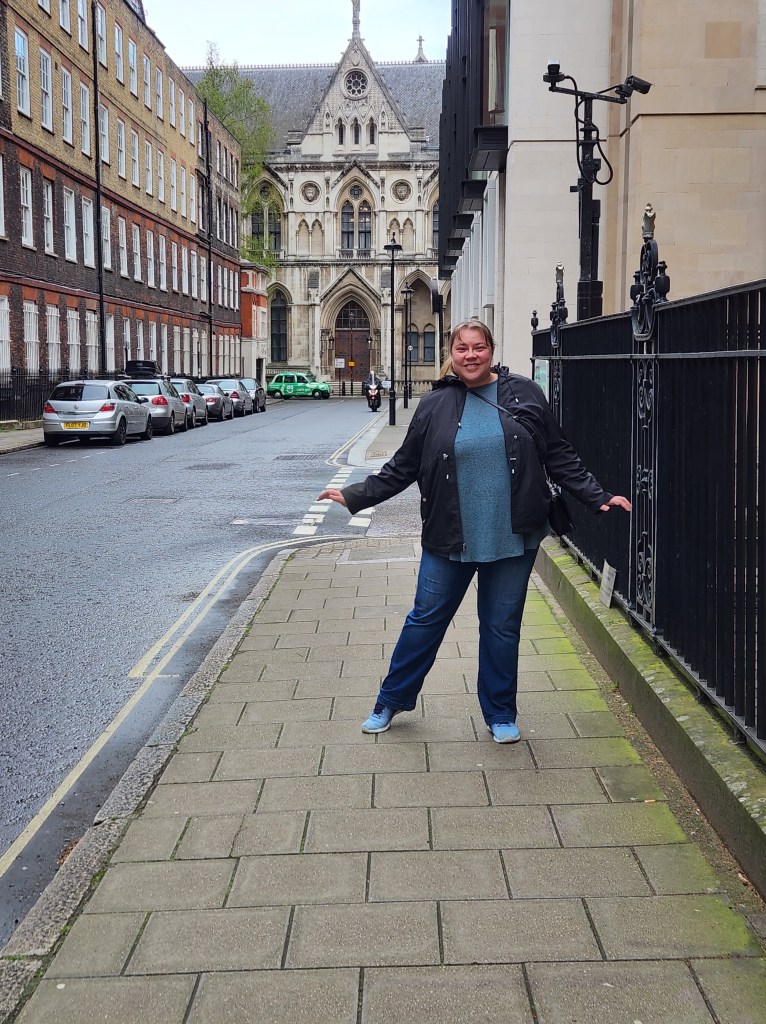
As well as the Court of Justice…
And the 300-year-old Twinings flagship store.

Tomorrow, I have to go back to Chicago and return to normal, but at least I’m leaving England refreshed and inspired.
 Laura Writes