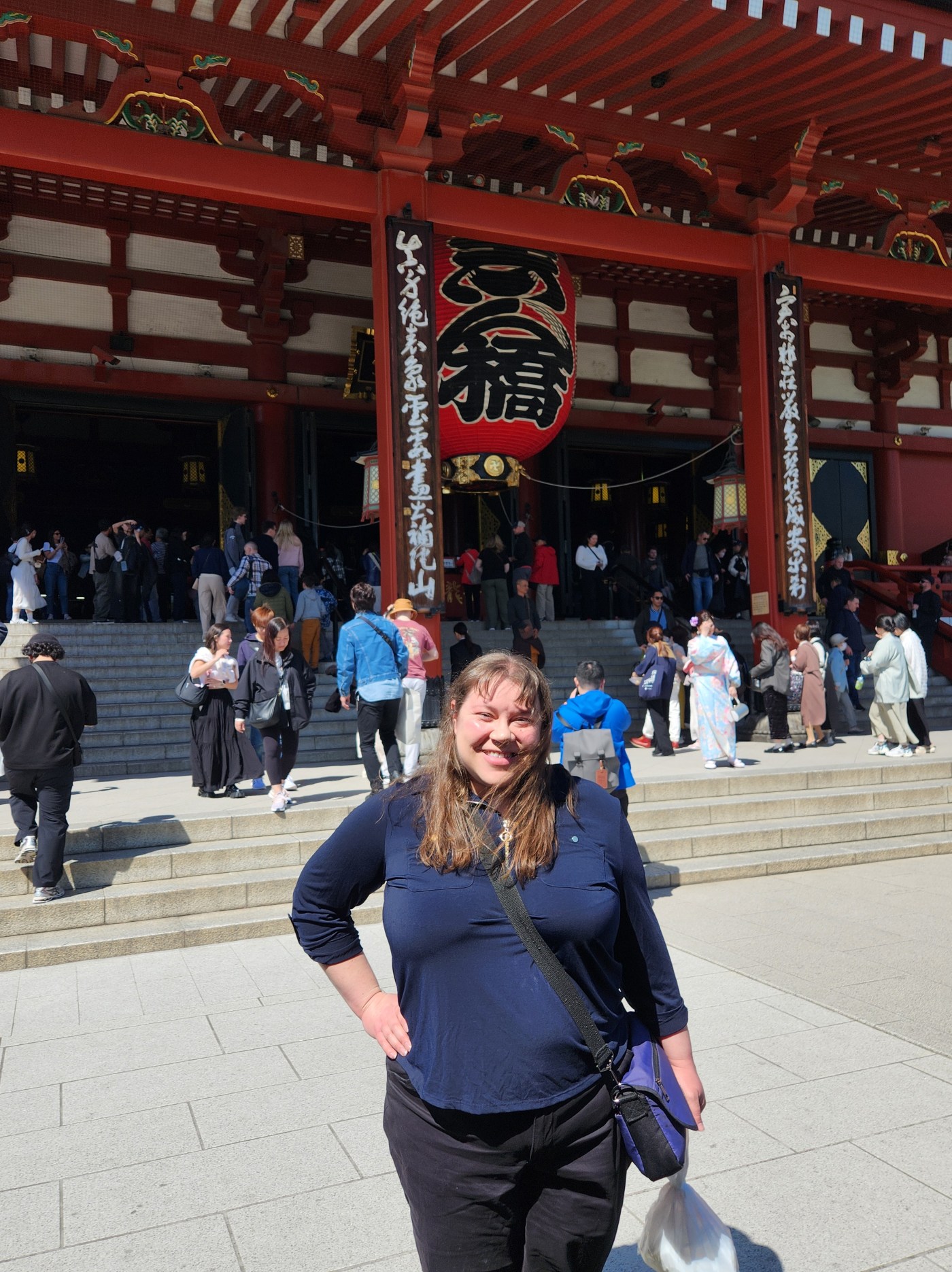
I expected Tokyo to feel more foreign. It doesn’t. In some ways, London felt more alien to me, as cities go, but Tokyo feels like any other modern city. It probably helps that it isn’t too hard to find someone that speaks English anywhere I go. I mean, the buildings are slightly shorter and I can’t read the signs, but if I squint, it’s almost like being back in Chicago.
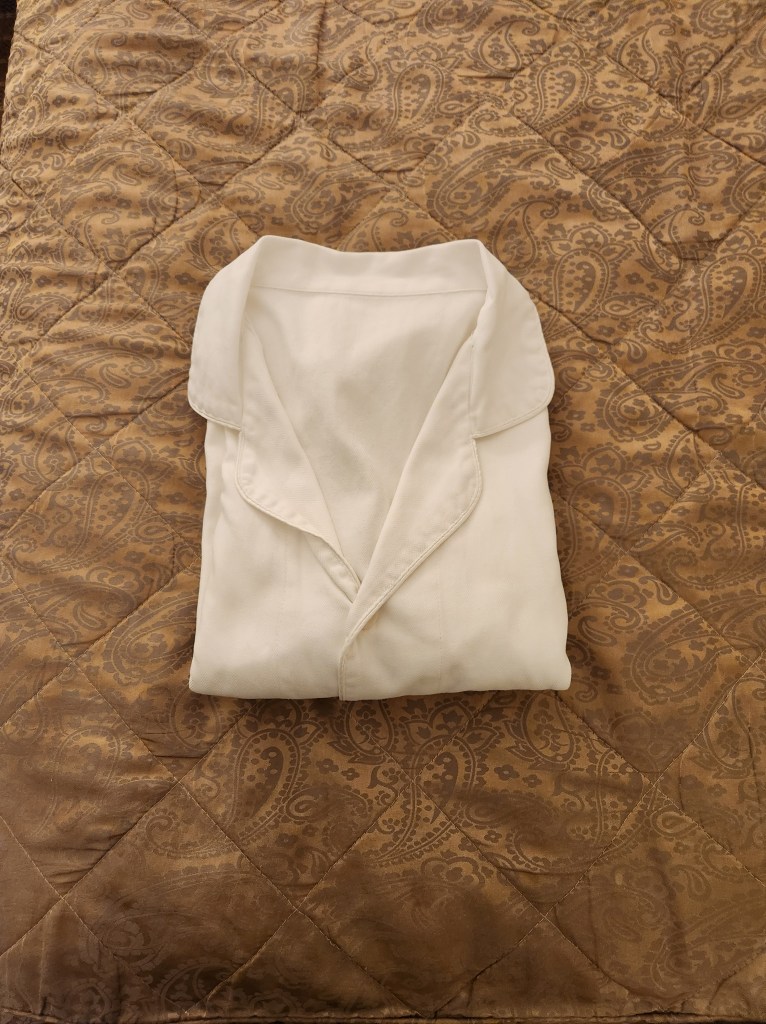
My hotel room, though? It’s pretty extra. When you walk in there are a selection of slippers for you to wear. Etiquette in Japan is that immediately upon entering your house you take off your shoes and switch to slippers, and then there should be a second set of slippers that you switch to just for entering the bathroom. I’m not sure how I, a person recently diagnosed with OCD, haven’t already been doing this, but it’s entirely possible I might start. Apart from that, there were neatly packaged toothbrushes waiting for me in the bathroom, and on each of the twin beds, a set of straight-up 1950s button-down pajamas.
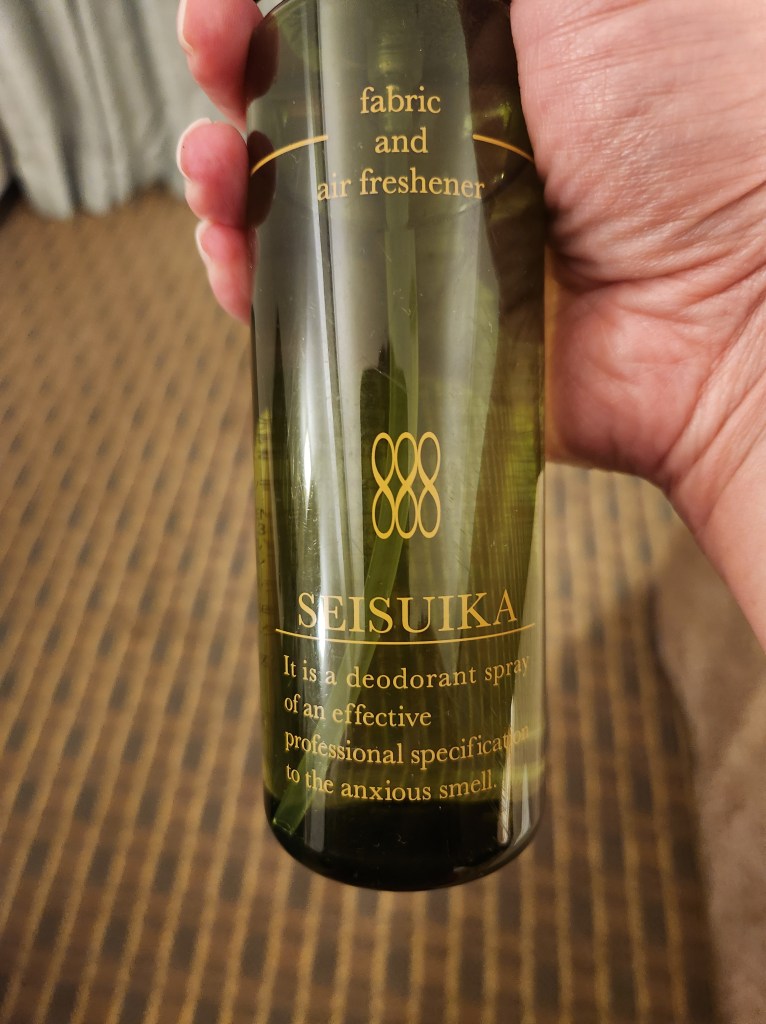
There’s a shoe brush in the closet, and a bottle of air freshener spray on the counter ‘of effective professional specification to the anxious smell’.
In the lobby, there’s a little station with cotton balls, Q-tips, razors, hair brushes, and a bunch of different types of tea bags. This isn’t meant to be a fancy hotel–it’s my understanding that things are just like that here.
So obviously, after a grueling twelve-hour flight, I had a great night’s sleep, and woke up this morning ready to explore. It’s an easy walk from my hotel to the train station, which also happens to be the nearest train station to the convention center, and they know exactly who their audience is going to be for the next week.

First thing on my list today was Senso-Ji Shrine, because according to my research, if you don’t get a picture at this shrine, are you even in Japan?
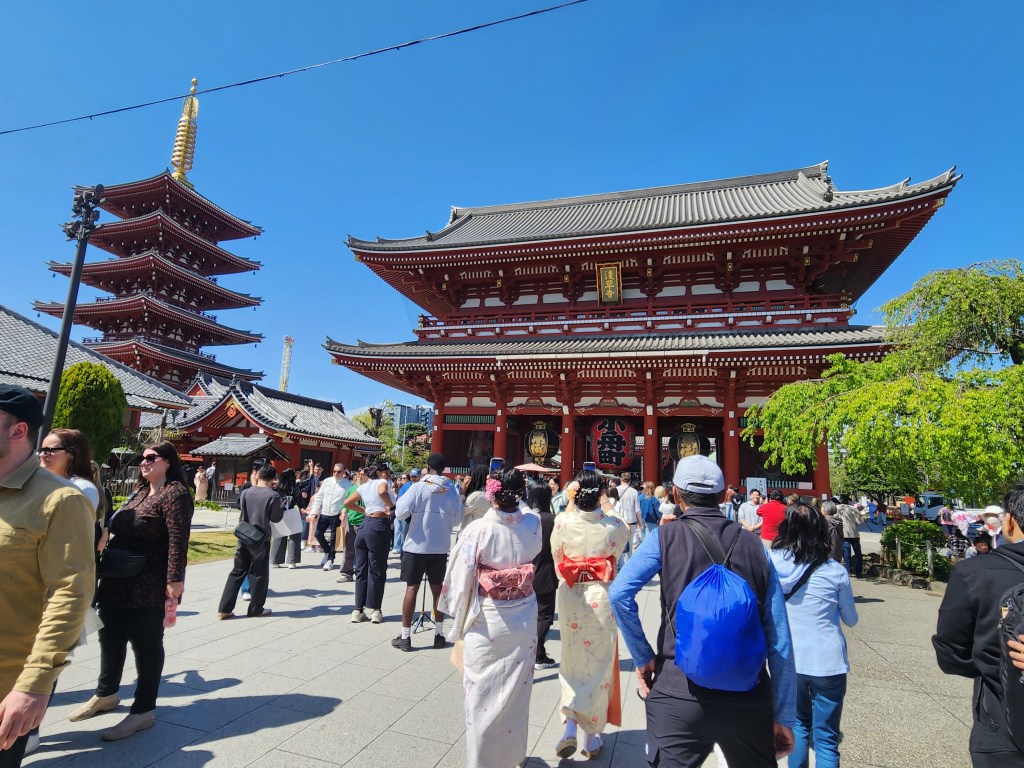
I definitely wasn’t expecting that I would just stumble out of the subway and it would be right there.
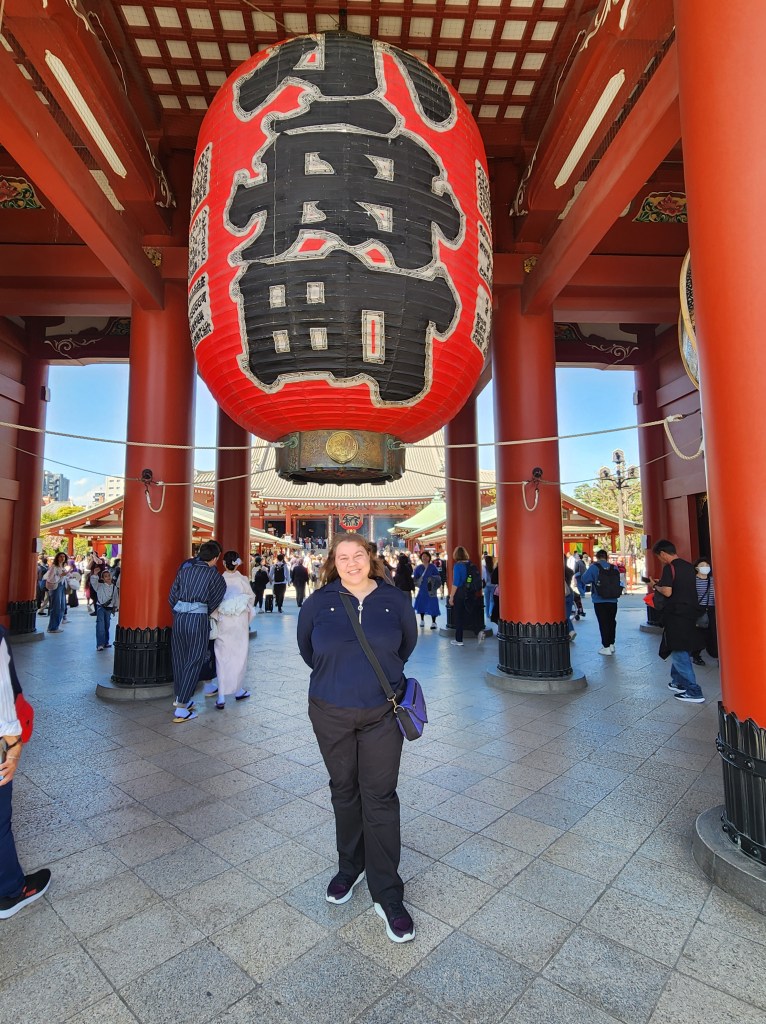
What I was expecting–and I was delighted to find it so–was that the walkway to Senso-Ji is lined with a market of food and souvenir stalls. By this point it was lunch time, so I snacked my way to the temple. I had been advised that anything on a stick would be delicious, and that’s how I discovered dango–sweet balls of rice flour on a stick. They may now be my favorite thing in the universe.

Near the shrine was a wall of what looked like little safe deposit boxes, and I felt like I had to see what that was about. It turned out to be a fortune telling station. Around the wall were some little metal cylinders full of chopsticks. You shake up the cylinder and draw a chopstick, and it will have a number on it. Then you find the little drawer in the wall that has that number, and your fortune is inside.

When I pulled mine, it was in Japanese on one side and English on the other. The Japanese man next to me happened to glance at mine and went ‘ooooooooooh’ with a genuine ‘oh shit’ look on his face.
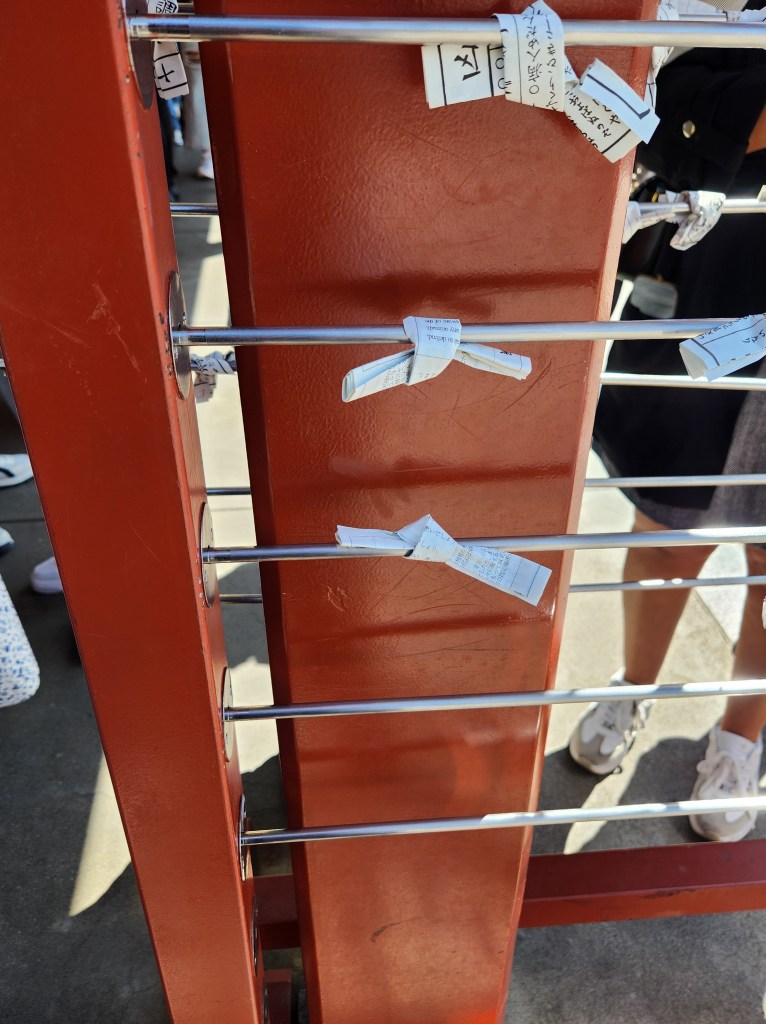
I asked him if it was bad–he said yes, but not to worry. Near the fortunes were little wire racks. If you draw a bad one, you roll it up and tie it onto the rack, leaving the bad luck behind. So I did!

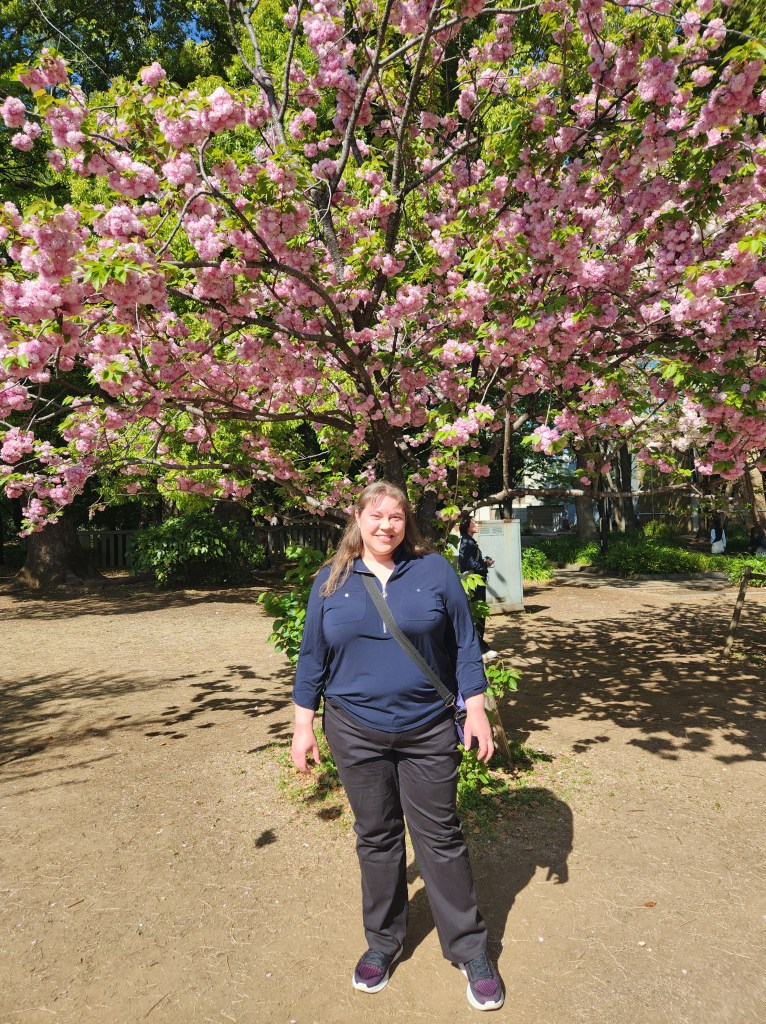
When I’d filled up on snacks, I headed over to Ueno Park. Near as I can tell, it’s like Tokyo’s equivalent of Central Park or the National Mall: it’s a gorgeous walk surrounded by trees, flowers, and fountains. Lined around the outside are a number of museums and the Ueno Zoo.

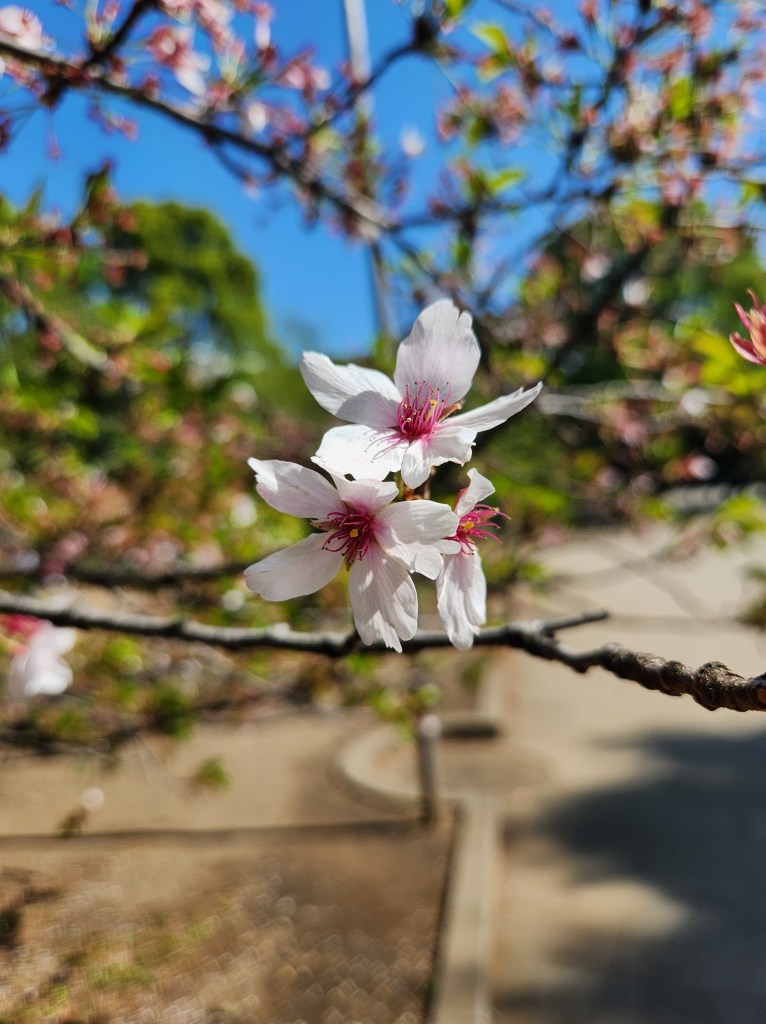
The cherry blossoms are kind of winding down now, but every here and there in the park there was still a tree in full bloom.
I refuse to apologize for the fact that I love museums, so I had to check out Tokyo National Museum, and I was not disappointed. First of all, they’ve got some really old stuff there; like, 12,000 years old. ICE AGE old.
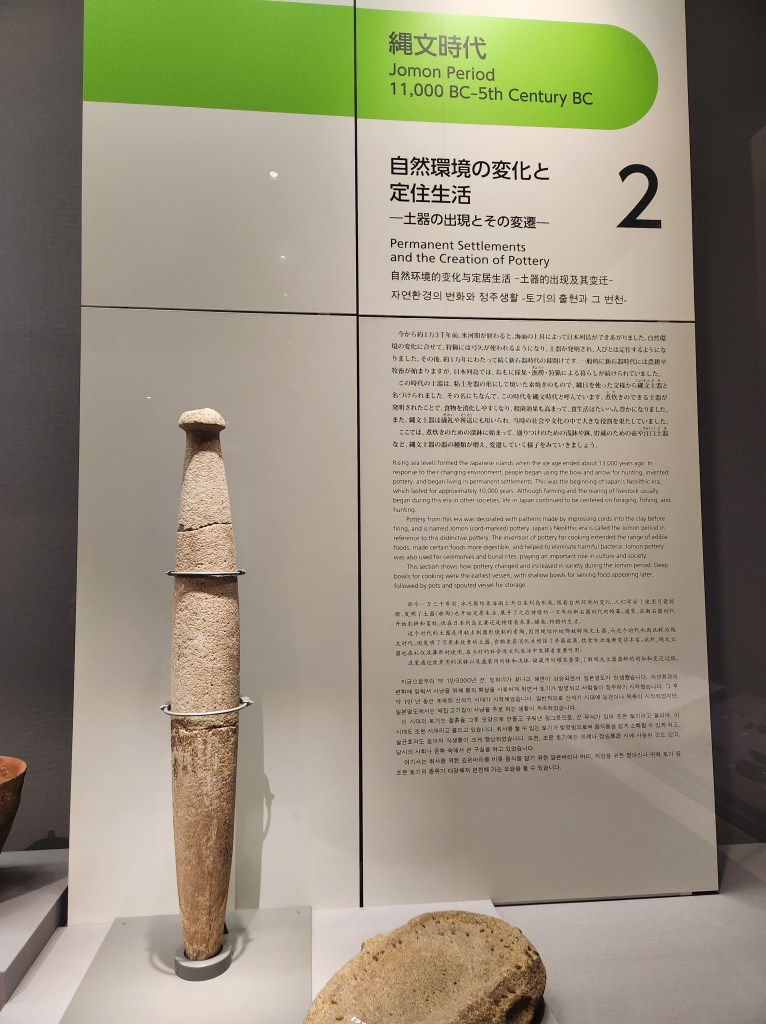
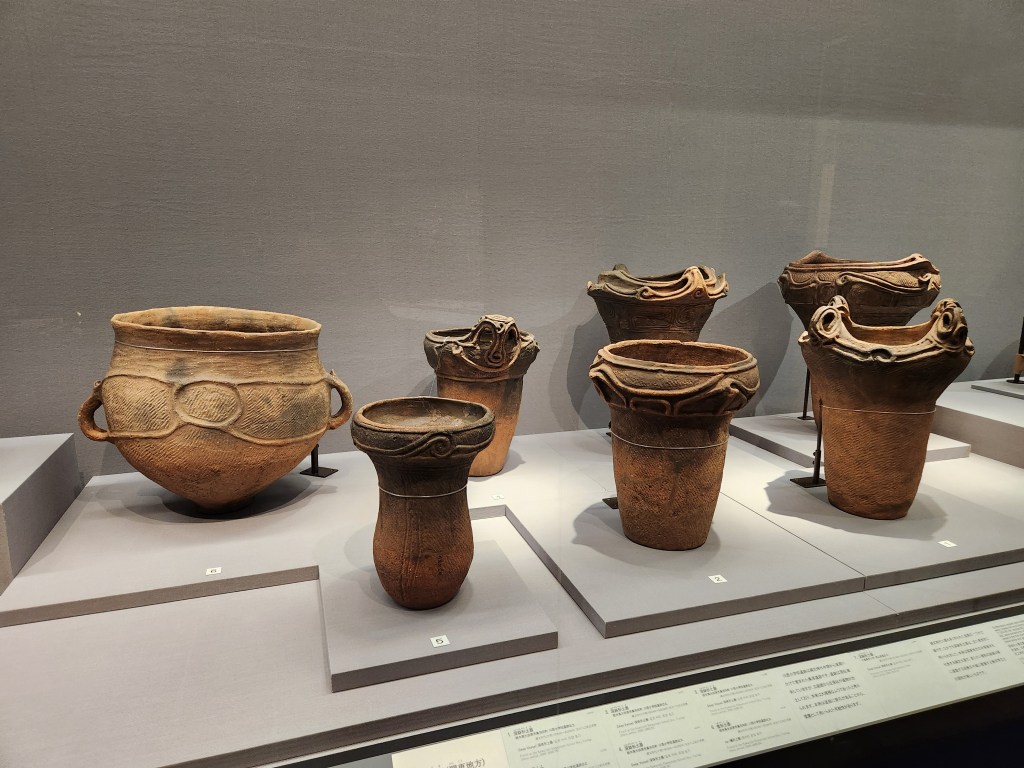
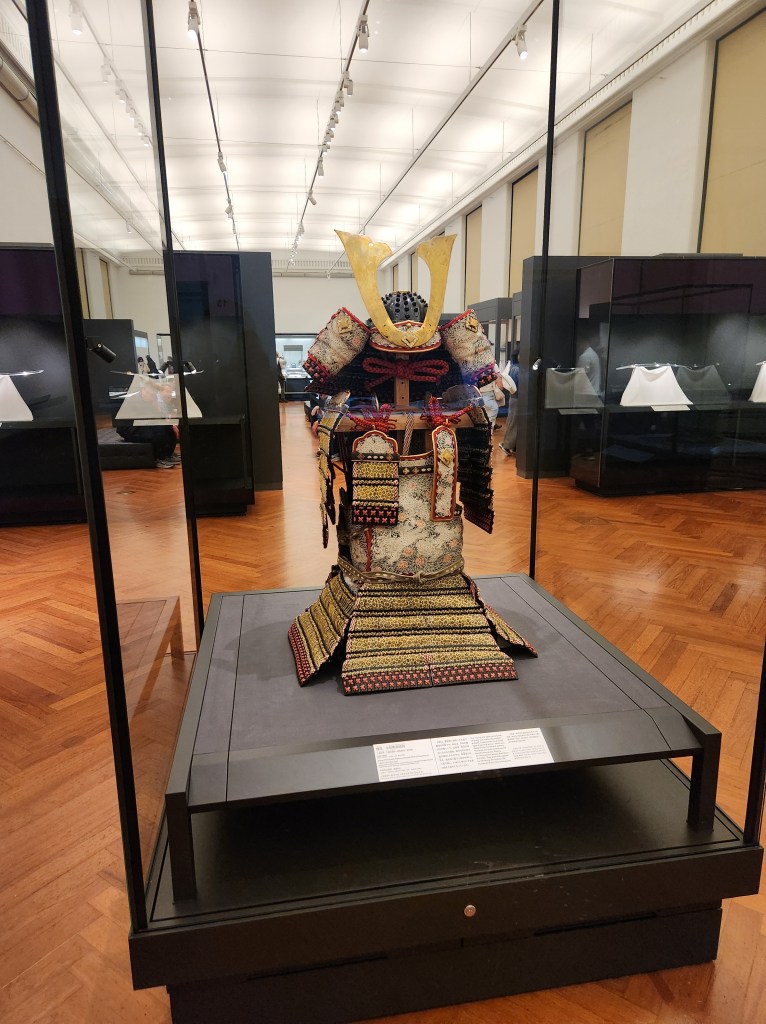
But of course, you can probably guess what I was really there to see: Samurai stuff.

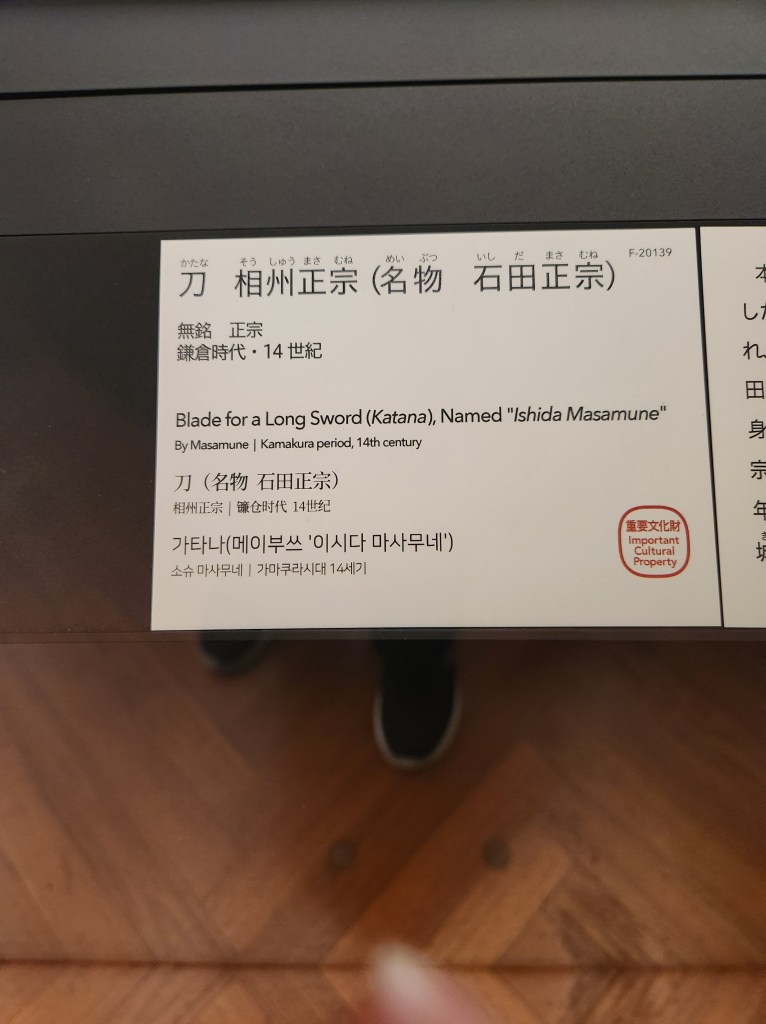
The sword display was everything never knew I wanted from a sword display. All the blades were displayed without their hilts so that you could see the swordsmith’s mark, which would normally be underneath it. The placards explained stuff about not only who used each blade and who made each blade, but HOW. And they were really, really pretty.

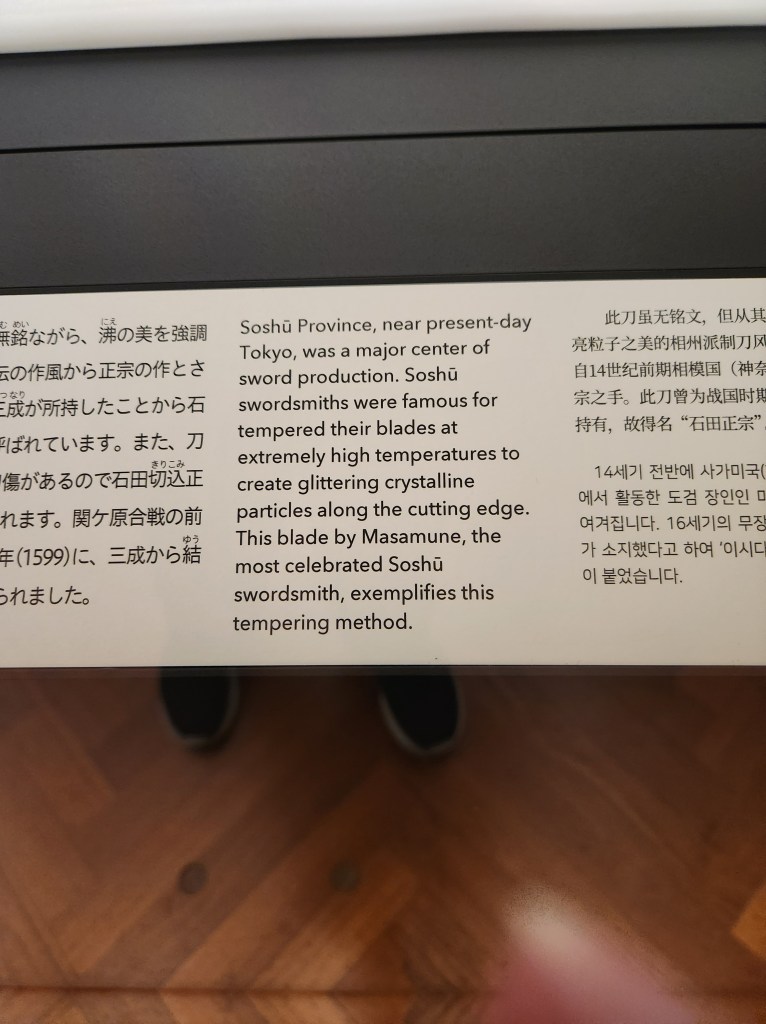
Other stuff that made this museum heaven for Laura: thousand-year-old poetry written on paper inlaid with sparkly minerals

Beautiful silk screens

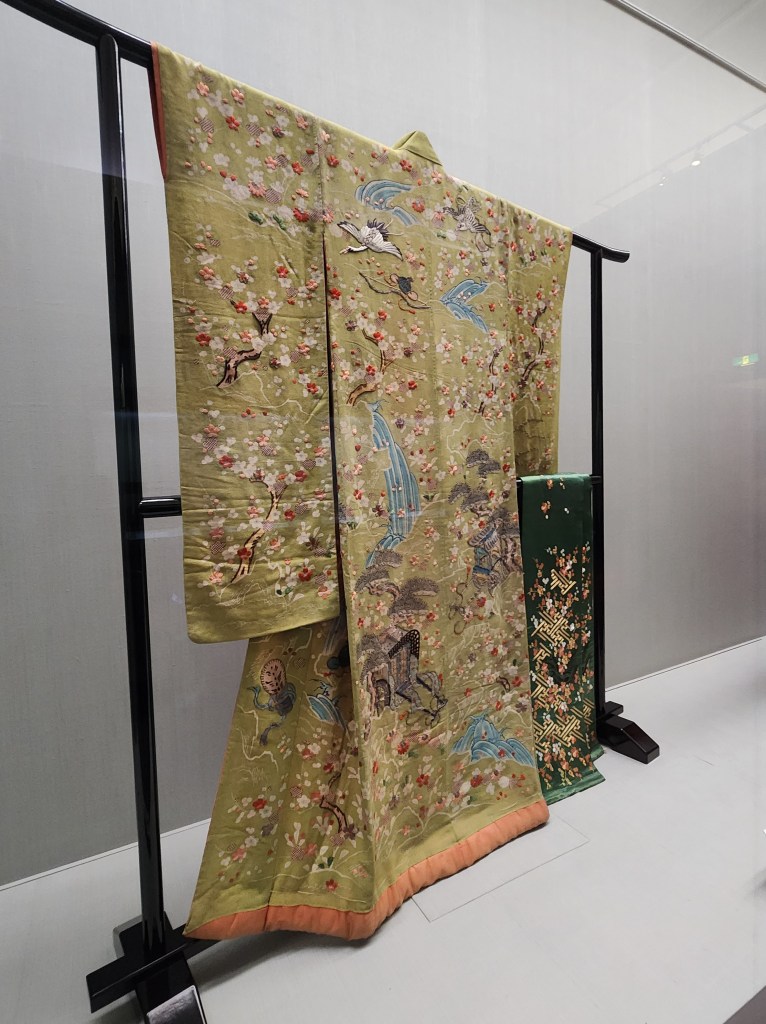
And gorgeous antique kimonos.
I had dinner at a place called Yakiniku LIKE, where each customer has a tiny grill built into the table in front of them and they bring you the meat to grill yourself. It was delicious. I only accidentally set fire to my chopsticks once.
 Laura Writes