First of all, if I could ride the Shinkansen green car to work every day instead of the Metra…I mean, I’d quickly be broke, but I’d complain a lot less about going in to the office.
The Shinkansen is the Japanese bullet train, and the green car is the fanciest section, where you have to reserve a seat and you can order alcohol and snack from you phone and they bring them to you. Kind of like an airplane, but if the seats were designed by La-Z-Boy because they were COMFORTABLE.

After a ride across the Japanese countryside on a beautiful, sunny day, I arrived at Kyoto. The terrain reminded me a lot of, say, Kentucky or Tennessee.

There’s a portion of Kyoto that is certainly more modern, but my accommodation for the night was halfway up the side of a mountain in a residential neighborhood that looks like it’s barely changed in a century. At a certain point, the cab driver turned, and suddenly the streets were all the size of alleys. My sister-in-law, who knows things, says that Kyoto escaped the bombing that the rest of Japan got because a high-ranking military official had honeymooned here and declared it off-limits because he loved it here too much.
People in this part of Kyoto have cars, but they don’t seem to use them. Everyone was pretty much on mopeds or bikes. It was incredibly quiet with no motor noises–a strange thing for this Chicagoan’s ears.
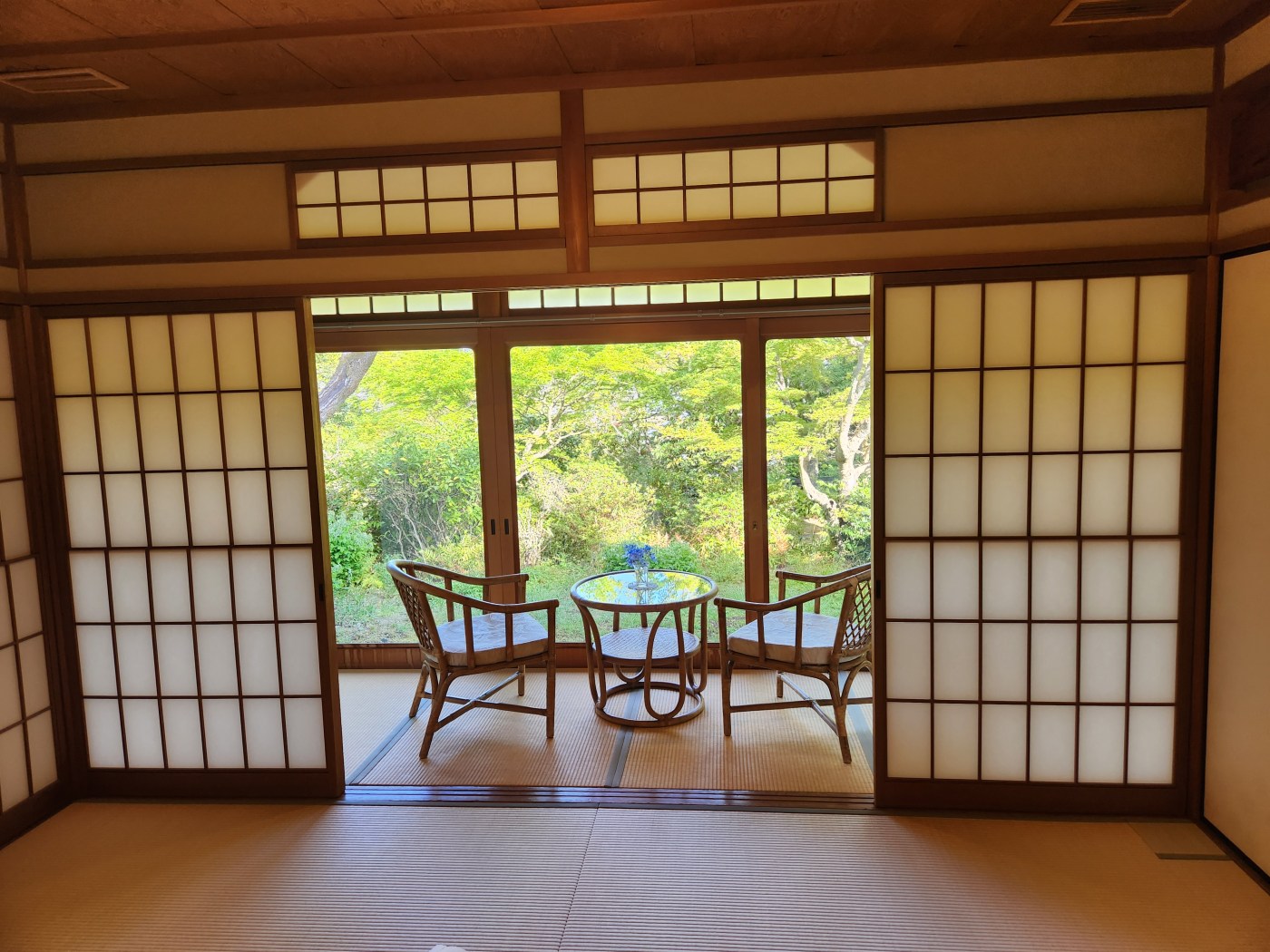
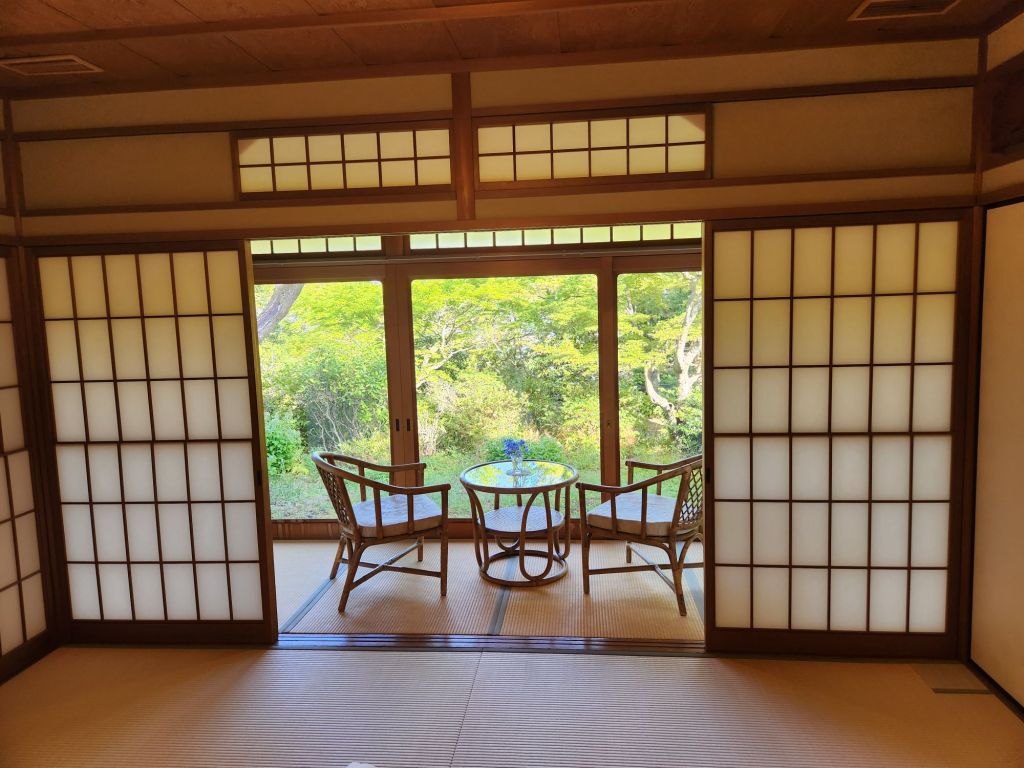
Since, ya know, I have no idea if I’m ever gonna make it back to Japan, I went all out on my accommodations and booked a room at a ryokan–a traditional Japanese inn. More accurately, I booked a small guest house, detached from the inn itself.


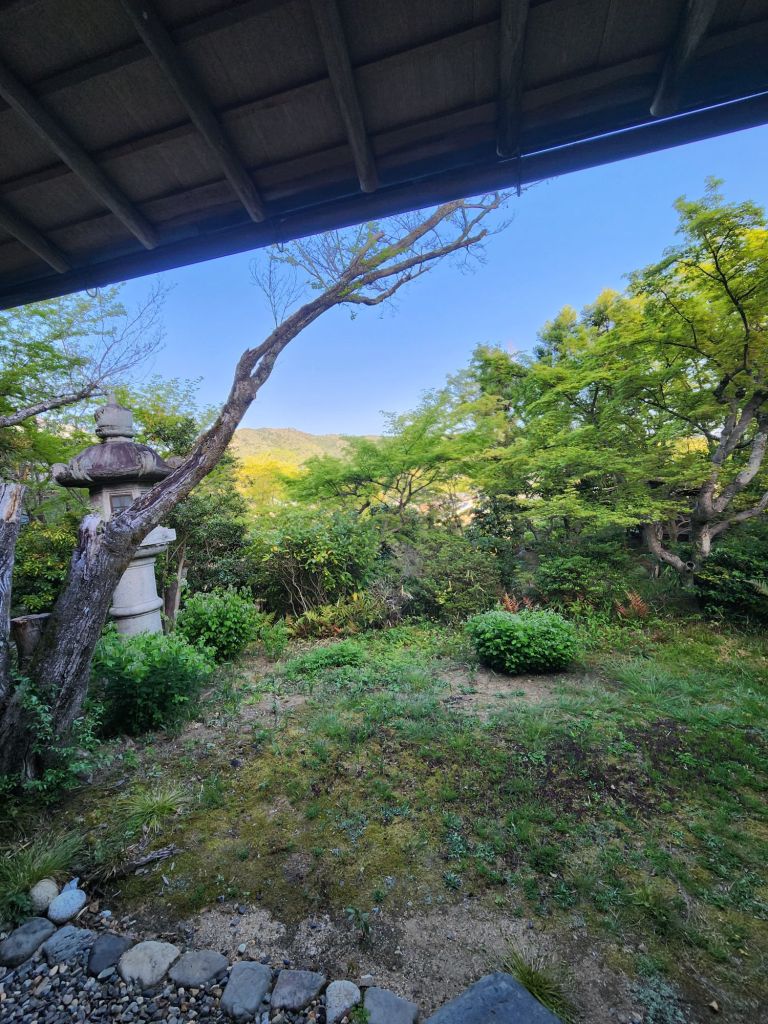
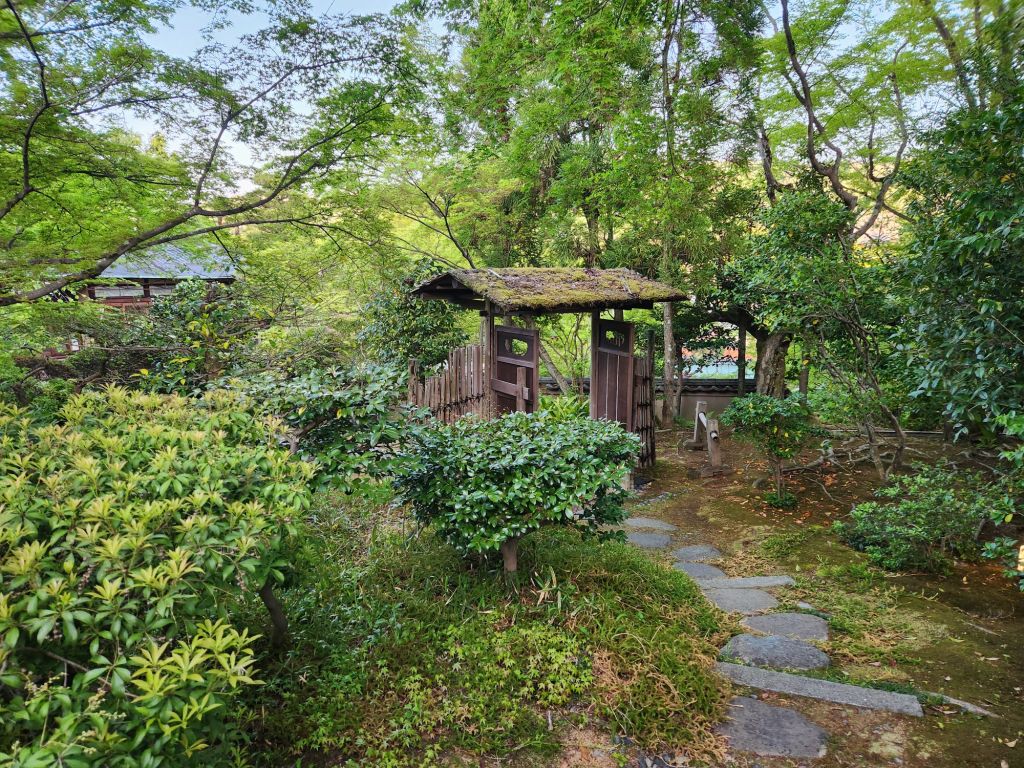
It’s got its own little garden right outside.
The proprietors, a mother and daughter, welcomed me with a cup of tea and a hand-written poem.

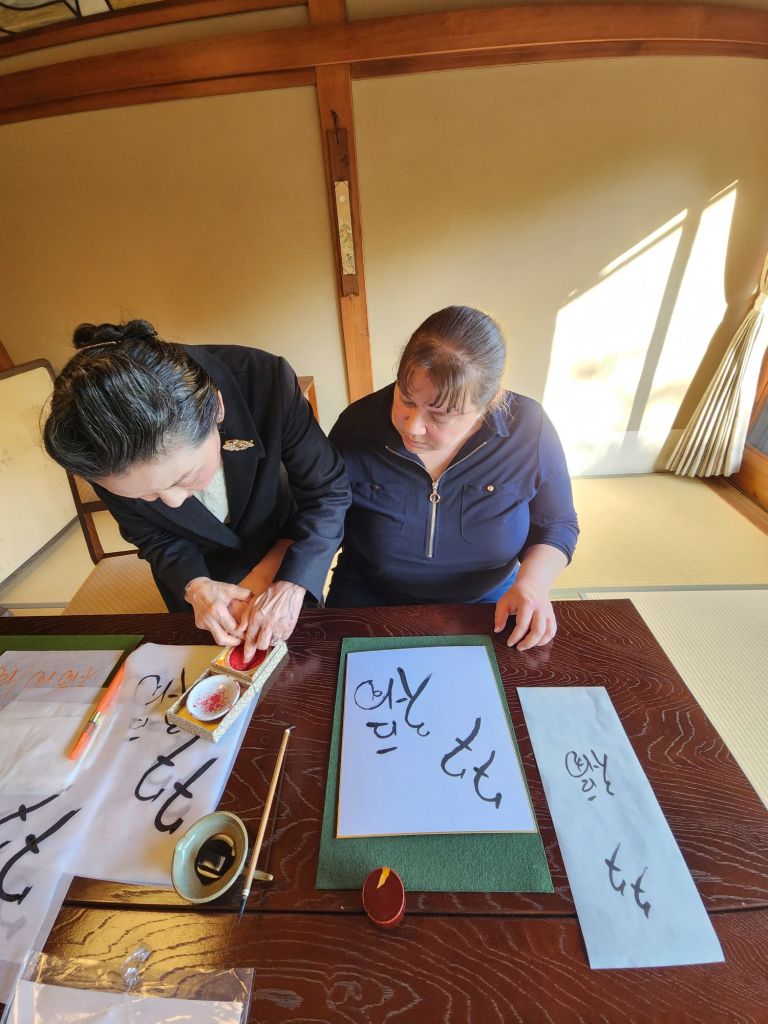
After I was settled in, I had an appointment to receive a lesson in Shodo, or Japanese calligraphy, from Kyoko, the elder of the two proprietors. Kyoko doesn’t speak English, so her daughter translated.
The ink is made from pine tree soot, so it smells amazing. As I type this, the pile of practice sheets I kept is sitting next to me, and every now and then I get a whiff of the aroma. Anyway, Kyoko was extremely skilled at Shodo.

And it seems like I might have been kind of decent at it? Writing with a paint brush isn’t intuitive, and I guess a lot of their students struggle with holding the brush upright instead of resting your writing hand on the page like you would with a pen. They seemed genuinely excited that I seemed to have at least some kind of idea of what I was doing. I’m sure there was a certain element of obsequiousness there–I was a paying customer, after all–but Kyoko was able to give me some advanced instructions about things like when to press down and when to let the ink trail off, the size and positioning of the letters, things like that. Sometimes when I finished a practice sheet, Kyoko’s daughter would say, “keep that one, it’s really good. Don’t make any more marks on it.” I think the final one turned out okay.


When I was done, Kyoko put my fingerprint on it in red ink as a signature.

I ventured down the mountain a bit to find some dinner, and then discovered I was only a short distance from the philosopher’s path. This is the meditative route a famous philosopher used to take on his daily commute to Kyoto University. It’s a little stone path next to a canal, lined with cherry trees.


In the dark, it wasn’t much to look at, but it was a quiet, contemplative walk with the sound of water lapping in the canal.
At this point, it was time for me to turn in for the night, because tomorrow is a full day of Kyoto adventures, so I headed back uphill (oof) to my little guest house for some sleep. After writing this blog, of course.
 Laura Writes