
BEST. DAY. EVER.
I woke to sunlight streaming into my little guesthouse and had some tea by the window.

I was brave enough to order the full Japanese breakfast this morning. There were eggs and fruit, yes, but that’s about where the similarities end to any kind of breakfast I recognize. There was miso soup and rice with pickles and fish and some kind of DIY tofu thing. I did my best to figure out what I was supposed to eat with what, but I did ask for some help.
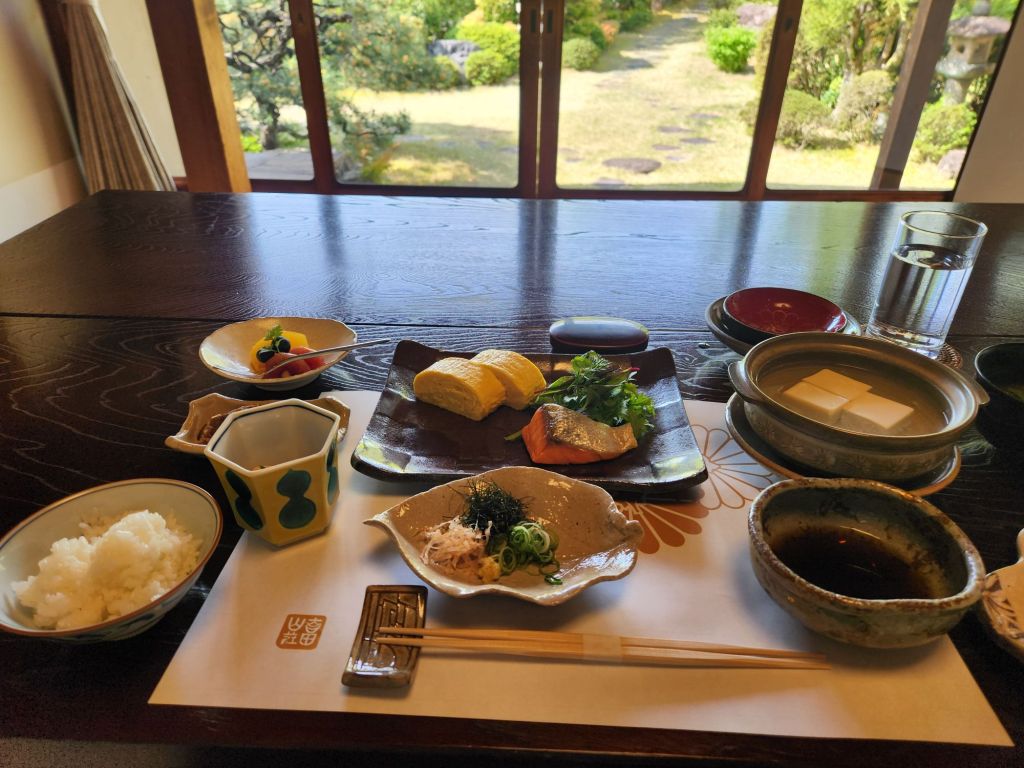
Seriously, Kyoto is so pretty.

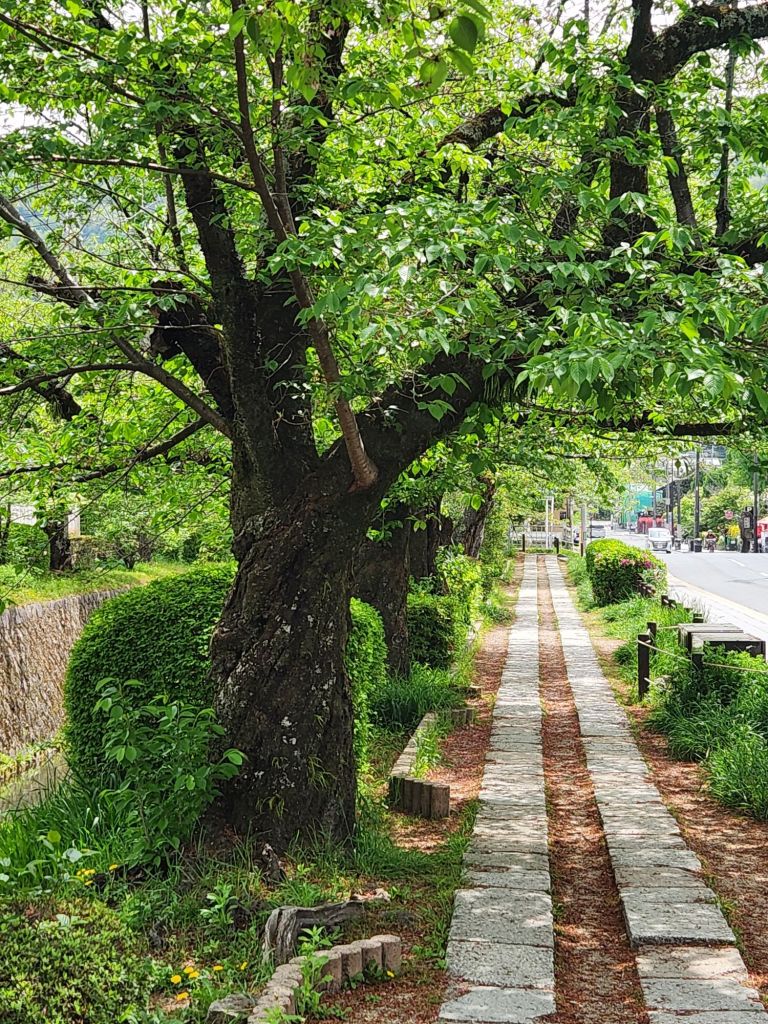
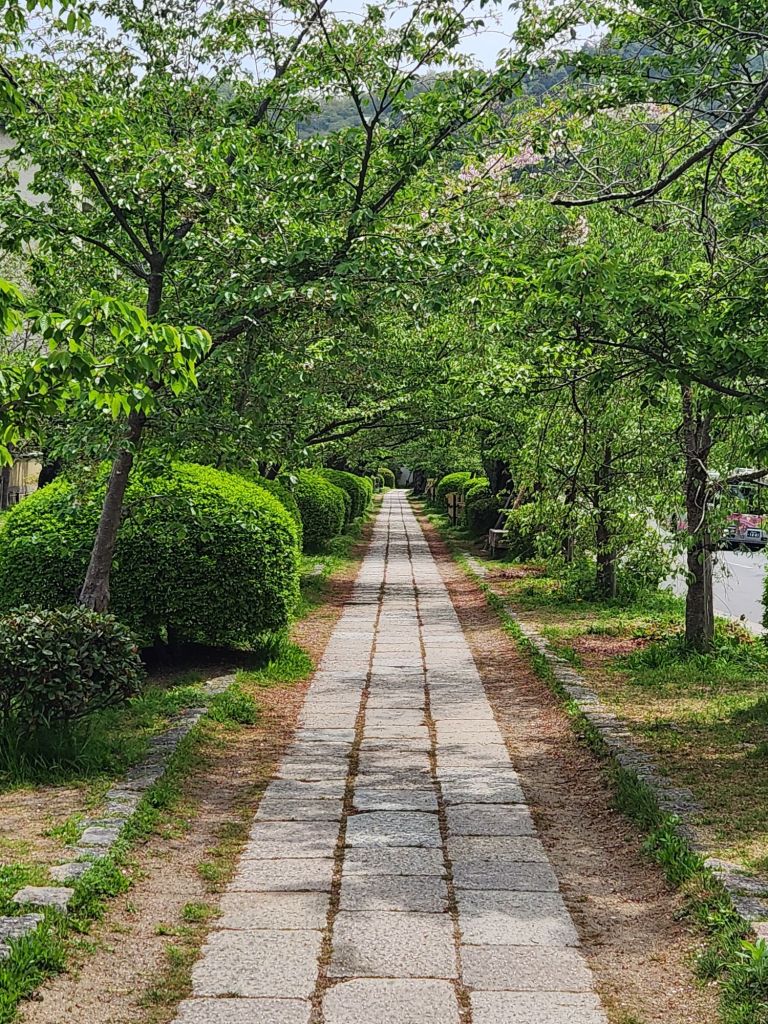
I went back and found the philosopher’s path in the daytime, and it’s quite charming.
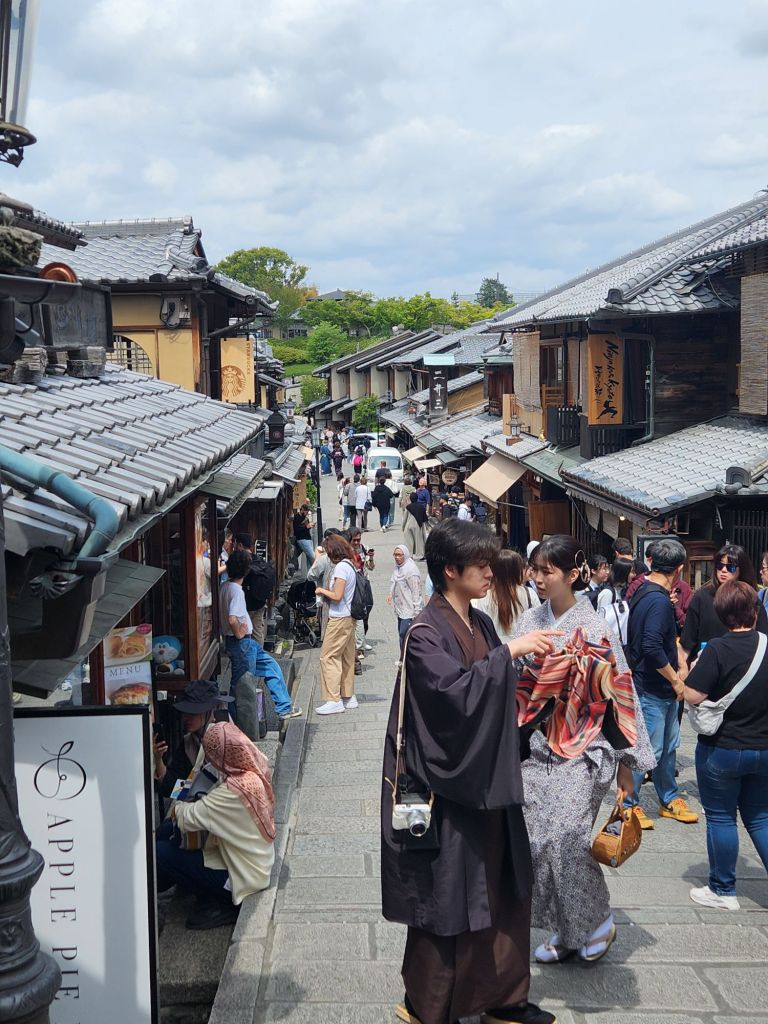
On my sister-in-law’s recommendation (she lived in Japan for a while and has visited before,) I spent the morning wandering the hilly Ichinenzaka, Ninenzaka, and Sannenzaka Streets. These three tight little streets wind their way up a hillside toward the Kiyomizu Temple.

But they’re just so charming and fun to wander through! And there was a shop for practically everything.




From there, it was an easy walk to Teramachi shopping street, a massive covered street/mall. I wandered down it for an hour or so and didn’t reach the end.

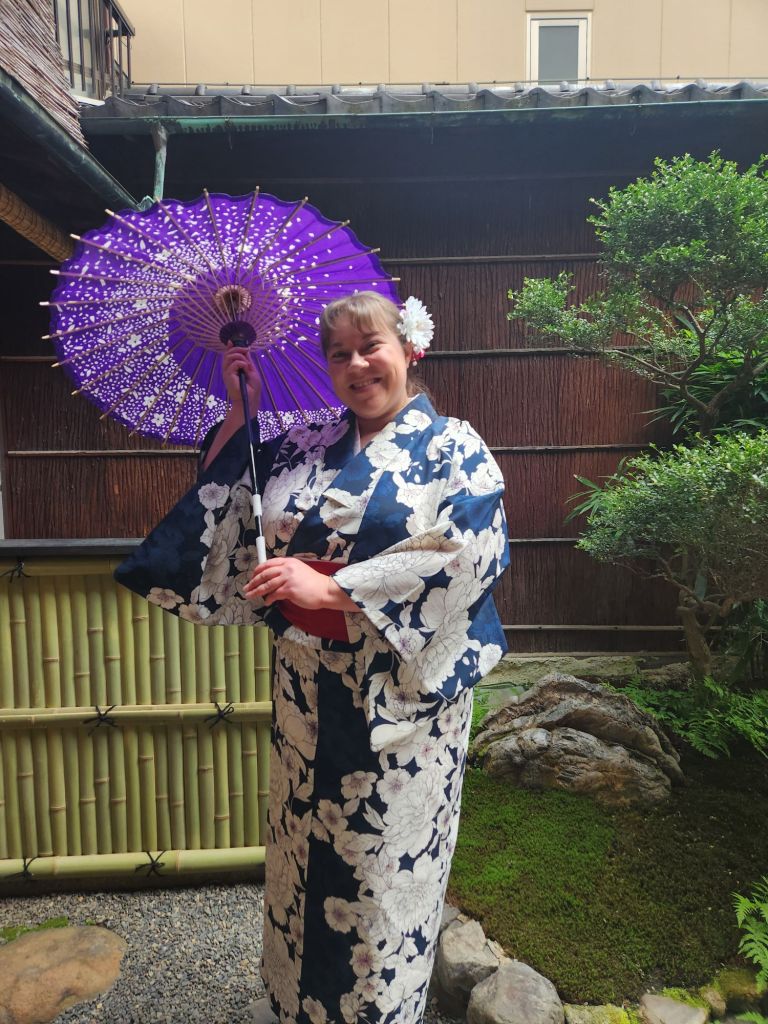
Just around the corner from Teramachi street, I was scheduled to participate in a tea ceremony. Is it an obvious tourist trap? Yes. Do I care? No. I wanted to wear a kimono, goshdarnit. You can actually rent them to wear around Kyoto for a day, but that seemed like a terrible idea for a variety of reasons. This way, I got to learn the ceremony, drink some fresh matcha, and be installed into a kimono by professionals.
You know that montage in Mulan where her hair is getting yanked in several directions and they’re layering clothes on her and cinching them as tightly as possible? I realize that’s China and not Japan, but the process felt a lot like that. There were a lot of straps to be tied and stuff to secure things in place. Getting dressed legitimately took half an hour with two women helping.
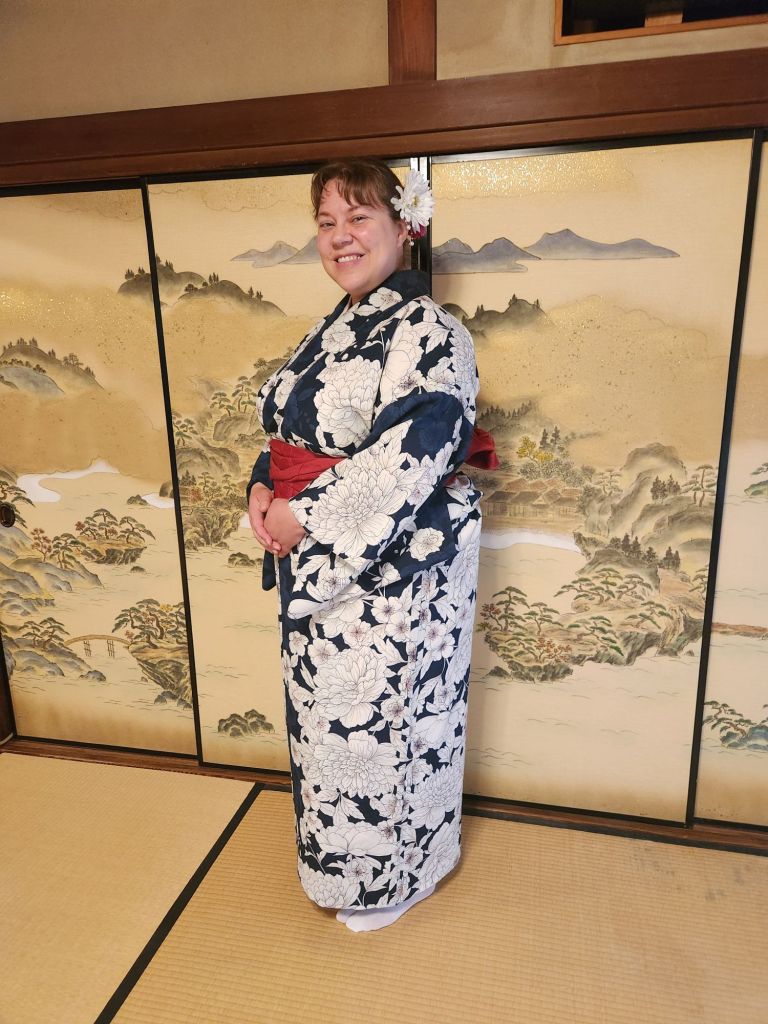


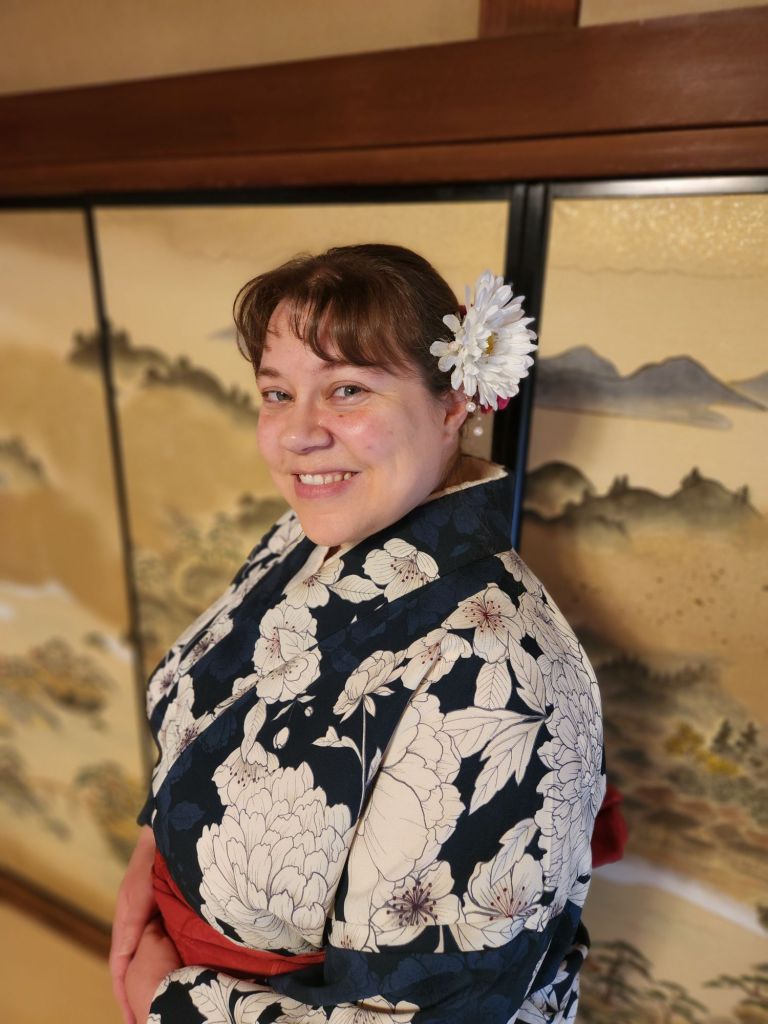


There were about a dozen of us in the tea ceremony. Our hostess began by teaching us the mantra that guides the ceremony, “Ichi go, ichi e”: One lifetime, one meeting. It’s a reminder to stay present in the moment and appreciate that this exact moment can’t be repeated. It’s a great reminder for this trip. My college band director actually used to remind us before each concert: “Remember tonight, because we will never have this band again,” and his admonishment had a very similar meaning: people will come and go and change. It cannot ever be the same.

The next step of the ceremony is to purify. We purified ourselves through some deep breathing. Our hostess purified the tea materials by very purposefully wiping them all clean with a cloth.

Then, she invited us to partake of the sweets set beside our tea things, to balance the bitterness of the matcha that was coming next.

We watched her make matcha, which involved scooping the matcha powder into hot water and whisking vigorously, then it was our turn.
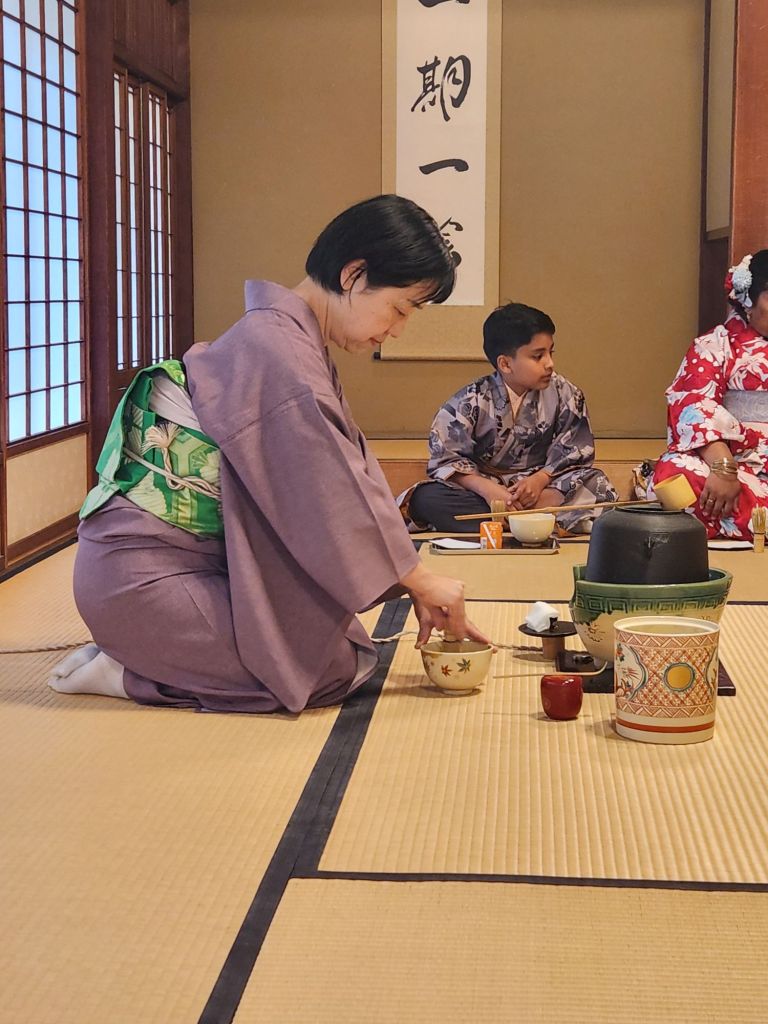
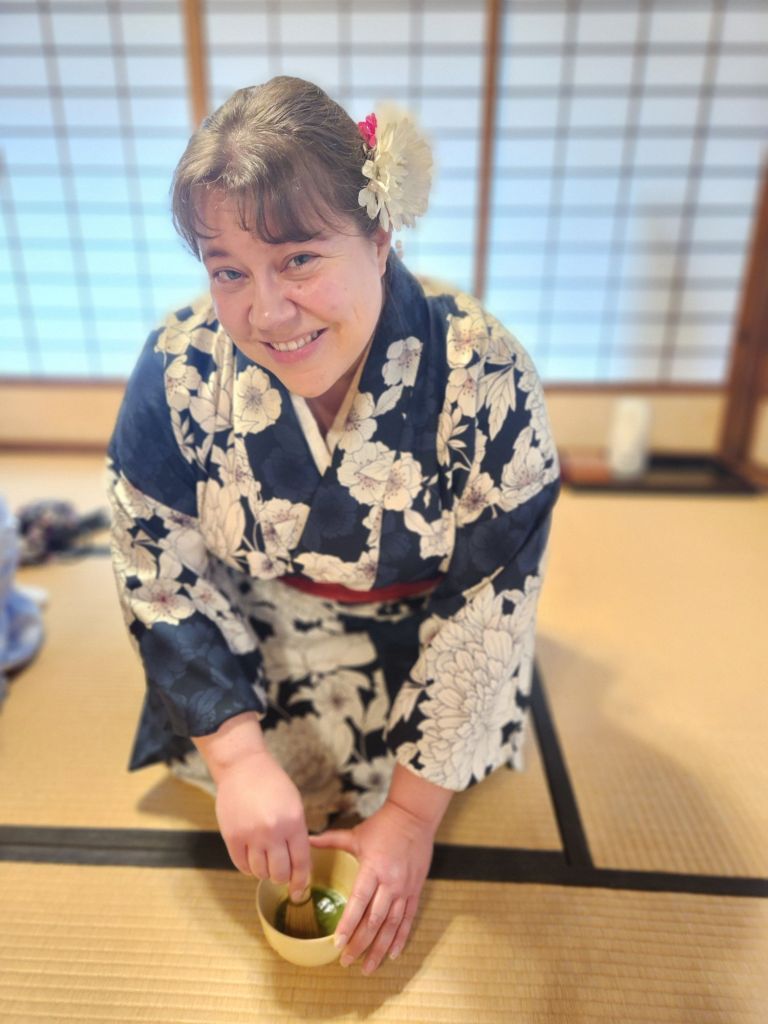
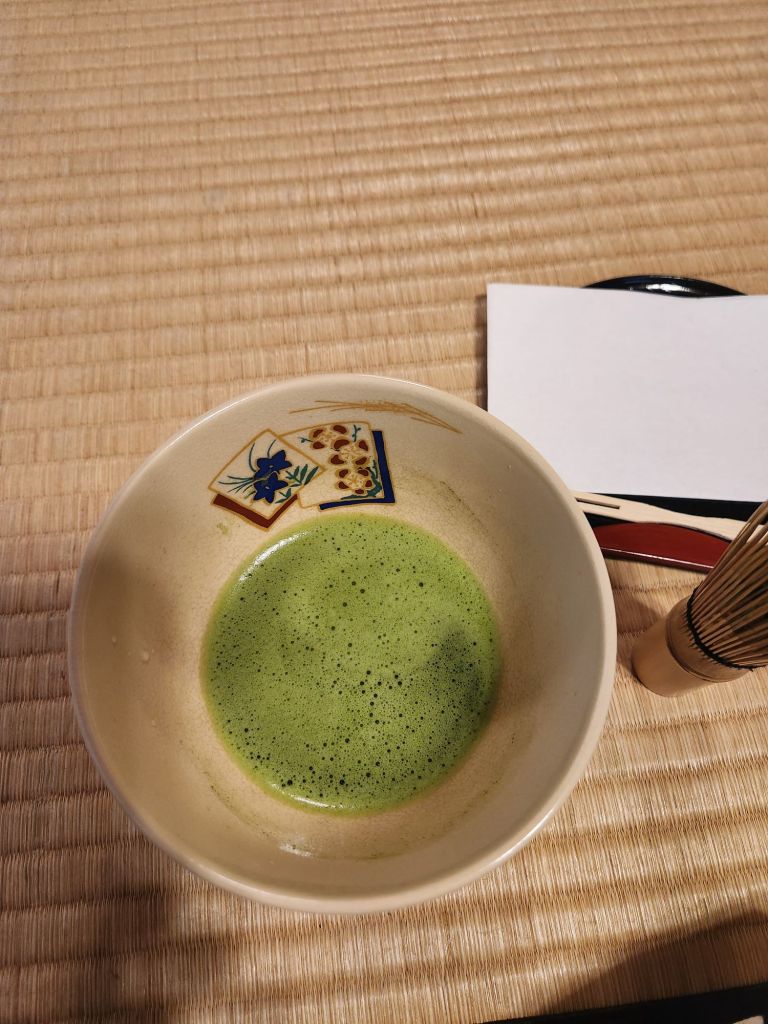
The ‘pretty side’ of the cup faces you during the ceremony, but part of the ritual is very purposefully turning it toward the host when it’s time to drink. This is a sign of respect, but I mean, also, it kind of makes sense not to put your lips all over that side.

All in all, it was super fun, and I felt pretty.

…But now it was time for something completely different.
Samurai training.
There are a lot of places in Tokyo and Kyoto that you can do this. There’s one in particular that’s kind of advertised everywhere, and from what I hear they recently lost permission to let tourists handle anything sharp.
The place I signed up instead is an actual dojo with actual regular students that also offers an introductory session on certain days, for nerds like me.
The first thing we did is get into some hakama-like outfits.

Our teacher, Yushin Sensei, was not only a great instructor but a pretty fun and genuinely nice dude. He didn’t speak a whole lot of English, so his second in command was a British fellow named Jordan who was a longtime student at the dojo, and now employed as an interpreter.
The training swords were blunted zinc alloy blades, and there was a lot to learn before we could handle them. When wearing a blade, you have to keep a thumb on the hilt at all times so it doesn’t come sliding out of the scabbard when you bow. Drawing a lengthy weapon quickly is a process that takes practice. Sheathing it without damaging yourself or the scabbard also takes practice.
As far as the stance, the swinging, and the position of the blade? A while back I took a course in European longswords, and I’ve been trying ever since to keep my limited skill up in what I had learned. It turns out, there’s quite a bit of overlap.
When we received our training swords, we learned a simple kata–a series of choreographed movements. Unsheath, step into the ‘eye-catching stance’, step back to dodge, raise your weapon, strike, swipe the blade down to send anything that might have, uh, coagulated on it flying off, and then sheath in again. Once we mastered that, Yushin Sensei taught us a slightly longer version that involved a blocking move.
There was a test, we learned, before we could handle an actual sharp katana. We would have to perform the longer kata one by one and meet approval before doing any real cutting. Performing all the moves perfectly would earn us an A+, Yushin Sensei said, something that about 1 in 30 students manage.
We went in the order we were sitting, which meant I had to go first.
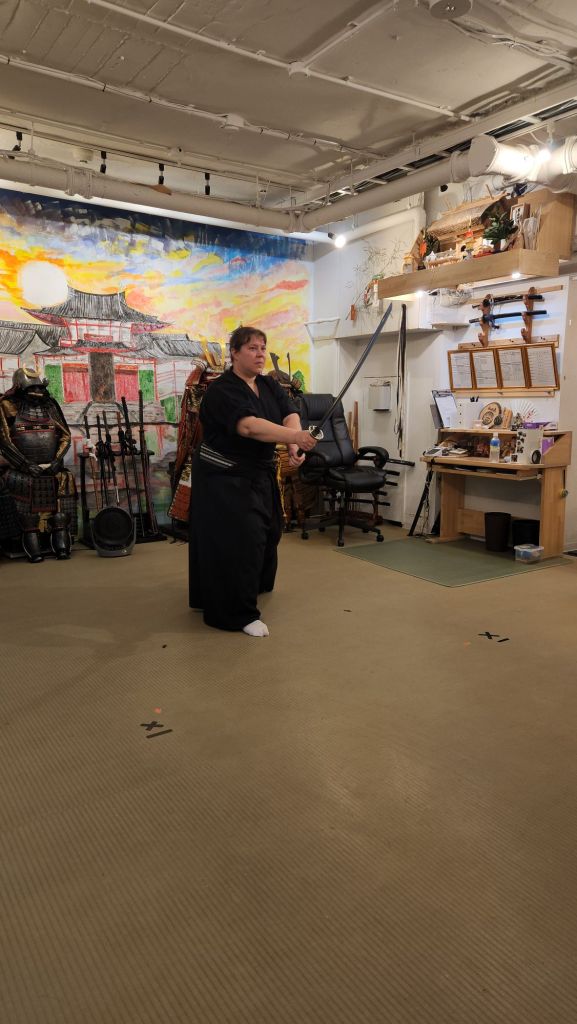

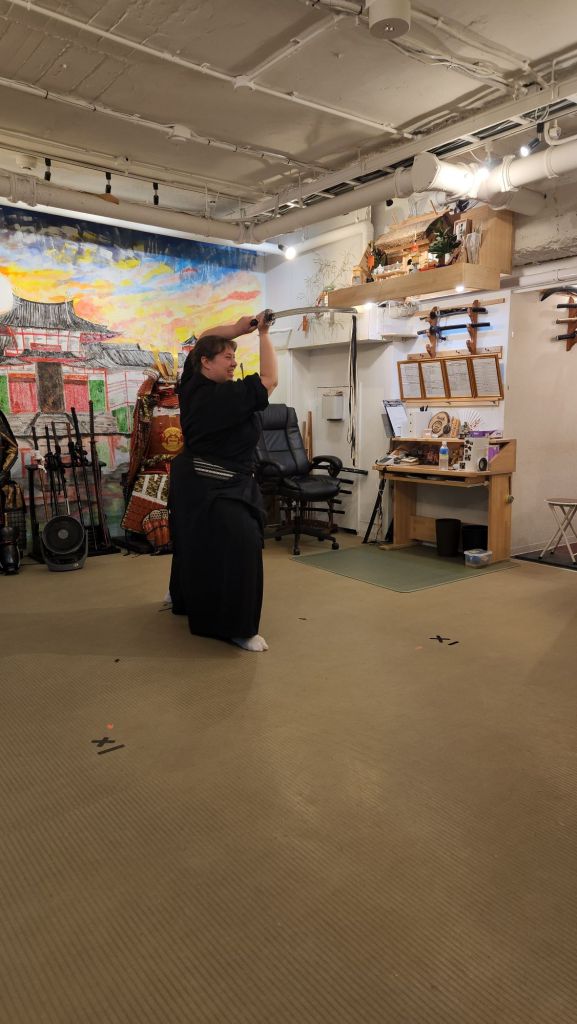


I got an A+. I guess I remember enough of that longsword training after all.
Next we were shown the blade we would all be cutting with–an actual 250-year-old katana. It was–and they could not stress this enough–very sharp.
First of all, we wouldn’t be sheathing and unsheathing it ourselves–Yushin Sensei would do that for us. There were so many warnings we had to listen to before we got to use it–some more obvious than others, but as I learned from years of training Disney Cast Members, sometimes people do need to be told things out loud. Do not touch the blade. Do not swing so hard that you wind up facing backwards. If the blade gets stuck, do not try to unstick it yourself. Do not let go of the blade.
We would each get two rolled up tatami (straw) mats to cut, and we would get to make two cuts on each mat in a very controlled sequence: step forward, lift the blade, bring it back, focus, and swing. If your cut curved at all or you came in at the wrong angle, there was a chance of it getting stuck or bouncing off.
I was the first person in the class to make all four cuts cleanly, and I think only one other person managed it. Yushin Sensei seemed genuinely excited that I managed it. And let me tell you: it felt awesome.


On the way out of class I got an official membership card for the dojo, and Yushin Sensei said again: “Your cutting is really nice–really nice!” And again, I know I’m a paying customer and to a certain extent he has to say that, but like, I don’t feel like the praise was the effusive for anyone else in the class.
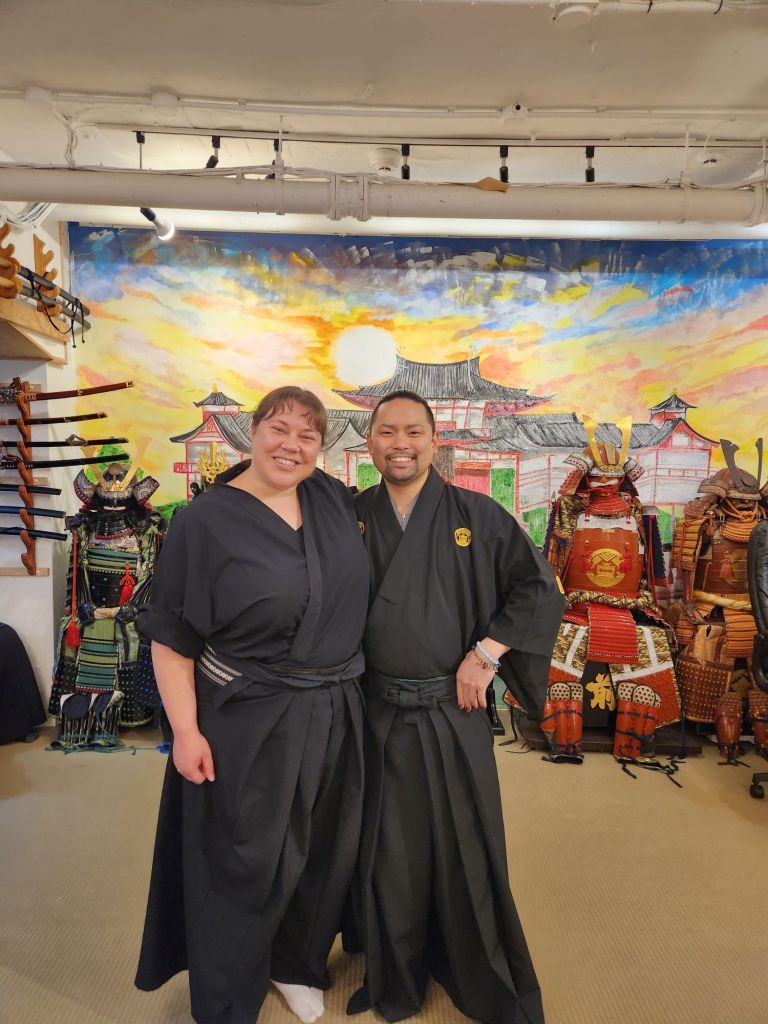


I think I might have actually done a good job.
Anyway, I’m gonna go to sleep now and dream about being a samurai. Tomorrow I leave Kyoto for a place where I’m sure I’ll feel right at home.
 Laura Writes